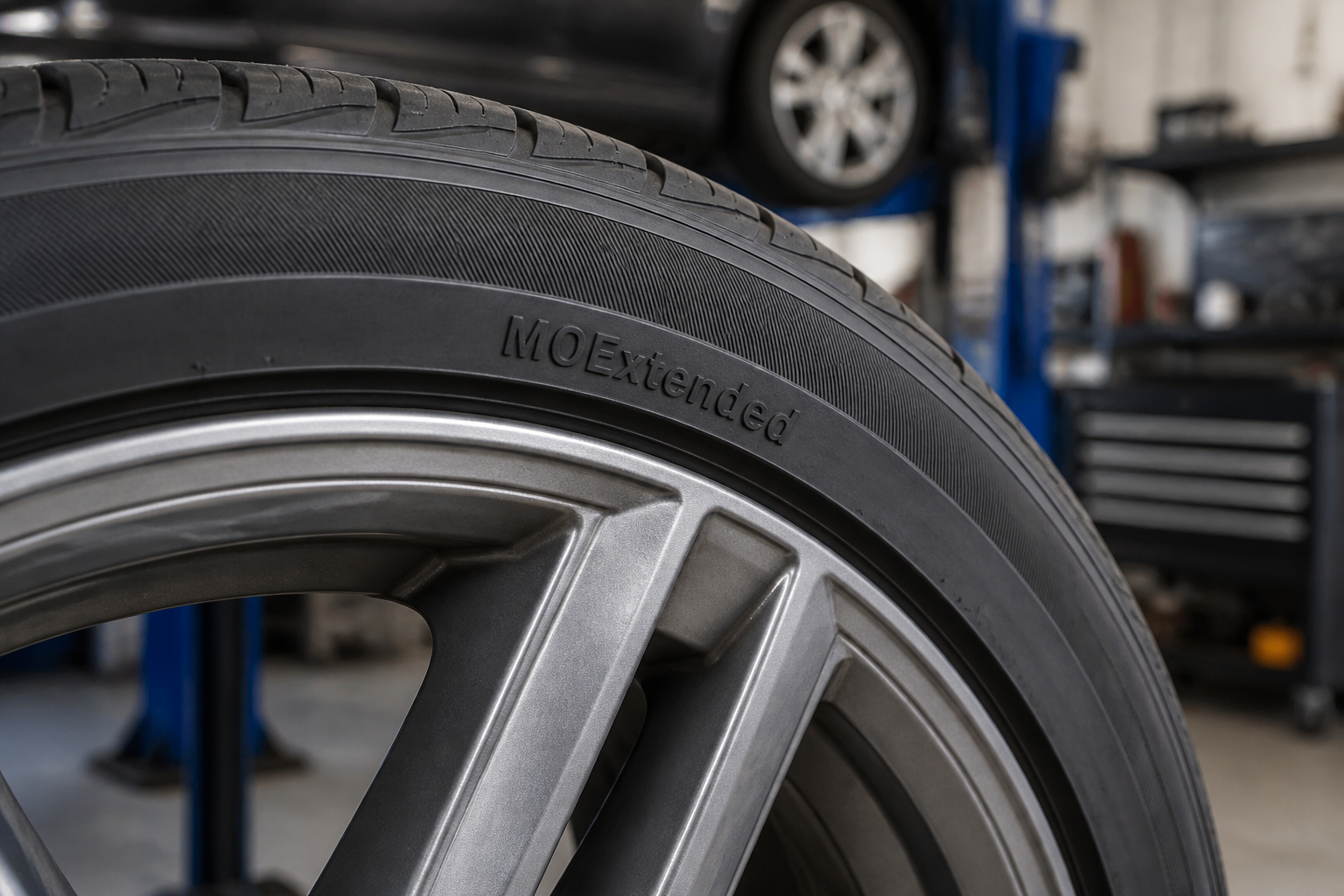
MOExtended tires (MOE) are Mercedes-Benz branded tires designed for temporary mobility, offering a potentially smoother ride and broader conventional-tire options, but they differ from ISO run-flat tires and may require a mobility plan after a puncture. The choice between MOE and run-flats hinges on ride comfort, spare strategy, and how you plan for long trips or limited service access.
Key takeaways
- MOE tires are Mercedes-specific and may not be identical to run-flats in performance or mobility limits.
- Run-flat tires provide immediate post-puncture usability but can compromise ride quality and tire choices.
- MOE tires can improve ride comfort with conventional tires, but you should have a contingency plan for punctures.
- Your decision should weigh daily driving conditions, trip distance, and local service availability.
- Always reference vehicle-specific guidance from Mercedes-Benz and trusted tire guides when selecting MOE versus run-flat options.
Mercedes-Benz owners face a nuanced decision when replacing tires: MOExtended (MOE) tires versus traditional run-flat (RFT) setups. MOE tires carry a Mercedes-Benz design and branding intent aimed at preserving mobility after pressure loss, but they do not always behave identically to ISO-standard run-flats. This article expands the concept, quantifies how MOE changes ride feel, maintenance needs, and operating costs, and provides real-world guidance for daily driving and long trips. It also notes model-dependent caveats so you can make a decision that matches your vehicle, climate, and usage profile.
What MOExtended tires really are and how they differ from run-flats
MO Extended tires are branded to indicate a Mercedes-Benz-tuned tire that supports temporary mobility after pressure loss, with the intent of enabling continued, safe driving rather than requiring immediate tire service. Unlike universal run-flat tires, MOE tires are not guaranteed to have the same reinforcement in every axis or the exact same load-rating behavior across all models. Because vehicle tuning, suspension, and electronic systems interact with tire characteristics, the result is a more model-specific set of expectations: ride feel, remaining speed-to-puncture limits, and the recommended distance you can travel post-deflation can vary by tire model and vehicle configuration. For owners, this means that a MOE tire should be treated as part of an integrated mobility strategy rather than a standalone guarantee of continued operation after a puncture.
For reference, industry explanations and OEM guidance emphasize that MOExtended tires may allow a wider selection of conventional tires while preserving Mercedes-Benz’s mobility intent, but you should consult your owner’s manual and dealer notes for your exact model. Tire Rack: What Are Mercedes-Benz Original Extended (MOExtended Or MOE) Tires?
MOE vs run-flats: the trade-offs you’re weighing
The core considerations fall into three buckets: ride comfort and noise, spare and mobility planning, and long-haul practicality including fuel economy and wear patterns. Run-flat tires reinforce the sidewall so a puncture won’t immediately leave you stranded, and many Mercedes-Benz configurations shipped with run-flats to support ongoing travel without a spare. However, stiffer sidewalls can translate into a harsher ride on rough pavement, and inventory breadth for run-flat options can be more limited, sometimes increasing replacement costs.
MOE tires typically enable a more conventional tire construction feel, which can improve ride quality and road feedback on imperfect surfaces. They may come with a recommendation to carry a mobility solution (such as a compact spare, sealant kit, or a roadside-assistance plan) because the lack of a reinforced sidewall means a puncture may require more attention and a service visit near available help. The exact requirements vary by model and market, so verify what your vehicle’s configuration supports and what your local dealer suggests for emergency options.
Real-world impact on daily driving
Ride comfort: In cities and on highways with rough patches, MOE tires often translate to lower cabin noise and smoother transitions across pavement irregularities compared with some run-flat setups. This is highly dependent on the tire model’s rubber compound, tread pattern, and intended load. Tire engineers balance stiffness, noise, and comfort; MOE tires typically trade some added stiffness for the conventional-feel you expect from a non-RFT tire, but this is not universal—verify with test drives or model-specific data from the tire maker and Mercedes-Benz.
Tire wear and maintenance: MOE tires can offer standard wear characteristics similar to non-RFT tires, but wear rates depend on tread design, compound, vehicle load, and driving style. If you drive aggressively, carry heavy loads, or frequently run at high speeds, expect wear patterns that reflect that usage. Without the reinforced sidewall of an RFT, you may see different puncture-resilience behavior, so plan maintenance and inspections accordingly. Many owners find MOE tires require normal cadence for rotation and alignment checks, just as with conventional tires.
Fuel economy and rolling resistance: The mass and stiffness profile of a tire can influence rolling resistance and, by extension, fuel economy. MOE tires designed to emulate conventional tires may exhibit slightly different rolling resistance compared with low-rolling-resistance run-flats, but the effect is typically modest and highly model-specific. If your daily route includes frequent highway miles, the cumulative effect may be noticeable over months, especially on vehicles with sensitive trip computers and real-time efficiency metrics.
Practical scenarios: where MOE shines or stalls
- Daily commuting with mixed pavement: MOE tires can deliver a more forgiving ride and reduced road noise on rough urban streets, depending on the model. If comfort and cabin serenity are priorities, MOE might be preferable to some run-flats.
- Frequent long trips on highways: A MOE setup paired with a defined mobility plan (spare, sealant kit, or roadside assistance) can offer a quieter, steadier long-haul ride. You’ll need to plan for puncture contingencies away from service networks, especially in rural or remote corridors.
- Urban driving with occasional curb exposure: When you’re navigating tight spaces, MOE tires can provide a more compliant feel, but the absence of a reinforced sidewall means you should be mindful of curb impact risks and check pressures regularly to avoid unexpected deflations.
Maintenance planning and cost implications
Cost considerations are sensitive to the exact tire model, local pricing, and the dealer’s recommended mobility options. MOE tires may be priced differently from run-flats and can involve different service paths if a puncture occurs far from assistance. In many markets, run-flats reduce immediate need for a spare but can limit tire selections, push up upfront tire costs, and introduce trade-offs in ride quality. MOE tires, by contrast, typically widen tire availability and enable more conventional tire choices, which can offer benefits in ride feel and noise but necessitate a clear plan for puncture events when service is not nearby.
As you evaluate total cost of ownership, factor in: tire price, replacement intervals based on mileage and wear indicators, the cost of a mobility plan (spare or roadside service), and potential downtime during puncture events. Your Mercedes-Benz dealer can provide model-specific guidance on MOE compatibility, recommended tire widths, and approved service options.
Decision criteria: how to pick for your Mercedes
Use these questions to guide your choice: - What is my typical annual mileage and terrain mix (highways, city streets, rough roads)? - How important is ride comfort and interior quietness to me? - Do I have easy access to tire service or a mobility plan during trips, including long-distance travel? - Is having a guaranteed driveable puncture mode a critical priority, or am I comfortable with a planned mobility solution in exchange for a conventional tire feel? - How do local prices, tire availability, and service networks affect my budget and downtime in the event of a puncture?
Always verify model-specific guidance from your Mercedes-Benz dealer. Some vehicles require or favor MOE for certain wheel-size configurations, while others may have more limited MOE availability in your market. Your dealer can confirm compatibility, availability, and any regional requirements for mobility assistance when you choose MOE tires.
Bottom line
MOExtended tires offer Mercedes-Benz-oriented performance with the aim of preserving temporary mobility while delivering a conventional-tire driving feel. They can improve ride comfort and broaden tire choices, but they require a clear plan for puncture events and long trips away from service networks. If you value a smoother ride and normal-tire behavior, MOE tires paired with an appropriate mobility solution can be advantageous. If absolving concerns about puncture practicality is paramount and your car supports run-flats, a run-flat setup remains compelling, albeit with potential compromises in ride quality and tire selection flexibility.
For a model-specific recommendation, consult your Mercedes-Benz dealer and review your regional tire availability and service infrastructure. The broader industry context—encompassing Tire Rack’s overview of MOE tires and Car and Driver’s tire buying guidance—can provide additional perspectives when evaluating the options. Tire Rack: MOExtended or MOE tires and Car and Driver: New Tire Buying Guide.
Frequently asked questions
Can I replace just one MOE tire without affecting stability?
MOE tires are designed to work with the vehicle’s engineering targets, but replacing only one tire can affect handling balance. Consult Mercedes-Benz guidelines and a tire professional for model-specific advice.
Do MOExtended tires require a spare or alternative mobility solution?
In many cases, MOE tires do not come with the same spare provisions as some run-flat configurations, so owners should plan for a mobility solution when choosing MOE tires.
Is MOE more about branding than performance limits?
MOE marks indicate Mercedes-Benz targeted tires with temporary mobility characteristics; actual performance and post-pressurization limits depend on tire and vehicle load configuration.
Related Mercedes-Benz guides