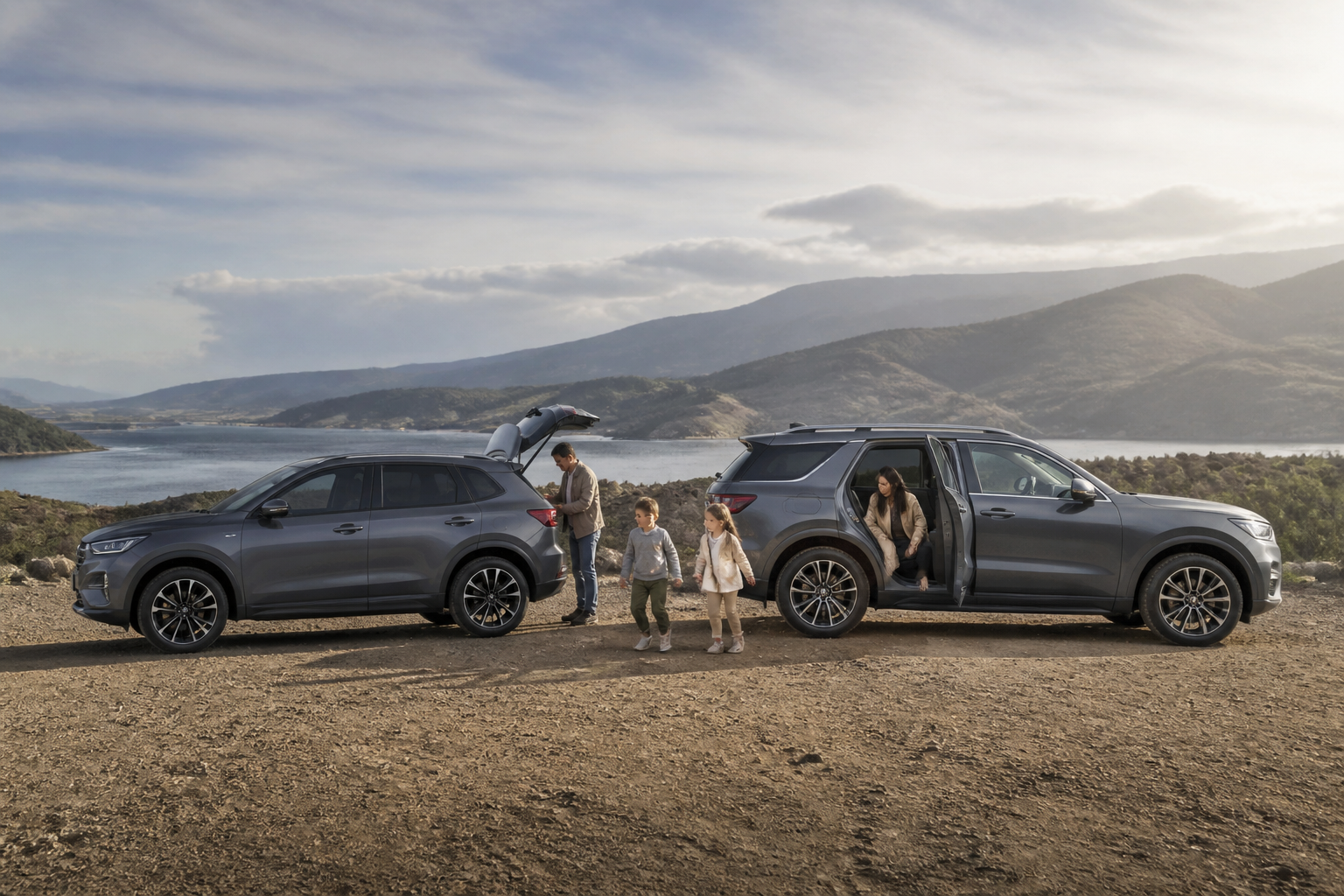
For family use, the larger Mercedes‑Benz GLE offers noticeably more cargo space and rear legroom than the GLC, which translates to better practicality on trips and with gear. However, the GLC has a lower starting price and typically lower five-year ownership costs. If your family frequently carries multiple passengers with substantial gear, the extra space of the GLE justifies the premium; for routine errands and parking ease in urban settings, the GLC’s compact footprint and lower cost may be more sensible.
Key takeaways for family buyers
- GLE provides substantially more cargo space and rear legroom than GLC.
- GLC has lower upfront pricing and lower estimated five-year ownership costs in the cited comparison.
- Choose GLE if frequent full loads and long trips are normal; choose GLC for tighter urban use and budget-conscious ownership.
The Mercedes-Benz GLC and GLE occupy different niches in the brand’s SUV lineup, and the decision for a family buyer hinges on how much space, practicality, and ownership costs matter over the life of the vehicle. This article extends the comparison beyond surface-level specs, translating measurements into real-world usefulness, and calling out model-dependent caveats that influence total cost of ownership and daily practicality.
Key dimensions that drive family practicality
For families, interior space translates into usability: how easily a stroller, sports gear, groceries, and weekly essentials fit, and how comfortable rear-seat occupants will be on longer trips. The GLC’s smaller footprint does not mean cramped interior; it remains a capable five‑seat SUV with a surprisingly roomy second row for its segment. The GLE, by contrast, grows in every dimension: more cargo behind the rear seats, more cargo with the rear seats folded, and more rear legroom. These differences matter most when you regularly shuttle children, sports equipment, or bulky gear.
- Cargo behind the rear seats: The GLE’s larger footprint yields noticeably more usable space for day-to-day tasks like shopping trips or loading strollers and sports bags without folding seats.
- Cargo with seats folded: When flexibility matters, the GLE typically extends total cargo capacity beyond the GLC, enabling easier transport of longer items or multiple suitcases.
- Rear passenger comfort: Rear legroom often translates to happier back-seat riders on longer trips; the GLE’s extra inches of space help maintain comfort for adults and growing children alike.
However, tighter city-driving realities, parking constraints, and daily usability should factor into your math. If you frequently navigate narrow streets or require easy parkability, the GLC’s smaller footprint can be a practical advantage, despite its comparatively smaller interior volume.
Five-year ownership costs: what to expect beyond sticker price
Ownership costs are more than the upfront price. For families, this includes depreciation, fuel or energy costs, maintenance, insurance, and potential financing impacts. While precise numbers vary with region, model year, trim level, and optional equipment, the core trend is that the GLE carries a higher baseline MSRP, which compounds into higher depreciation and financing costs over five years. Sustainability and efficiency choices—such as engine choice, all-wheel drive configuration, and auxiliary equipment—also influence running costs and resale values.
Fuel or energy economy is another practical consideration. If your family’s driving profile leans toward frequent short trips in urban environments, the efficiency delta between GLC and GLE becomes meaningful, especially when paired with optional hybrid or efficient powertrain configurations offered in newer model years. Conversely, if your typical use involves longer highway commutes or family road trips, the GLE’s additional space may be offset by similar or modestly higher fuel use depending on drivetrain and powertrain tuning.
Practical decision criteria for families
- Assess daily needs — If you routinely carry multiple passengers, bulky gear, or large groceries, quantify how much cargo space you truly use in a typical week. Compare volumes behind the rear seats and maximum usable cargo with seats folded, then correlate to your actual items.
- Evaluate seating arrangements — If a third row is essential, note that both models offer limited third-row options in some configurations; verify availability and practicality for your family’s size and typical seating arrangements.
- Consider parking and maneuverability — The GLC’s smaller footprint makes parking easier in tight urban spaces; the GLE’s size can be advantageous when unloaded curbside space is ample but can be a disadvantage in dense city settings.
- Total cost of ownership — Run a five-year cost projection including depreciation, insurance, maintenance, and any financing differences between trims. Subtle differences in warranty coverage and service plans can shift the comparative math over time.
- Usage pattern alignment — If your family’s trips include frequent long highway drives and fewer in-town errands, the GLE’s interior comfort and cargo flexibility may justify the premium. If most trips are city-centric with modest cargo needs, the GLC remains attractive on a total-value basis.
Model-dependent caveats
This guidance reflects typical configurations reported by reputable comparison sources but does not fix specific trims, options, or model years. Real-world space can vary with optional third-row seating, roof rails, or panoramic sunroof packages, which alter headroom and cargo floor height. Powertrain choices—gasoline versus diesel versus mild-hybrid systems—also impact fuel economy and maintenance profiles. Always verify exact cargo figures, seat configurations, and payload ratings for the precise build you’re considering of either model year.
Scenarios: when the GLE makes sense for a family
- Multi-child household — Regularly transporting two or three children plus gear, sport equipment, or strollers benefits from the GLE’s greater rear-seat and cargo space, reducing the need for a second vehicle or frequent cargo compromises.
- Active lifestyle — If you value room for equipment like bikes or skiing gear, or you frequently embark on weekend getaways with a full load, the GLE’s larger cargo envelope improves practical, on-demand usability.
- Longer road trips — Improved rear comfort and broader cargo options enhance the daily ride quality for back-seat passengers during hours of travel, contributing to lower travel fatigue for children and adults alike.
On the other hand, the GLC remains a compelling choice for families who prize maneuverability and efficiency without giving up a large amount of interior practicality. It delivers solid rear-seat space for a five-passenger layout and a practical load space for most weekend needs, all while maintaining a more approachable total ownership footprint.
Takeaways for decision-making
Choosing between the Mercedes GLC and GLE for family use ultimately comes down to balancing space needs against ownership costs. If your family frequently handles bulky cargo, requires extra rear legroom, and values flexibility for longer trips, the GLE’s advantages are meaningful and likely worthwhile. If your daily driving involves urban commuting, school runs, and a smaller footprint is preferred, the GLC can offer a more favorable value proposition with less compromise on practicality.
Sources
- Mercedes-Benz GLC vs. GLE: Is the larger SUV worth the price and parking-space trade-off for a family buyer?
- Mercedes-Benz GLC vs. GLE: Is the larger SUV worth the price and parking-space trade-off for a family buyer?
Frequently asked questions for family buyers
Is the extra space worth the price premium for a family?
Space needs depend on usage: if you regularly haul gear or multiple rear-seat passengers, the GLE’s larger cargo area and legroom often justify the premium. For solo or small-family urban use, the GLC’s lower cost and easier maneuverability can be more practical.
How do depreciation and running costs compare?
In the cited comparison, the GLE shows higher five-year ownership costs than the GLC, reflecting larger purchase price and higher running costs. Always re-check current regional incentives, fuel economy ratings, maintenance plans, and insurance quotes for your exact configuration.
Do either model offer a true third row?
In the referenced configurations, neither is described as offering a standard third-row option; verify with a dealer for current options and seating configurations if third-row seating is a priority.
Related Mercedes-Benz guides