
Why Carbon Fiber Parts Have Become So Popular on Mercedes-Benz Cars
Carbon fiber has moved far beyond the world of race cars and limited-production supercars. Today, it is one of the most popular materials used for exterior and interior upgrades on Mercedes-Benz vehicles, particularly AMG models. Owners use carbon fiber to sharpen the appearance of the car, replace damaged trim, reduce weight in selected areas, or create a more aggressive visual connection with factory AMG and motorsport styling.
However, buying carbon fiber parts is not as simple as choosing the most attractive photograph. Two components that look almost identical online can differ significantly in construction, fitment, surface finish, mounting quality and long-term durability. This becomes especially important on modern Mercedes-Benz models because bumpers, sensors, cameras, radar modules and aerodynamic elements are often integrated into the same areas where aftermarket carbon parts are installed.
This guide explains the main types of Mercedes-Benz carbon fiber parts, how they are manufactured, which upgrades provide the greatest visual impact, what to check before ordering, how fitment differs between standard Mercedes and AMG variants, and how to avoid the most common buying mistakes.
What Is a Real Carbon Fiber Automotive Part?
Carbon fiber itself consists of extremely thin carbon filaments woven into fabric. The fabric becomes structurally useful when it is combined with resin and cured into a rigid composite component.
In automotive applications, the phrase “carbon fiber part” can describe several very different products. Understanding the construction is therefore essential before comparing prices.
Dry Carbon Fiber
Dry carbon, often associated with prepreg manufacturing, uses carbon fabric that has already been impregnated with a controlled quantity of resin. The material is normally cured under carefully controlled temperature and pressure conditions.
Advantages can include:
- Low weight.
- Excellent rigidity.
- Consistent resin distribution.
- High-quality surface structure.
- Thin component construction.
- Good strength-to-weight ratio.
High-quality dry-carbon components are generally among the most expensive choices because the manufacturing process requires more precise materials and equipment.
Wet Carbon Fiber
Wet carbon components are produced by applying liquid resin to carbon fabric during manufacturing. Well-made wet carbon can still provide an attractive appearance and satisfactory strength for cosmetic automotive components.
For spoilers, mirror covers, interior trim and similar upgrades where extreme weight reduction is not the primary objective, a good wet-carbon component may offer an excellent balance between price and appearance.
The main issue is not simply whether a product is described as dry or wet carbon. Manufacturing quality matters just as much. Poor resin control, inadequate curing or weak moulds can produce a component with waves, pinholes, uneven edges or inaccurate mounting points regardless of the marketing terminology used.
Carbon Fiber Overlay and Skinning
Some automotive parts use an existing plastic, fiberglass or composite base that is covered with a layer of real carbon fiber. This process is often called carbon skinning or overlay construction.
These parts can look very good, but they should not be confused with fully structural carbon components. They are generally heavier because the original substrate remains underneath the carbon layer.
Overlay construction is often completely acceptable for:
- Mirror covers.
- Interior trim.
- Small decorative panels.
- Console trim.
- Door handle trim.
For large aerodynamic parts, buyers should pay closer attention to the underlying construction.
Carbon-Look Plastic Is Not Carbon Fiber
Another category includes ABS plastic components with a printed carbon pattern, hydro-dipped surface or carbon-style film. These parts may be inexpensive and visually suitable for some projects, but they are not genuine carbon fiber.
If genuine carbon construction matters to you, look for clear product specifications rather than relying solely on photographs.
The Most Popular Carbon Fiber Upgrades for Mercedes-Benz
Different carbon parts change the character of the car in very different ways. A small mirror cover provides a subtle detail, while a front splitter or rear diffuser can substantially alter the overall proportions of the vehicle.
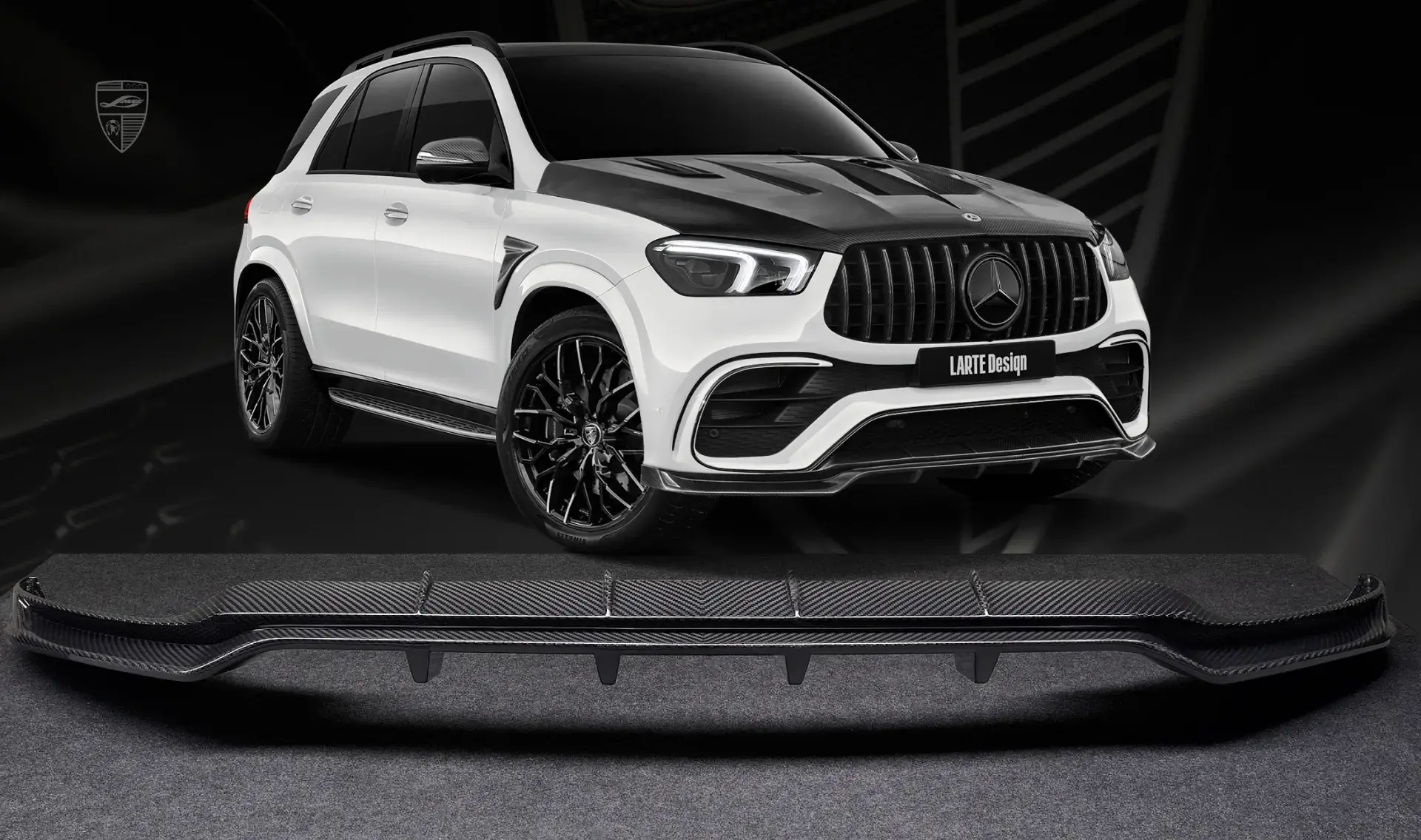
1. Front Splitters and Front Lips
The front splitter is one of the most visually effective carbon upgrades available for a Mercedes-Benz. It extends or reshapes the lower section of the front bumper and visually lowers the front of the car.
On AMG models, a carbon splitter can complement the large factory air intakes and aggressive bumper geometry particularly well.
Before ordering, verify:
- Exact model generation.
- AMG versus non-AMG bumper.
- Facelift versus pre-facelift configuration.
- Presence of an AMG Line exterior package.
- Whether drilling is required.
- Whether brackets or mounting hardware are included.
A splitter designed for a C63 AMG will generally not fit a standard C-Class bumper simply because both cars share the same basic chassis generation.
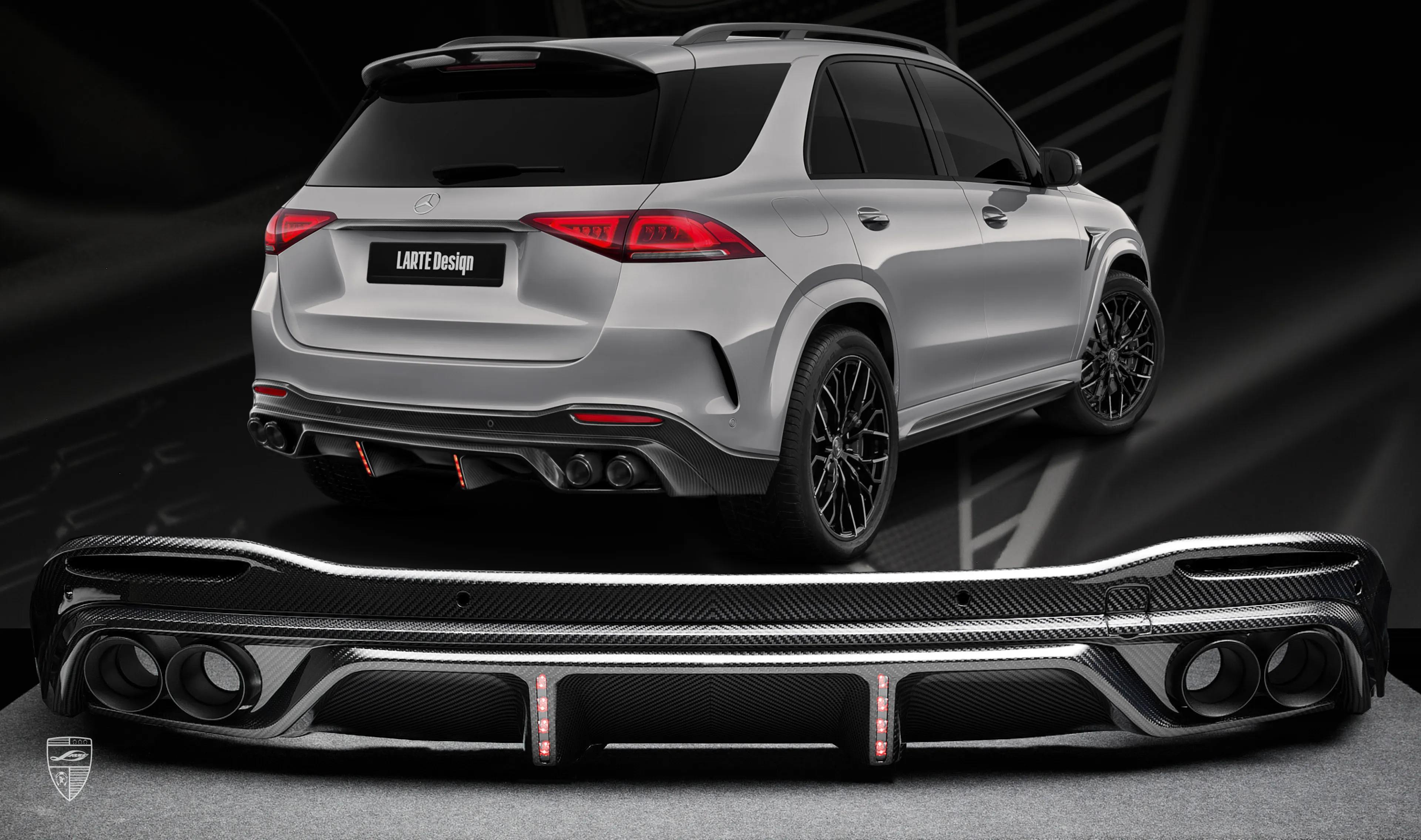
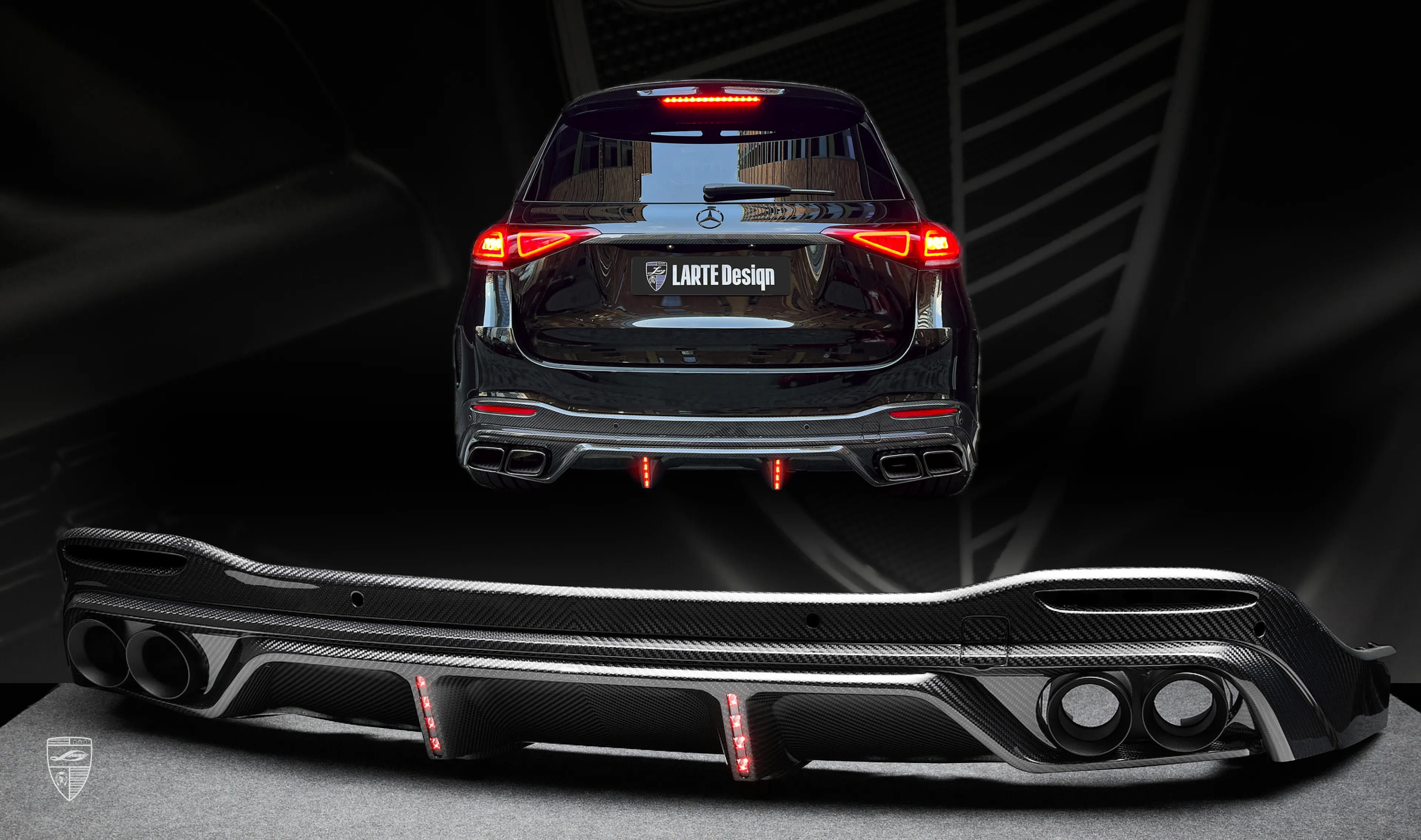
2. Rear Diffusers
Rear diffusers are another popular modification because they can transform the rear appearance without changing the entire bumper.
Carbon diffusers are particularly common on AMG models equipped with large exhaust outlets. Buyers must check the exhaust configuration carefully because diffuser designs may differ between vehicles with round, rectangular or trapezoidal exhaust finishers.
Some aftermarket diffusers are purely cosmetic. Others incorporate deeper fins and more aggressive aerodynamic styling. Unless the product has been properly tested, it is safer to treat dramatic aerodynamic claims cautiously.
3. Carbon Fiber Spoilers
A rear spoiler is often one of the easiest carbon upgrades to install. Depending on the design, it may use automotive adhesive, factory mounting points or mechanical fasteners.
Common styles include:
- Low-profile lip spoilers.
- High-kick spoilers.
- Ducktail-style spoilers.
- AMG-inspired spoilers.
- Large fixed rear wings.
The correct style depends heavily on the body shape. A subtle carbon lip can suit an executive E-Class sedan, while an aggressive high-kick spoiler may look more natural on a C63 Coupe or AMG GT.
4. Carbon Fiber Mirror Covers
Mirror covers are among the most affordable ways to introduce real carbon fiber into the exterior design.
There are two main types:
- Replacement mirror housings.
- Overlay covers fitted over the original housing.
Replacement housings usually provide the cleanest appearance because they retain factory-like panel dimensions. Overlay designs are easier to install but add thickness around the edges.
When buying mirror covers, check whether the vehicle has integrated turn signals, cameras or different mirror shapes associated with a particular model year.
5. Carbon Fiber Hoods
A carbon hood is a much more substantial modification. Unlike a decorative trim piece, a hood is a large exterior panel exposed to aerodynamic forces, engine heat, vibration and repeated opening and closing.
Quality matters considerably.
A hood should have:
- Strong mounting points.
- Correct latch alignment.
- Consistent panel gaps.
- Adequate reinforcement around hinges.
- Heat-resistant construction.
- A stable clear coat.
Some lightweight racing-style hoods may also require hood pins or additional securing systems. Never assume a universal installation procedure.
6. Side Skirts and Side Extensions
Carbon side extensions visually connect the front splitter with the rear diffuser. They can make a Mercedes appear lower without changing suspension height.
These parts are particularly exposed to road debris, curbs and lifting equipment, so construction quality and mounting strength are important.
7. Fender Trim and Air Vent Components
AMG models often feature vents or styling elements around the front fenders. Carbon replacements can create a subtle OEM-plus appearance.
Because these components are relatively small, accurate moulding and weave alignment often matter more visually than weight reduction.
8. Interior Carbon Fiber Trim
Carbon fiber can also be used inside the vehicle for:
- Center console panels.
- Dashboard trim.
- Door trim.
- Steering wheel components.
- Seat trim.
- Gear selector surrounds.
Interior parts require particularly clean finishing because they are viewed from close range. Uneven clear coat, distorted weave or poor edge finishing is much more noticeable inside the cabin than underneath a bumper.
Mercedes-Benz, AMG Line and Mercedes-AMG Are Not the Same for Fitment
This is one of the most important points when purchasing exterior parts.
A Mercedes-Benz model equipped with an AMG Line styling package is not necessarily fitted with the same bumper or body components as the corresponding Mercedes-AMG performance model.
For example, several visually similar versions of the same Mercedes platform may exist:
- Standard exterior package.
- AMG Line exterior package.
- Mercedes-AMG performance model.
- Facelift version.
- Pre-facelift version.
- Regional bumper configuration.
A seller may describe a product simply as “Mercedes C-Class carbon splitter,” but that description is often not detailed enough to guarantee fitment.
Always identify the exact vehicle before ordering.
Information You Should Confirm Before Buying
| Vehicle detail | Why it matters |
|---|---|
| Model | Different Mercedes models use different body dimensions and mounting points. |
| Chassis code | Codes such as W205, W206, W213 or X253 help distinguish generations accurately. |
| Model year | Facelift changes can alter bumpers, lights and trim. |
| Body style | Sedan, coupe, wagon and cabriolet components are often different. |
| Trim level | AMG Line and Mercedes-AMG bodywork can differ significantly. |
| Existing bumper | Many splitters and diffusers attach directly to a specific bumper design. |
Understanding Mercedes Chassis Codes
Mercedes-Benz chassis codes are extremely useful when searching for aftermarket components because they identify the vehicle generation more precisely than the marketing name alone.
Examples include:
- W205 C-Class sedan.
- C205 C-Class Coupe.
- W206 C-Class sedan.
- W213 E-Class.
- W223 S-Class.
- C257 CLS.
- X253 GLC.
- X167 GLS.
- W463 G-Class.
A product title containing the correct chassis code is usually much more useful than one simply labelled “fits Mercedes 2015–2021.”
Even then, the exact bumper and model year should still be checked because mid-cycle facelifts can introduce major styling changes without replacing the entire chassis designation.
Choosing Carbon Parts for Popular Mercedes Models
Mercedes-AMG C63
The C63 is one of the most frequently modified AMG models. Popular upgrades include front splitters, rear diffusers, trunk spoilers, mirror covers, side skirts and hood components.
Because several C-Class body styles and generations exist, confirming the exact chassis is essential. W205, C205 and newer W206-based vehicles do not share the same exterior carbon components.
Mercedes-AMG E63
The E63 combines executive styling with very high performance, so many owners prefer carbon parts that enhance rather than overwhelm the original design.
Subtle splitters, diffuser extensions, mirror covers and trunk spoilers tend to work particularly well.
Mercedes-AMG GT
The AMG GT already has a highly sculpted body, making carbon fiber a natural visual match. Front aerodynamic components, rear spoilers, diffusers, side extensions and replacement exterior panels are commonly offered.
However, the AMG GT family includes multiple variants and generations, so a component advertised for one GT derivative should not automatically be assumed to fit another.
Mercedes G-Class and AMG G63
Carbon fiber on the G-Class is often used differently. Rather than emphasizing traditional low-slung aerodynamics, carbon components can highlight the vehicle's boxy architecture.
Common upgrades include:
- Mirror housings.
- Hood components.
- Spare wheel covers.
- Front bumper trim.
- Rear bumper trim.
- Fender components.
- Interior trim.
Because the G-Class has undergone significant generational changes, fitment must be checked particularly carefully.
Mercedes GLC and GLE
Performance SUVs such as the GLC 43, GLC 63, GLE 53 and GLE 63 can also benefit visually from carbon accents.
Side skirts, mirror caps, rear diffusers and front splitter extensions can provide a sportier appearance without changing the practicality of the vehicle.
How to Evaluate Carbon Fiber Quality Before Ordering
Product photographs reveal more information than many buyers realize. Zoom in on the images and inspect the weave, edges and reflections across the clear coat.
Check the Carbon Weave
A high-quality visible carbon surface should normally have a consistent pattern. Significant distortion around simple flat sections can indicate poor layup quality.
Some distortion is unavoidable around complex curves because the fabric must conform to the mould, so perfectly straight weave everywhere is not always realistic.
Look at the Clear Coat
The clear coat protects the carbon and resin from environmental exposure while creating the familiar glossy appearance.
Look for:
- Uniform gloss.
- No visible pinholes.
- No cloudy areas.
- No obvious resin pools.
- Clean edges.
- No large bubbles.
UV resistance is especially important for exterior components that spend years in direct sunlight.
Examine Mounting Points
The back of a carbon component can be more important than the front.
Ask whether the product uses:
- Factory mounting holes.
- Separate brackets.
- Screws.
- Bolts.
- Clips.
- Automotive adhesive.
A beautiful surface is not useful if the mounting structure is inaccurate.
Does Carbon Fiber Actually Reduce Weight?
Sometimes, but not always.
A full dry-carbon replacement panel can be significantly lighter than a steel, aluminium or reinforced factory component. However, many aftermarket cosmetic pieces are additions rather than replacements.
If you install a carbon spoiler over the existing trunk or attach carbon extensions below the factory bumper, the modification adds weight rather than reducing it.
For most road-going Mercedes projects, buyers choose carbon primarily for appearance rather than measurable performance.
If weight reduction is the goal, ask for the actual component weight and compare it with the OEM part being replaced.
Can Carbon Fiber Parts Improve Aerodynamics?
Potentially, but the answer depends entirely on design and testing.
A properly engineered splitter, diffuser or wing can influence airflow and aerodynamic balance. A styling component that resembles a racing part does not automatically create meaningful downforce.
Road-car buyers should therefore distinguish between:
- Aesthetic aerodynamic styling.
- Functional motorsport aerodynamics.
Both can be legitimate reasons to purchase a component, but they are not the same thing.
Professional Installation vs DIY Installation
Small carbon components may be suitable for experienced DIY installation. Mirror covers and simple trunk spoilers, for example, often require relatively little disassembly.
Large components should usually be installed professionally.
Parts That Often Benefit From Professional Installation
- Front splitters.
- Rear diffusers.
- Full side skirts.
- Hoods.
- Fenders.
- Large rear wings.
- Complete body kits.
Professional installation is particularly valuable when drilling, bumper removal or alignment is required.
Always Test-Fit Before Permanent Installation
One of the best installation practices is also one of the simplest: test-fit the component before drilling holes or applying permanent adhesive.
Place the part in position and check:
- Panel gaps.
- Edge alignment.
- Clearance around sensors.
- Clearance around exhaust outlets.
- Wheel and tire clearance.
- Door or trunk operation.
- Mounting hole positions.
If something does not align correctly, stop before making irreversible changes.
Parking Sensors, Radar and Driver Assistance Systems
Modern Mercedes-Benz vehicles may have parking sensors, radar units, cameras and other driver-assistance hardware positioned around bumpers and grilles.
Carbon fiber and mounting hardware should never obstruct sensors that the vehicle relies on for safety systems.
Depending on the vehicle, modifications near these systems may also require calibration after installation.
This is one reason why extremely cheap universal body components can be problematic on newer Mercedes models.
How to Protect Carbon Fiber Exterior Parts
Once installed, carbon components require relatively simple maintenance.
Wash them using the same careful techniques you would use for painted body panels.
- Avoid highly abrasive cleaners.
- Do not aggressively polish thin clear coat.
- Remove bird droppings and contamination promptly.
- Inspect low-mounted splitters periodically for damage.
- Consider paint protection film for expensive components.
PPF can be particularly useful on front splitters and side skirts because these areas receive frequent impacts from road debris.
Can Carbon Fiber Be Repaired?
Minor clear-coat damage can sometimes be refinished. Structural cracks are more complicated.
A carbon component may still look acceptable while having hidden damage beneath the surface. Large structural components should therefore be inspected carefully following an impact.
For cosmetic accessories, replacement may occasionally be more economical than professional composite repair.
Gloss Carbon vs Matte Carbon
Gloss carbon is the most common choice because the clear coat creates strong visual depth and makes the weave highly visible.
Matte or satin carbon provides a more understated appearance and can suit cars with matte paint, satin trim or motorsport-inspired styling.
Neither finish is inherently superior. The decision is primarily aesthetic.
Matching Multiple Carbon Fiber Parts
If you plan to install several carbon components on the same vehicle, matching the weave and finish becomes important.
Possible differences include:
- 2x2 twill versus plain weave.
- Gloss versus matte finish.
- Different weave direction.
- Different carbon tint.
- Forged carbon versus woven carbon.
Buying related parts from the same product range can make it easier to achieve a consistent appearance.
Forged Carbon Fiber
Forged carbon has become increasingly popular on modern performance vehicles. Instead of the regular woven pattern associated with traditional carbon cloth, forged carbon uses chopped carbon fibers that create an irregular marbled appearance.
It can produce a very distinctive visual effect, but mixing forged carbon with traditional twill carbon requires careful planning. Some owners intentionally combine them, while others prefer a single carbon style throughout the vehicle.
How Much Should Mercedes Carbon Fiber Parts Cost?
There is no meaningful universal price because the cost depends heavily on size, construction method, manufacturing volume and complexity.
A pair of mirror covers and a complete carbon hood obviously cannot be evaluated using the same price expectations.
When comparing prices, consider:
| Factor | Impact on price |
|---|---|
| Manufacturing method | Prepreg and autoclave production usually costs more. |
| Part size | Large panels require more material and larger moulds. |
| Complexity | Complex shapes require more difficult tooling and finishing. |
| Mounting hardware | Brackets and integrated mounting points add manufacturing complexity. |
| Surface finish | High-quality clear coating and polishing increase production cost. |
| Production volume | Rare AMG models may have higher unit costs. |
Where to Look for Mercedes-Benz Carbon Fiber Parts
When comparing carbon upgrades, the useful starting point is a catalogue that allows you to browse by vehicle brand, body component and seller rather than searching through unrelated universal accessories.
For readers looking specifically for Mercedes exterior and styling upgrades, carbon fiber parts for Mercedes-Benz can also be compared through Lux Carbon, where carbon body components and accessories from independent sellers are grouped around performance and luxury vehicles.
Regardless of where the component is purchased, fitment should always be confirmed against the exact vehicle before installation.
What to Ask a Seller Before Ordering
A few questions can prevent most expensive fitment mistakes.
- Does the part fit my exact chassis code?
- Does it fit the standard bumper, AMG Line bumper or Mercedes-AMG bumper?
- Is it compatible with my model year?
- Is the component real carbon fiber or carbon-look plastic?
- Is it a replacement part or an overlay?
- Does it use OEM mounting points?
- Is drilling required?
- Is mounting hardware included?
- Does it interfere with parking sensors or radar?
- Is professional installation recommended?
- What clear coat or UV protection is used?
- Can the seller provide photographs of the actual component?
Common Mistakes When Buying Mercedes Carbon Parts
Buying by Model Name Alone
“Mercedes C-Class” is usually not precise enough. Generation, body style and bumper configuration must also be identified.
Assuming AMG Line Means Mercedes-AMG
This is a frequent source of incorrect orders. AMG Line is a styling package, while Mercedes-AMG vehicles may use substantially different exterior components.
Choosing the Cheapest Option Without Checking Construction
A low price is not automatically bad, but buyers should understand exactly what they are purchasing.
A carbon-look ABS component and a full prepreg carbon component should not be evaluated as equivalent products.
Installing Without a Test Fit
Never permanently bond or drill a component before checking its alignment.
Ignoring Ground Clearance
A front splitter can substantially reduce effective bumper clearance. Cars that already have lowered suspension require extra attention.
Ignoring Shipping Requirements
Large carbon components such as hoods, wings and complete diffusers may require oversized or pallet shipping. Packaging quality is particularly important because thin edges can be damaged during transport.
Frequently Asked Questions About Mercedes Carbon Fiber Parts
Are Carbon Fiber Parts Worth Buying for a Mercedes-Benz?
They can be, particularly when appearance and personalization are the main goals. High-quality carbon components can complement AMG styling extremely well. The value depends on manufacturing quality, fitment and the type of component being purchased.
Will Carbon Fiber Make My Mercedes Faster?
Small cosmetic carbon parts will not create a noticeable performance improvement. Significant weight reduction requires replacing relatively heavy factory components with genuinely lightweight carbon alternatives.
Do I Need an AMG Model to Install Carbon Parts?
No. Many carbon accessories are available for standard Mercedes-Benz models and vehicles equipped with AMG Line packages. The critical requirement is selecting components designed specifically for the bumper and body configuration of your car.
Is Dry Carbon Better Than Wet Carbon?
Dry/prepreg carbon generally provides better weight control and structural efficiency, but a well-made wet-carbon cosmetic part can still be an excellent choice for a road car. Manufacturing quality and intended use should guide the decision.
Can I Install a Carbon Splitter Myself?
Some owners can, but large splitters often require accurate alignment, drilling or bumper removal. Professional installation reduces the risk of poor alignment or insecure mounting.
Can Carbon Fiber Crack?
Yes. Carbon composites are strong and rigid but can crack under severe impact. Low-mounted splitters are particularly vulnerable to curbs, steep ramps and road debris.
Does Carbon Fiber Fade in the Sun?
The carbon fibers themselves are not normally the visual problem. Resin and surface coating can degrade or yellow when poorly protected from ultraviolet exposure. A quality UV-resistant automotive clear coat helps protect the finish.
Can Carbon Fiber Parts Be Wrapped or Painted?
Yes, although covering real visible carbon defeats the visual purpose for many owners. Some builds intentionally paint part of a carbon component while leaving selected areas exposed.
What Is the Best First Carbon Upgrade?
For many owners, mirror covers or a trunk spoiler are sensible starting points because they provide a noticeable visual change without requiring major body disassembly.
Owners looking for a stronger transformation often choose a coordinated combination of front splitter, side extensions and rear diffuser.
Should All Carbon Parts Have the Same Weave?
They do not have to, but matching weave type and direction usually creates a more cohesive appearance. This becomes increasingly important when several carbon parts are positioned close to one another.
Will Aftermarket Carbon Parts Affect Mercedes Sensors?
They can if a component obstructs radar, ultrasonic sensors or cameras. Any carbon part installed around driver-assistance equipment should be checked carefully for compatibility.
Is a Carbon Hood Safe for Daily Driving?
A properly manufactured and correctly installed hood can be suitable for road use, but mounting construction matters. Follow the manufacturer's installation requirements and determine whether additional hood pins or locking hardware are required.
How Do I Know Whether a Carbon Part Will Fit?
The safest approach is to compare the exact chassis code, model year, body style and bumper version. Photographs of the existing car can also help a knowledgeable seller verify fitment.
A Practical Buying Checklist
Before placing an order, run through this checklist:
- Confirm exact Mercedes model.
- Confirm chassis code.
- Confirm production year.
- Confirm facelift or pre-facelift.
- Confirm sedan, coupe, wagon, SUV or cabriolet body style.
- Confirm standard, AMG Line or Mercedes-AMG bumper.
- Confirm whether the product is genuine carbon.
- Confirm dry carbon, wet carbon or overlay construction.
- Check weave and surface finish.
- Check mounting method.
- Check whether drilling is required.
- Check sensor and radar clearance.
- Check whether mounting hardware is included.
- Check shipping method for large components.
- Test-fit before permanent installation.
Final Thoughts
Carbon fiber can suit Mercedes-Benz vehicles exceptionally well because it complements both the technical character of AMG models and the clean styling of standard Mercedes cars. The key is selecting components based on exact fitment rather than appearance alone.
A high-quality splitter, diffuser, spoiler or mirror cover should look like an intentional extension of the vehicle rather than an accessory added afterward. Achieving that result requires attention to chassis codes, bumper variants, material construction, mounting points and installation quality.
For subtle builds, a few carefully selected components are often enough. Mirror covers, a low-profile spoiler and a modest splitter can create a cohesive OEM-plus appearance. More aggressive projects may combine a front splitter, side extensions, diffuser, hood and rear wing, but the parts should still share a consistent design language.
The most important rule is simple: verify the vehicle first and buy the component second. Mercedes-Benz frequently offers multiple body styles, trim packages, facelift versions and AMG variants within the same model family. A few minutes spent confirming these details can prevent expensive shipping, installation and fitment problems later.
Carbon fiber should improve the overall presentation of the vehicle, not create new problems. Choose parts with realistic specifications, inspect construction quality carefully, use professional installation when appropriate and prioritize precise fitment over exaggerated marketing claims.
When those principles are followed, carbon fiber upgrades can provide one of the most effective ways to personalize a Mercedes-Benz while preserving the premium character that attracted many owners to the brand in the first place.


