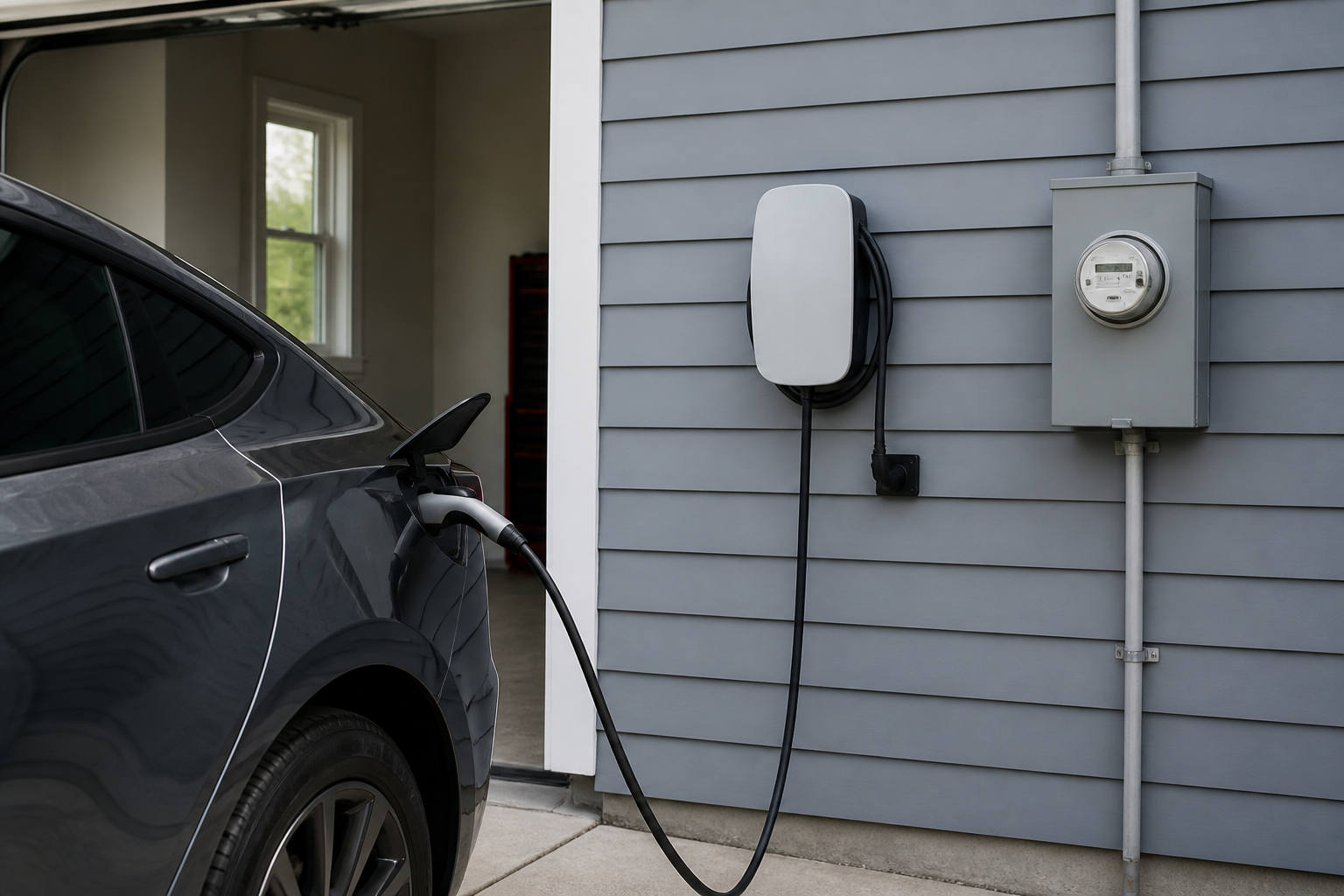
A practical home charging setup for Mercedes-Benz BEVs starts with a 7.4 kW wall box with smart features and OCPP compatibility. Confirm your electrical panel capacity and distance to the parking spot, then select a charging network that offers predictable pricing and MB.OS-friendly automation. Consider solar or storage integration if you have it. For higher daily use or future flexibility, plan for an upgrade to 11 kW or 22 kW and ensure the installer follows local codes to keep costs and downtime reasonable.
Key takeaways
- Start with a 7.4 kW wall box for most Mercedes BEV owners; upgrade only if you regularly recharge quickly or park where solar/storage integration is feasible.
- Ensure hardware is OCPP-compatible and can integrate with MB.OS routines for smarter charging and energy management.
- Assess your electrical panel capacity and wiring; upgrading may be necessary but prevents nuisance trips and future failures.
- Factor in network costs, incentives, and potential solar/storage scenarios to minimize long-term charging expenses.
- Plan for outdoor installation considerations (weatherproofing, cable management) and safe, code-compliant grounding.
Charging at home is often the most convenient and cost-efficient way to keep a Mercedes-Benz BEV fully prepared for daily use. This guide walks through choosing a home charging setup that fits your Mercedes-Benz BEV, your energy plan, and your budget, with practical steps for planning, installation, and ongoing operation. We cover hardware choices from wall boxes to in-wall charging solutions, how to pair them with charging networks, and what to expect in terms of speed, cost, and reliability. While MB.OS delivers a broad suite of in-car functions and a growing array of digital services, the home charging ecosystem is where you realize the day-to-day efficiency gains that make Mercedes BEVs compelling over time.
Key questions to answer before buying a home charger
- What is the required charging power for your Mercedes-Benz BEV model and battery size?
- Is your electrical panel and wiring capable of the charger’s amperage without costly upgrades?
- What type of plug and connector does your Mercedes BEV use (Type 2, CCS, or specific OEM adapters) and is the charger compatible?
- Do you want smart features (schedule charging, grid demand response, app control) and how will it integrate with MB.OS and your home network?
- Are there local incentives, rebates, or utility programs that reduce installation costs or operating expenses?
Understanding MB.OS integration and vehicle-side considerations
Mercedes-Benz BEVs rely on a robust software stack that coordinates charging behavior, trip planning, and energy management. MB.OS can optimize charging schedules based on predicted driving needs, energy prices, and vehicle state of charge. While most charging decisions occur at the charger, MB.OS can influence when the vehicle requests energy, particularly if you enable home charging routines that align with typical daily patterns. In practice, you’ll want to ensure your charger supports advanced control via standard interfaces (Open Charge Point Protocol, or OCPP) and that any in-car charging planning features are compatible with your home setup. If you use solar or time-of-use pricing, look for chargers or networks that expose clear energy cost data and allow simple scripting or app-based automation compatible with MB.OS routines.
Home wall boxes vs. integrated in-wall options
Wall boxes offer modularity, easy upgrades, and wide compatibility. They typically provide 7.4 kW to 22 kW AC charging, with multiple connectors or single type 2 sockets. For most Mercedes BEVs, 7.4 kW (32 A) is sufficient for overnight charging, while 11 kW (16 A per leg) or 22 kW (three-phase in some regions) suits households with higher daily driving or shorter reload times. When selecting a wall box, prioritize:
- Ingress protection (IP rating) for outdoor installation
- Cable length and management to reach your parking space
- Smart features: app control, remote start/stop, energy monitoring, and integration with your home energy management system
- Support for OCPP 1.6 or 2.0 and manufacturer updates
In-wall charging options keep the charger concealed within the wall, which can improve aesthetics and reduce physical footprint. In-wall solutions are sometimes more complex to install because of electrical code requirements, pull boxes, and potential drywall work. If you choose in-wall, verify:
- Heat dissipation and access for maintenance
- Manufacturer support for updates and warranty coverage
- Proper cable routing to avoid heat buildup and ensure safe termination
Charging networks and connectivity options
Choosing a charging network is more than price per kWh. It includes reliability, network size, app usability, and how well the network supports smart charging features you want to use alongside MB.OS. Consider these aspects:
- Public network access: If you frequently travel or park in multi-unit dwellings, a network with broad coverage helps maintain consistent home-style charging experiences on the road.
- Smart charging capabilities: Look for real-time price data, load balancing, and the ability to schedule charging within MB.OS-friendly windows.
- Transaction costs and subscription models: Some networks charge a monthly fee or require a card, while others are pay-per-use. Calculate the long-term cost based on your driving and charging habits.
- Integration with solar or home energy storage: If you have solar panels or a home battery, choose a network that supports solar pairing, bidirectional charging in the future, or energy forecasting.
Estimating installation costs and practical budgeting
Installation cost hinges on electrical panel capacity, distance from the panel to the parking location, and whether upgrades are necessary. A practical budgeting approach is to consider three components: hardware, labor, and potential electrical upgrades. Use illustrative assumptions for planning (these are not real prices):
- Wall box hardware: 7.4 kW unit with smart features
- Installation labor: typical single-site electrical work, conduit routing, and wall mounting
- Electrical upgrades: panel expansion, dedicated circuit breaker, and wiring upgrades if needed
By breaking out these factors, you can compare total costs across options—an essential step when evaluating delayed upgrades versus a more capacious but upfront investment. If incentives exist, factor them into the final cash outlay and estimated payback period using your local utility rates and driving profile. For households with solar, pairing a charger with solar production during peak sunlight can reduce net energy costs and shorten charging times during the day.
Practical scenarios: matching setups to ownership patterns
Home charging options: wall boxes, networks, and costs
Option Typical Power Pros/Cons Wall Box 7.4 kW 7.4 kW (32 A) Flexible placement; good for most homes; moderate cost Wall Box 11 kW 11 kW (16 A/leg) Faster charging; higher install/upgrade needs Wall Box 22 kW 22 kW (three-phase) Very fast; requires three-phase supply; higher cost In-wall charger Up to 11–22 kW Aesthetics; complex install; maintenance reliance on OEM support Network provider A Base rates + app control Broad coverage; potential subscription fees Network provider B Pay-per-use No commitment; variable pricing; fewer features Frequently asked questions
What charger do I need at home?
Most Mercedes BEV owners start with a 7.4 kW wall box with smart features; upgrade only if your daily driving pattern requires faster replenishment or if your home can support higher power without overloading the electrical panel.
How to estimate installation cost?
Estimate hardware price, then add labor for mounting and wiring, plus any panel upgrades. Include potential permitting and inspection costs. Use a conservative range and adjust for local labor rates.
Are there rebates or incentives?
Incentives vary by region. Check local utility programs and government rebates. Some programs offer installation credits or time-of-use credits for smart charging.
Should I pair with solar?
If you have solar generation, choose a charger and network that supports solar pairing or time-based control to maximize self-consumption and minimize grid energy costs.
Is three-phase power worth it?
Three-phase enables 22 kW charging; weigh the incremental cost against your typical daily driving needs and proximity to a three-phase supply.
Related Mercedes-Benz guides