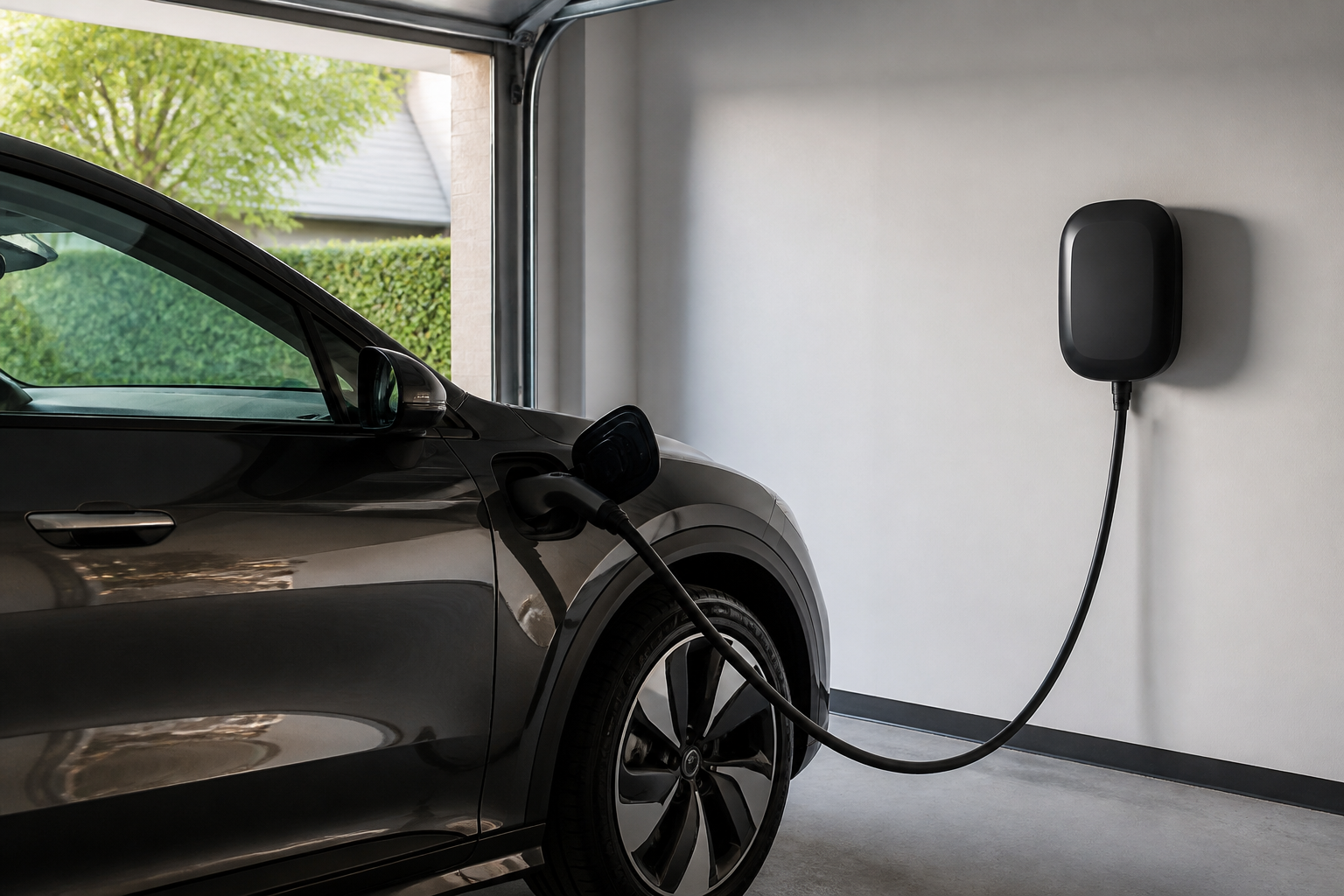
For Mercedes-Benz owners, the most practical approach is to install a 7 kW or higher home wallbox with a Type 2 connector for daily use, while keeping public charging as a supplementary option for longer trips. Optimize costs by charging during off-peak hours at home, plan routes to include efficient charging stops, and leverage MB charging features where available. Public networks are useful for longer trips or when home charging isn’t convenient, but costs vary by region and network. This guide provides a framework to choose hardware, plan installation, and integrate public-network use with MB vehicles.
Top takeaways for Mercedes owners
- A dedicated home wallbox (7–11 kW) balances installation cost, daily use, and future flexibility for most Mercedes-Benz EVs.
- Assess your electrical service and panel capacity before selecting a charger to avoid costly upgrades.
- Public charging should supplement, not replace, home charging for cost efficiency and planning reliability.
- Leverage in-vehicle charging planning and preconditioning to maximize efficiency on mixed driving days.
- Verify MB OS or partner network features in your region to simplify charging management and pricing.
Charging an electric Mercedes-Benz isn’t just about plugging in. It’s about choosing the right home setup, understanding how public networks work with your MB vehicle, and making cost-conscious decisions that fit your driving pattern. This guide walks through hardware choices, installation steps, and practical tips to optimize charging across home and public networks for Mercedes-Benz EQ models and plug-in hybrids.
Deciding between home wallbox options for Mercedes-Benz EVs
Most Mercedes-Benz EVs and PHEVs benefit from a dedicated home charging solution that can deliver more power than a standard household outlet. When evaluating wallboxes, consider: charging rate (kW), cable length, enclosure quality, and future-proofing for higher-RO charging or second vehicle use. Common configurations include 7 kW units suitable for many homes and 11–22 kW units for planning faster charging in garages with higher electrical capacity. If your home circuit is 40–60 A, a 7–11 kW wallbox with Type 2 connector is typically sufficient for daily use; cases with larger electrical service can leverage 22 kW units, often requiring a dedicated installer and potential electrical panel upgrades.
Key installation considerations
- Electrical capacity: Ensure your main breaker and feeder wires support the chosen charger’s amperage.
- Location: Garages or carports with weather protection and a mounted wallbox near the parking spot reduce cord wear and maximize convenience.
- Future-proofing: If you’re planning a second Mercedes-Benz EV, a higher-capacity unit or multi-port charger may be worth it.
- Software and monitoring: Many MB wallboxes include app access, energy usage tracking, and tariff-aware charging features through the charger or MB OS integration.
Using Mercedes charging networks with your vehicle
Mercedes-Benz electric vehicles can leverage networks and apps to locate chargers, monitor sessions, and manage charging cost. The MB charging ecosystem often includes navigation-assisted charger discovery, in-vehicle charging status, and sometimes bundled credits or partnerships depending on region. When using public networks, it helps to understand membership models, roaming agreements, and pay-at-pump options. Always verify compatibility: Type 2 connectors are standard in Europe and many other regions, while CCS combos are common for fast charging in many markets.
Practical tips for public charging efficiency
- Plan routes with charging stops: Use in-vehicle trip planning to minimize detours and maximize battery health.
- Charge window strategy: If off-peak rates are offered, align charging sessions to start when rates drop, and avoid charging to 100% unless needed for longer trips.
- Roaming and memberships: Consider networks that support universal access or MB-partnered plans to reduce card management clutter.
- Vehicle-preconditioning: Precondition the cabin and battery while plugged in to improve efficiency and reduce on-road energy use.
Cost optimization: calculating charging at home versus public networks
Understanding relative costs helps you decide when to rely on home charging versus public networks. For illustrative purposes, consider a typical scenario: a Mercedes-Benz EQE 350 with a 90 kWh usable battery, driven 15,000 miles per year with an average efficiency of 3.0 mi/kWh. This yields approximately 5,000 kWh/year of energy use.
Sample home charging scenario: a 7 kW wallbox during off-peak hours with an electricity rate of 15 cents per kWh results in about $750/year for charging. If you occasionally rely on public networks with an average charge of 40 kWh per stop and pay $0.35/kWh for fast charging, adding 2000 kWh/year could cost around $700. In this simplified model, home charging dominates cost savings, but real-world prices vary by region and tariff. Always verify your local rates and MB charging offers in your area.
Operational checklists for Mercedes owners
Home wallbox vs. public network charging for Mercedes-Benz EVs
Scenario Typical charge rate (kW) Installation considerations Annual energy use (kWh/year) Estimated annual cost (illustrative, off-peak home rate) Public network notes Home wallbox (7 kW) daily use 7 Needs dedicated circuit, weatherproof unit 5,000 750 Convenient; best rate stability; off-peak benefits if available Home wallbox (11 kW) daily use 11 Higher amperage circuit; possible panel upgrade 5,000 750 Faster charging; more cost-effective with high utilization Public network heavy-driver (occasional long trips) N/A No home installation; relies on roaming networks 2,000 700 Higher per-kWh costs; roaming fees may apply; plan ahead Mixed usage (home + public for a long-range trip) Home 7–11 kW + public fast charging as needed Combination of installation and roaming access 7,000 1,400 Balanced approach; optimize with preconditioning and route planning Frequently asked questions about Mercedes charging
What charger do I need at home for my Mercedes-Benz EV?
For most daily drivers, a 7 kW wallbox with a Type 2 connector provides practical charging speed; higher-rate 11–22 kW units are worth considering if your home electrical system supports them and you frequently need faster top-ups.
How do I map charging costs for Mercedes-Benz vehicles?
Estimate annual energy use from mileage and efficiency, then multiply by your local electricity rate. Compare home off-peak pricing with typical public network rates and roaming fees. Use MB OS charging features where available to monitor sessions and tariffs.
Are Mercedes charging networks worth using regularly?
Network value depends on regional access, pricing, and incentives. They can simplify payment and locate nearby chargers, but always compare per-kWh costs with home charging and factor any roaming fees or idle-time charges.
Should I precondition the battery before charging?
Yes. Preconditioning while plugged in reduces the energy required to reach the desired state of charge and improves overall efficiency, especially in cold weather.
Is it better to charge to 80% or 100% regularly?
For daily use, charging to around 80% preserves battery health and minimizes degradation; charge to 100% only when you need the full range for a long trip.
Do I need to upgrade my electrical panel to install a wallbox?
Not always. A 40–60 A service can typically support a 7 kW charger, but higher-rate chargers (11–22 kW) may require panel upgrades. A licensed electrician can assess load calculations and compliance requirements.
Can I install a wallbox outdoors in winter climates?
Choose an IP-rated, weatherproof unit designed for outdoor use and ensure proper mounting and drainage. Outdoor installations are common, but confirm local electrical codes and warranty terms with the installer.
Explore interconnected Mercedes tech guides: from charging and MB.OS to maintenance, warranties, and app ecosystem
Related Mercedes-Benz guides
- Charging ecosystems and home installation for Mercedes BEVs
- Cost implications of Mercedes maintenance and parts
- Five-year ownership cost Mercedes GLC depreciation analysis
- 2026 Mercedes-Benz GLC EQ Review: 713 km Range, 330 kW Charging and Towing
- 2026 Mercedes-AMG GT 4-Door Coupé First Look: 1,169 hp and 600 kW Charging