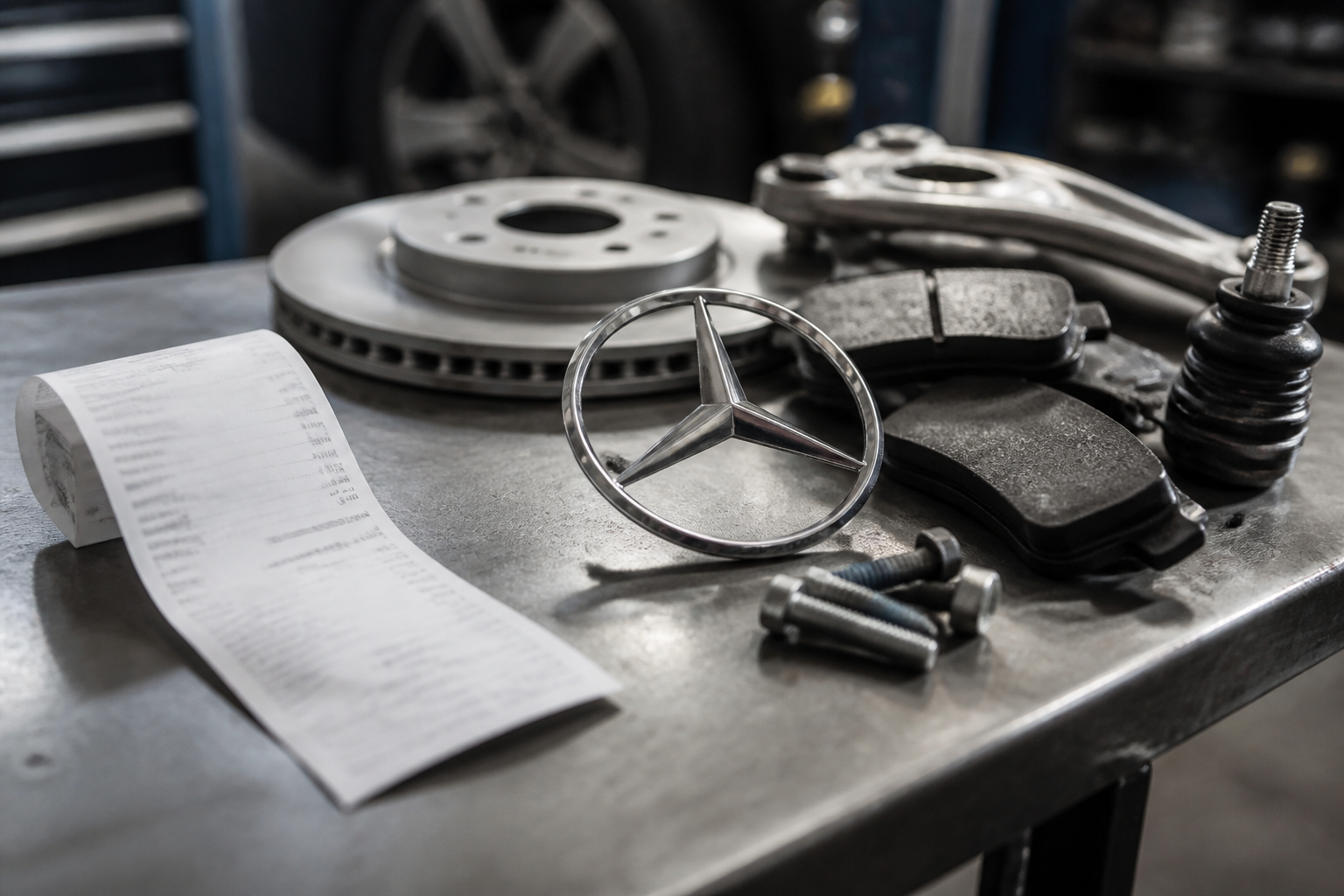
A practical, evergreen budgeting guide: expect routine services (oil/filters/fluids) roughly 300–700 USD annually, tires and brakes add 400–1,200 USD depending on tires and driving style, and major services every 30–60 months can range 1,000–3,500 USD. MB.OS and telematics can influence annual costs via software updates and sensor recalibrations. Use model-specific schedules, consider maintenance plans to smooth costs, and compare with MB.SPOR variants for cost of ownership differences.
Key takeaways
- Maintenance costs vary by model, region, and driving style; plan for routine items and periodic major services.
- OEM parts and dealer-labor rates drive the premium versus mainstream brands; TBOS and telematics add predictable software-related costs.
- Maintenance plans can mitigate volatility in yearly costs and simplify budgeting.
- MB.SPOR variants may shift wear-item expenses due to sport tires and brakes; assess usage to decide on a plan.
- Use model-specific schedules and official MBOS guidance to avoid misestimating intervals or parts needed.
Maintaining a Mercedes-Benz isn't just about keeping wheels turning; it's about preserving resale value, reliability, and the refined driving experience the brand promises. This guide expands on typical maintenance costs, plausible part-replacement intervals, and how these figures influence total ownership costs across mainstream MB models and the MB.OS ecosystem. Where prices vary by region and model, the text uses clearly labeled assumptions and reproducible calculations to help owners budget accurately without guesswork.
Direct-answer summary: what owners should expect for annual maintenance costs
For most mid-range Mercedes models in regular use, a practical annual maintenance budget falls into the ranges below before major part replacements or unexpected repairs: routine service visits (oil, filters, fluids, inspections) typically 300–700 USD per year; tires, brakes, wiper blades, and small wear items can add 400–1,200 USD depending on driving style, tire choices, and local labor rates; major service milestones (every 30–60 months or 20,000–40,000 miles, depending on model) can add 1,000–3,500 USD. Parts pricing varies by model family; MB.OS and telematics-related services can influence annual maintenance costs through software updates, sensor recalibrations, and occasional module replacements. Always consult the official maintenance schedule for your exact model and region to align expectations with factory-recommended intervals and caps on wear items.
What drives maintenance cost for Mercedes-Benz
Mercedes-Benz maintenance costs hinge on five core areas:
- Service intervals and labor costs: The frequency of oil changes, inspections, and ancillary maintenance in combination with local labor rates shapes year-to-year spend. Some markets offer extended service intervals with synthetic oils, while others emphasize more frequent service for turbocharged engines or high-output variants.
- Parts pricing and availability: Genuine MB parts generally carry a premium versus aftermarket parts. Pricing is influenced by model complexity, the need for specific sensors, control modules, or MB.OS-specific hardware, and whether parts are sourced through authorized networks or independent repair shops.
- Tire and brake wear: Performance tires, adaptive suspension systems, and high-performance brake components common on sport trims or AMG variants can be a larger share of annual costs due to higher replacement frequencies and premium parts.
- Software updates and calibrations: MB.OS, telematics, and sensor ecosystems require periodic firmware and calibration updates. Some dealer service plans include these updates, while others bill them as discrete items or bundle them with major maintenance.
- Warranty structure and maintenance plans: Bundled or prepaid plans can materially alter long-run costs by spreading major service events and sometimes providing fixed-price parts and labor for a defined period.
Understanding these drivers helps owners decide whether a maintenance plan, extended warranty, or selective aftermarket parts fit their ownership profile and risk tolerance.
Maintenance intervals by category
Note: MB provides model-specific schedules. The figures below reflect typical guidance for a broad range of mid-size to large Mercedes-Benz passenger cars in markets where MB.OS telematics is standard and service intervals are based on a combination of mileage, engine type, and driving style. Always verify against your owner's manual for your VIN.
- Engine oil and filter service – Commonly every 10,000–15,000 miles or 12 months for vehicles with synthetic oil, though turbocharged or high-output engines may require earlier intervals under heavy use.
- Air filters, fuel filters, and cabin filters – Typically on the 15,000–30,000 mile spectrum, depending on driving environment (dusty roads, urban vs. highway) and gross vehicle weight.
- Brakes and tires – Brake pad and rotor wear varies with driving style and configuration (disc brakes on all corners are common; some models equip larger rotors or fixed calipers). Tire replacement depends on tread depth, tire type (summer, all-season, or performance), and ensuring even wear across axles.
- Suspension and steering components – Routine inspections at service visits; major components (shock absorbers, ball joints) are typically replaced in coordination with wear or diagnostic findings rather than on a fixed calendar.
- MB.OS software and telematics calibration – Periodic updates tied to vehicle age and market; some updates install automatically during service, others may require status checks or consent for software-only maintenance.
- Major service milestones – Depending on model and driving conditions, major services (often encompassing fluids, timing components where applicable, and comprehensive inspections) occur approximately every 30–60 months or 20,000–40,000 miles.
Cost-by-model and feature considerations
Beyond the broad guidance, several model-dependent factors affect the cost profile:
- Powertrain configuration: Diesel vs. gasoline vs. electrified variants influence oil type, filter complexity, and the potential inclusion of additional cooling or emission-control components.
- MB.OS and sensor ecosystem: Vehicles with advanced driver assistance systems (ADAS) and richer sensor suites may incur higher calibration and update costs, particularly when hardware recalibration is needed after wheel alignment or after component replacement.
- Wheel and tire strategies: Standard-fit versus optional performance tires; higher-end trims frequently use more expensive tires and bespoke wheel packages that raise replacement costs.
- Warranty and service plan choices: Prepaid plans can cap annual spend and reduce variability, but require upfront investment and careful evaluation against expected usage and resale horizon.
MB.OS, telematics, and data-related maintenance costs
Mercedes-Benz's MB.OS and integrated telematics influence maintenance in two principal ways: software maintenance and hardware health monitoring. Software updates can patch security flaws, improve performance, or recalibrate sensor behavior, sometimes at no direct out-of-pocket cost if included in a service plan. In other cases, updates may be billed as diagnostic or software-service items. Hardware health monitoring can flag components early, potentially reducing the likelihood of sudden failures but possibly triggering earlier maintenance windows than conventional baselines. Owners should track service advisories through official channels and note whether updates are part of standard care or eligible for bundled plans.
Budgeting tips and practical strategies
- Create a maintenance reserve: Allocate a predictable annual amount for routine service, tires, and brake wear based on your model, driving style, and local tires prices. Use a rolling 12-month view to accommodate tire replacements that may occur irregularly.
- Compare service plans: If you anticipate high annual mileage or prefer fixed-cost budgeting, evaluate prepaid maintenance plans against projected annual spend. Include potential savings from bundled oil, filter, and software recalibrations.
- Shop smart for parts: For non-warranty items, weigh OEM MB parts against high-quality aftermarket options. Consider reliability records and local labor costs, especially for complex modules or MB.OS-related components that require specialized tooling.
- Document and time major services: Align major service work with seasonal downtime or planned vehicle usage gaps to minimize disruption and spread costs meaningfully across the year.
Statistical flash: translating costs into ownership impact
To translate maintenance costs into ownership impact, consider a twenty-four- to thirty-six-month horizon. A typical mid-range MB model may exhibit the following rough cost distribution, excluding unexpected repairs: routine service 15–35%, tires 20–40%, brakes and wear items 15–25%, software updates and calibrations 5–15%, and major service milestones 15–25% of the total maintenance spend over the period. This distribution will shift with model complexity, regional pricing, and the presence of MB.OS-related maintenance plans.
Common questions addressed
What are typical annual maintenance costs? How do parts pricing affect total ownership cost? Are there cost-saving maintenance plans? For model-specific figures, always refer to the official MB maintenance schedule and your local dealer. The numbers here provide a framework for budgeting and comparison across MB variants and against non-luxury brands.
Mercedes maintenance costs vs. mainstream brands and MB.SPOR variants (illustrative framework)
| Category | Typical Annual Cost (USD) | Notes |
|---|---|---|
| Routine service items | 300–700 | Oil/filter/fluids; regional labor affects total |
| Tires and brakes | 400–1,200 | Tire choice and driving style major factors |
| Major service events | 1,000–3,500 | Every 30–60 months; varies by model/year |
| Telematics/software | 0–300 | MB.OS updates may be included in plans or billed separately |
Frequently asked questions
What are typical annual maintenance costs for a Mercedes-Benz?
Typical annual costs range from roughly 700 to 2,200 USD, depending on service frequency, tires, brakes, and regional labor rates. Major service events can add 1,000–3,500 USD over several years.
How do MB.OS and telematics affect maintenance costs?
Software updates, sensor recalibrations, and telematics health checks may add routine service items or diagnostics fees. Some plans cover these, others bill separately.
Are maintenance plans worth it for Mercedes owners?
If you prefer predictable yearly expenses and want to minimize price shocks from major parts, maintenance plans can offer peace of mind and cost smoothing.
Do MB.SPOR variants cost more to maintain than regular models?
They can, due to sport brakes and performance tires, which typically wear faster. Long-term costs depend on driving style and the specific variant's components.
What should I budget for tire replacement on a Mercedes?
Budget for tires by your chosen tire type and driving style; premium tires and AWD setups may push replacement costs higher and more frequently.”
Related Mercedes-Benz guides
- Charging Mercedes: home install, networks, and cost optimization
- Reading Mercedes maintenance indicators and service reminders
- Five-year ownership cost Mercedes GLC depreciation analysis
- Understanding Mercedes-Benz maintenance planning service reminders estimate timing
- Mercedes-Benz MB.OS explained: features, updates, and daily usability