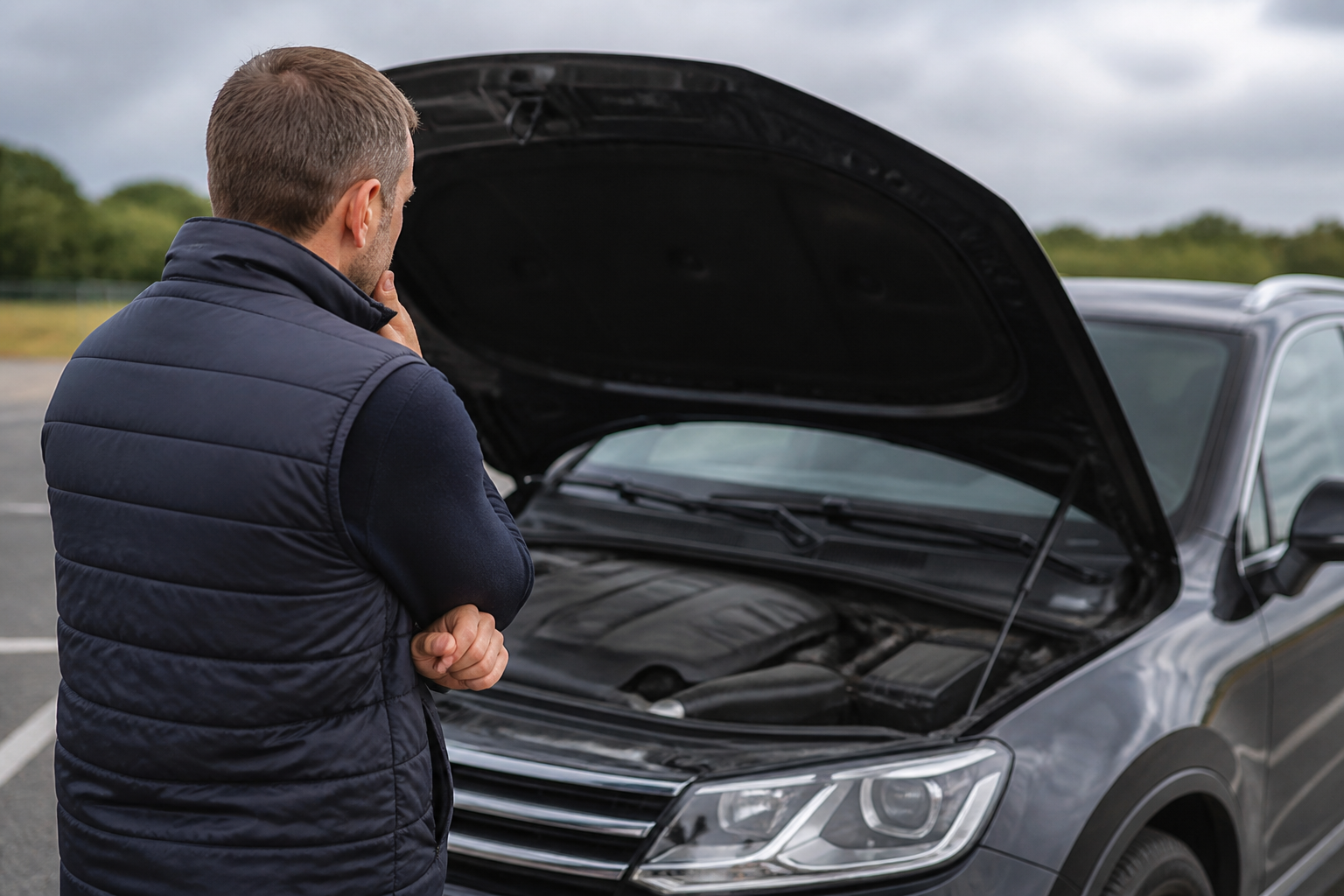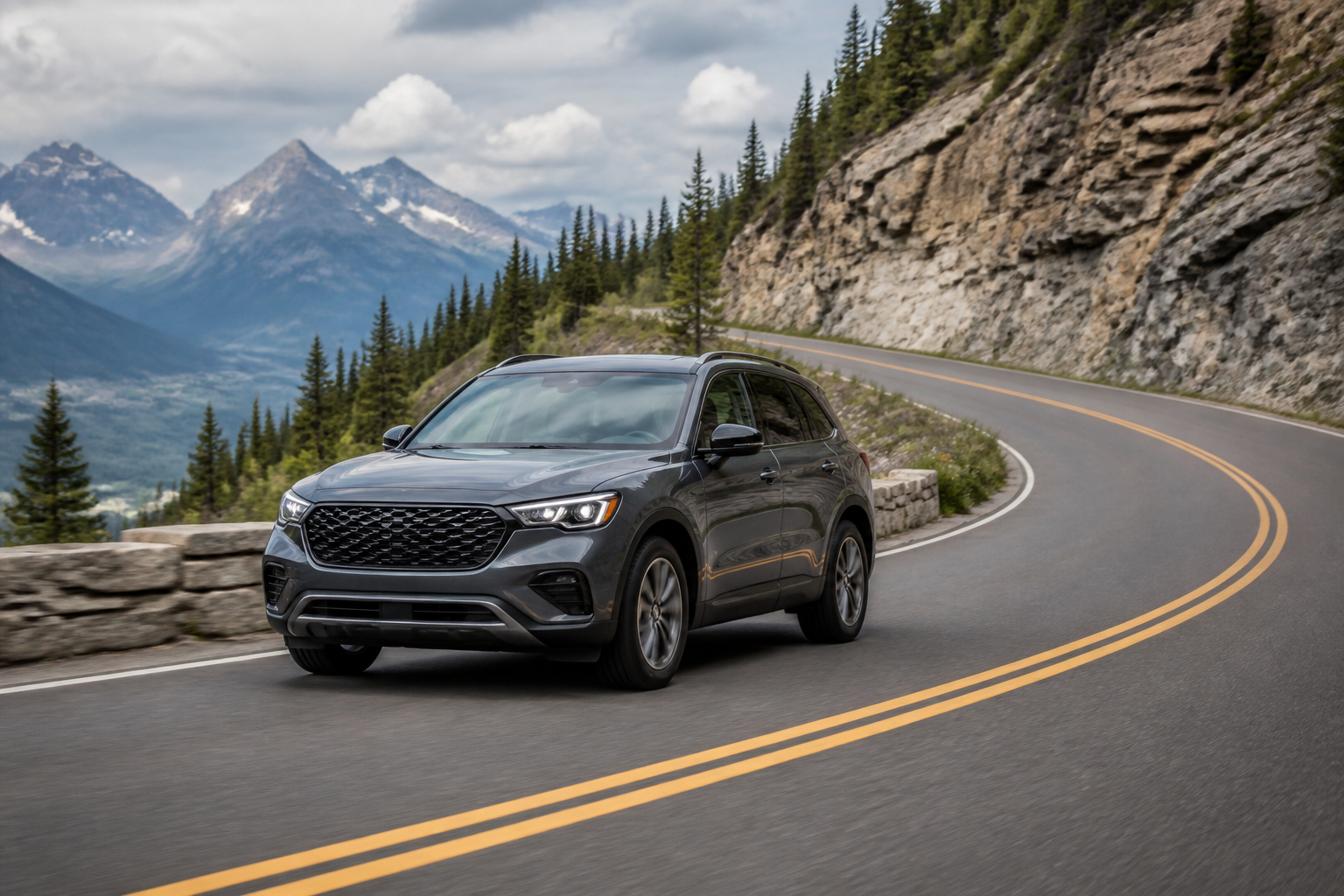
DSR is an assistive downhill-speed regulation feature that keeps the vehicle at a set speed on descents. It can apply braking as downhill grade increases but cannot compensate for road, weather, or traffic conditions. Activate DSR and set a target speed per model-specific procedures, then monitor the descent and intervene with manual braking if needed. Always remember that the driver remains responsible for control, lane position, and safe response to changing conditions on slippery grades.
Key takeaways
- DSR is an assistive aid, not a replacement for driver control or awareness.
- Braking effect from DSR increases with steeper downhill grades.
- DSR may not maintain the target speed on all surfaces or grades; driver intervention may be required.
- Driver must adapt driving style and cannot rely on DSR to handle all conditions, especially on slippery surfaces.
Downhill Speed Regulation (DSR) is Mercedes-Benz’s driver-assist feature designed to help manage speed on descents by contributing to braking in proportion to the downhill grade. The official manuals consistently frame DSR as an aid, not a trigger that overrides road conditions, weather, or traffic. The driver remains the ultimate control authority, with responsibility for monitoring traffic, maintaining lane position, and applying brakes as needed. For reference, see the DSR notes in the MY18 GLA Operator’s Manual and the DSR controls and safety notes in the MY18 GLE Coupe Operator’s Manual.
What DSR is and how it behaves
DSR is described as a downhill-speed-regulation aid that helps keep the vehicle at a preselected target speed when descending. Its braking contribution grows with steeper downhill gradients and diminishes on flatter or uphill sections, where its effect may be minimal or nonexistent. The system is capable of regulating speed while the transmission is in D, R, or N, but it does not compensate for changing road conditions, weather, or traffic. In practice, this means DSR can reduce the need for constant manual braking on long grades, but it cannot “see” around corners, react to slick patches, or anticipate a sudden vehicle ahead. The driver should always monitor the descent and be prepared to take action beyond the system’s responses.
Additional corroborating material from the Mercedes-Benz DSR documentation notes that the function operates during downhill driving and interacts with accelerator and brake inputs. The system maintains the target speed within defined limits, but its effectiveness is inherently tied to the grade, road surface, and tire condition. The Sprinter DSR overview also reinforces the idea that DSR serves as an assistive platform for downhill driving rather than a fixed regulator with physics-defying capabilities.
How to activate DSR and set a target speed
Activation proceeds with selecting a downhill target speed and engaging the DSR function as described in the owner’s manual. While exact steps can vary by model and year, the core principle remains: you establish a set speed for the descent and let the system assist with maintaining that speed. It’s important to understand that DSR works in concert with your throttle and brake inputs; you should not rely on DSR to perform all braking or to react to every hazard. If conditions demand, you should intervene manually.
Practical considerations when selecting a target speed include: choosing a speed that matches road grade, traffic, and tire grip; recognizing that steeper grades may require a lower target speed to ensure safe braking margins; and understanding that on very slippery surfaces the difference between actual speed and target speed can be more pronounced, requiring proactive braking or warning intervention.
Operator guidance: driver responsibility and system limits
- DSR is an aid, not a substitute for driver control. The system is designed to assist with speed regulation on descents, but it does not replace the driver’s responsibility to monitor the road, traffic conditions, and vehicle dynamics.
- Traction and surface conditions matter. On slippery roads, if the actual vehicle speed diverges from the target speed, traction loss and skidding can occur. In such cases, the driver should apply manual braking and adjust the descent strategy as needed.
- System effectiveness varies with gradient and surface. The braking contribution from DSR grows with downhill steepness but may be reduced or limited by road texture, weather, or tire condition. It may not be able to maintain the exact set speed in all scenarios.
- Transmission interaction is important. DSR engages with the transmission state (D, R, or N); expect different responses depending on gear selection and engine/brake blending for the descent.
- Always plan around the descent. DSR is intended to support you on downhill sections, but proper pace, lane discipline, and following distance are still determined by you, the driver, based on current conditions.
Practical testing and limitations: what to expect in real-world use
In real driving, DSR will feel like a controlled, gradual application of braking force corresponding to the grade. On a long, steep descent: you may notice noticeable deceleration as DSR works to hold the target speed; on a gentle slope: the effect will be subtler. If you transition from a descent into a curve or stop-and-go traffic, DSR may disengage or require driver input to reestablish a safe speed. Remember that road texture, weather (wet, icy, or snow-covered pavement), tire condition, and tire wear all influence how predictably DSR maintains the target speed.
Model-dependent caveats and how to tailor use to your vehicle
Mercedes-Benz DSR features can differ slightly between models and model years due to firmware updates, transmission tuning, and safety refinements. Always consult your specific vehicle’s operator’s manual for exact activation procedures, target-speed ranges, and any model-specific warnings. As a general practice, select a conservative target speed for unknown descent sections and adjust based on vehicle behavior observed during initial uses in low-risk environments (e.g., empty, dry grades) before venturing into more challenging downhill segments.
Practical case considerations
- On a long, winding descent with mixed pavement and variable slope, start with a modest target speed, then gradually observe how the system interacts with throttle and braking. If you notice drift beyond the target, be prepared to intervene with manual braking or throttle adjustments.
- In rain or light ice, plan for more conservative targets and shorter intervals of DSR engagement. Even when the system is active, reduced grip means you should expect greater reliance on your brakes and steering.
Key takeaways for safe use of DSR
- DSR is an assistive tool to help manage downhill speed, not a replacement for driver judgment.
- Set a reasonable target speed that accounts for grade, surface, and traffic, and be prepared to intervene manually if conditions change.
- On slippery surfaces, recognize the elevated risk of traction loss if speeds diverge from the target and apply manual braking as needed.
- Always maintain attention to road conditions, traffic, and tire grip; DSR cannot anticipate every hazard.
Sources