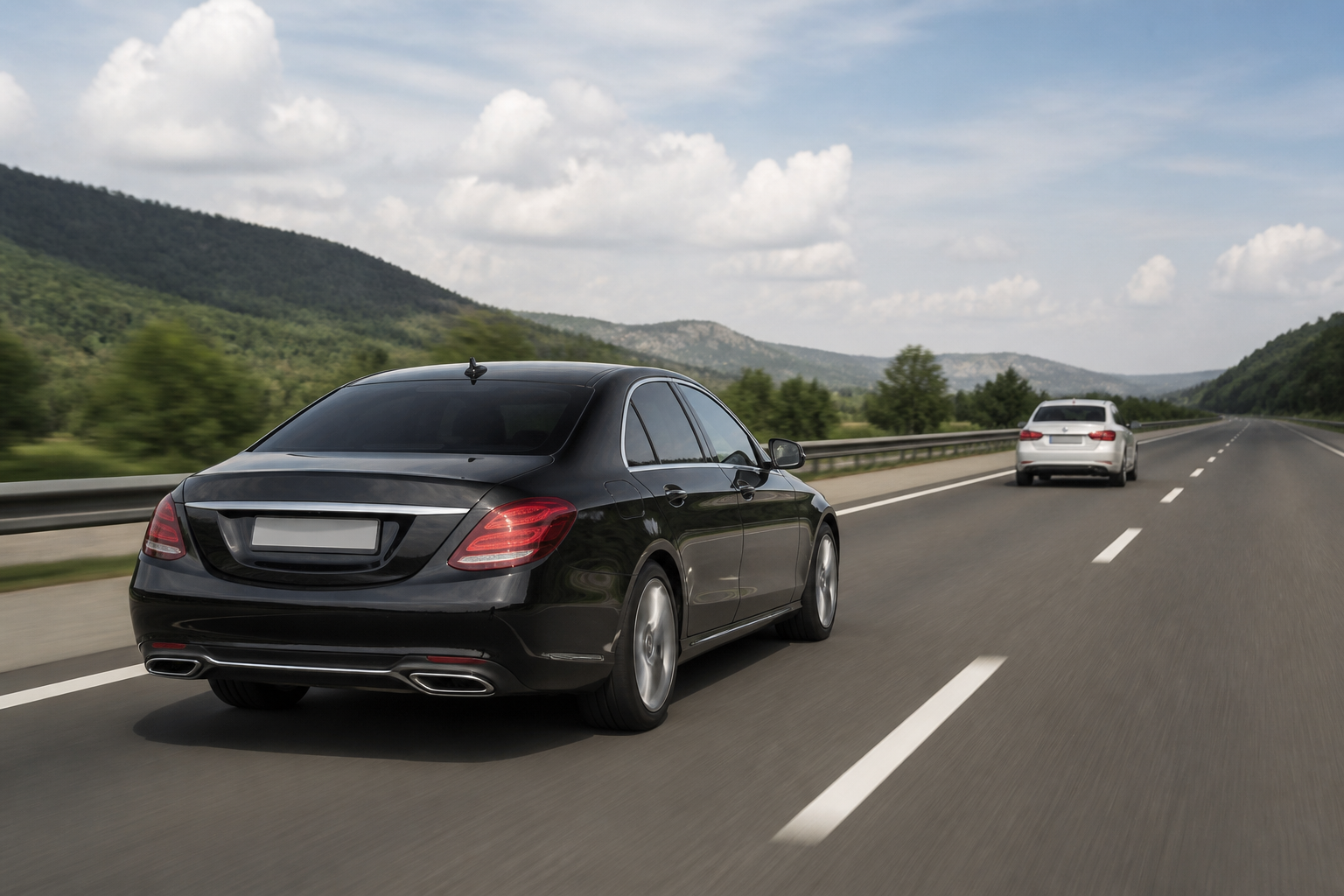
Set DISTRONIC PLUS to your chosen following distance (roughly one to two seconds, depending on the model), allow the system to adjust speed relative to the vehicle ahead, and stay ready to take over if conditions change or if you need to intervene for safety.
Key takeaways
- DISTRONIC PLUS adapts your speed to the car ahead and can slow to a stop when traffic requires it.
- You can set a minimum following time/distance (about one to two seconds) to define your gap.
- Driver attention and takeover remain essential; the system is an aid, not a substitute for safe driving.
- Refer to Mercedes-Benz driver assistance guides for model-specific steps and behavior.
- Official manuals corroborate the concept of maintaining a safe following distance and monitoring conditions.
Mercedes-Benz DISTRONIC PLUS is positioned as a driver-assistance aid that helps manage speed relative to the vehicle ahead, reducing the need for constant throttle input in steady traffic while preserving the driver’s ultimate responsibility for safe operation. When used correctly, it can smooth traffic flow, minimize pedal work, and provide a more comfortable driving experience. This article expands on practical setup, system behavior in real-world conditions, and the takeovers you should expect to plan for during daily driving.
How DISTRONIC PLUS establishes and maintains following distance
At the core, DISTRONIC PLUS uses a defined target gap behind the vehicle ahead. You select a minimum following distance, expressed as a time gap (for example, 1 second, 1.5 seconds, or 2 seconds) depending on your model and equipment. The system then automatically adjusts your vehicle speed to preserve that gap, including decelerating to a stop if the traffic in front halts. In other words, the feature is designed to ease speed control workload while preserving a driver’s role in observing the environment and taking over when needed.
Practical considerations when selecting a following distance:
- Environment and speed: In light traffic on dry pavement, a shorter gap (around 1–1.5 seconds) can be comfortable. In high-speed zones, heavy traffic, or wet/slippery surfaces, a larger gap (1.5–2 seconds or more) provides additional reaction time.
- Vehicle response: The system responds to the lead vehicle’s behavior; a sudden deceleration or a vehicle cutting in can require quicker driver intervention even if the system is maintaining a gap.
- Sensor limitations: Adverse weather, shading, snow, or road spray can affect sensors. In such conditions the system may be slower to detect the lead vehicle, prompting earlier driver takeover.
To set the minimum distance, use the stalk or the vehicle’s interface control. On most models, you’ll see a visual indicator in the instrument cluster showing the active gap, and the system will communicate when it detects the lead vehicle and when it has established the target spacing. The display is intended to reassure you of the chosen setting, but it is not a substitute for attentive monitoring.
Interpreting the system signals and the driver’s role
Mercedes-Benz explicitly frames DISTRONIC PLUS as an assistive technology with driver responsibility. You should expect two primary modes: active speed adaptation to the vehicle ahead and an override/ takeover when conditions require it. The key signals to watch include:
- Active adaptation: The vehicle smoothly reduces or increases speed to maintain the selected gap as traffic moves. You feel the car adjusting speed without requiring manual throttle input for minor adjustments.
- Takeover prompts: If traffic behavior, weather, or road geometry creates scenarios outside what the system can safely handle, expect an audible or visual cue prompting you to take control. This could happen when the gap cannot be maintained with the available sensor data, or if a vehicle cuts in aggressively.
- Stop and resume behavior: In stop-and-go traffic, DISTRONIC PLUS may bring the car to a complete stop and, once traffic resumes, accelerate back to the pre-set speed or gap, depending on the configuration and system version. Your readiness to resume manual control is essential at every restart.
In practice, drivers should remain engaged with the traffic environment. The system is designed to reduce driving workload, not replace judgment or situational awareness. Active attention to surrounding vehicles, pedestrians, signs, and road conditions remains necessary at all times.
Step-by-step approach for safe use in real traffic
- Choose an appropriate gap: Start with a conservative gap in unknown or complex traffic (for example, 1.5 to 2 seconds) and adjust as you gain confidence. If the road is slick or visibility is reduced, increase the gap.
- Activate and monitor: Engage DISTRONIC PLUS and observe the gap indicator. Confirm that the system is tracking the lead vehicle consistently and that speed adjustments feel smooth rather than abrupt.
- Be prepared to intervene: Keep hands on the wheel, eyes on the road, and be ready to take over if the system hesitates, if traffic behavior changes suddenly, or if sensor performance appears compromised by weather or road conditions.
- Handling intermittent braking: If the lead vehicle decelerates unexpectedly or stops, your awareness should lead to a timely manual throttle/brake input to ensure safe following distance, especially at lower speeds where the system may briefly lag behind rapid changes.
- Stopping and resuming in congestion: In heavy traffic, understand that the system may bring the vehicle to a stop and may require manual initiation to start moving again when the path ahead becomes clear. Plan your following distance accordingly so you can react without undue delay.
Model-specific notes: While the general concept is consistent across Mercedes-Benz vehicles equipped with DISTRONIC PLUS, the available time/distance gap range, control stalk behavior, and the user interface can vary by model year and market. Always consult your owner’s manual for the exact steps and available gap settings for your specific vehicle. For reference, older guidance and manuals describe selecting a time gap roughly in the one- to two-second range and using the vehicle’s display to monitor the active setting.
Limitations and caveats to consider
- Not a substitute for driver control: DISTRONIC PLUS can reduce workload but will not replace the driver. The driver remains responsible for vehicle control, lane positioning, and monitoring the environment.
- Sensor and feature availability: The precise behavior and available distance settings depend on equipment, optional packages, and market. Some features may be limited on base trims or older models.
- Environmental impacts: Heavy rain, fog, snow, or glare can degrade sensor performance and alter how the system maintains the gap.
- Stop-and-go behavior: In some scenarios, the system’s stop/start function may respond differently from the driver’s expectation. Always be prepared to re-engage manual control after a stop if traffic conditions demand it.
For a concise explanation of how the system works and the driver’s responsibilities, see Mercedes-Benz’s Driver Assistance Features overview and related operator manuals. These sources emphasize that ADAS features are aids designed to support safe driving rather than replace it, and they illustrate how to interpret the system’s prompts during routine and edge-case situations. https://www.mbusa.com/en/driver-assistance-features
In summary, DISTRONIC PLUS can be a valuable aid for maintaining a safe following distance and reducing steering input during steady traffic. The most reliable practice is to select a conservative gap, stay alert to the lead vehicle and road conditions, and be prepared to take over immediately when the situation calls for human intervention. This disciplined approach ensures you benefit from the system’s convenience without compromising safety.
Sources