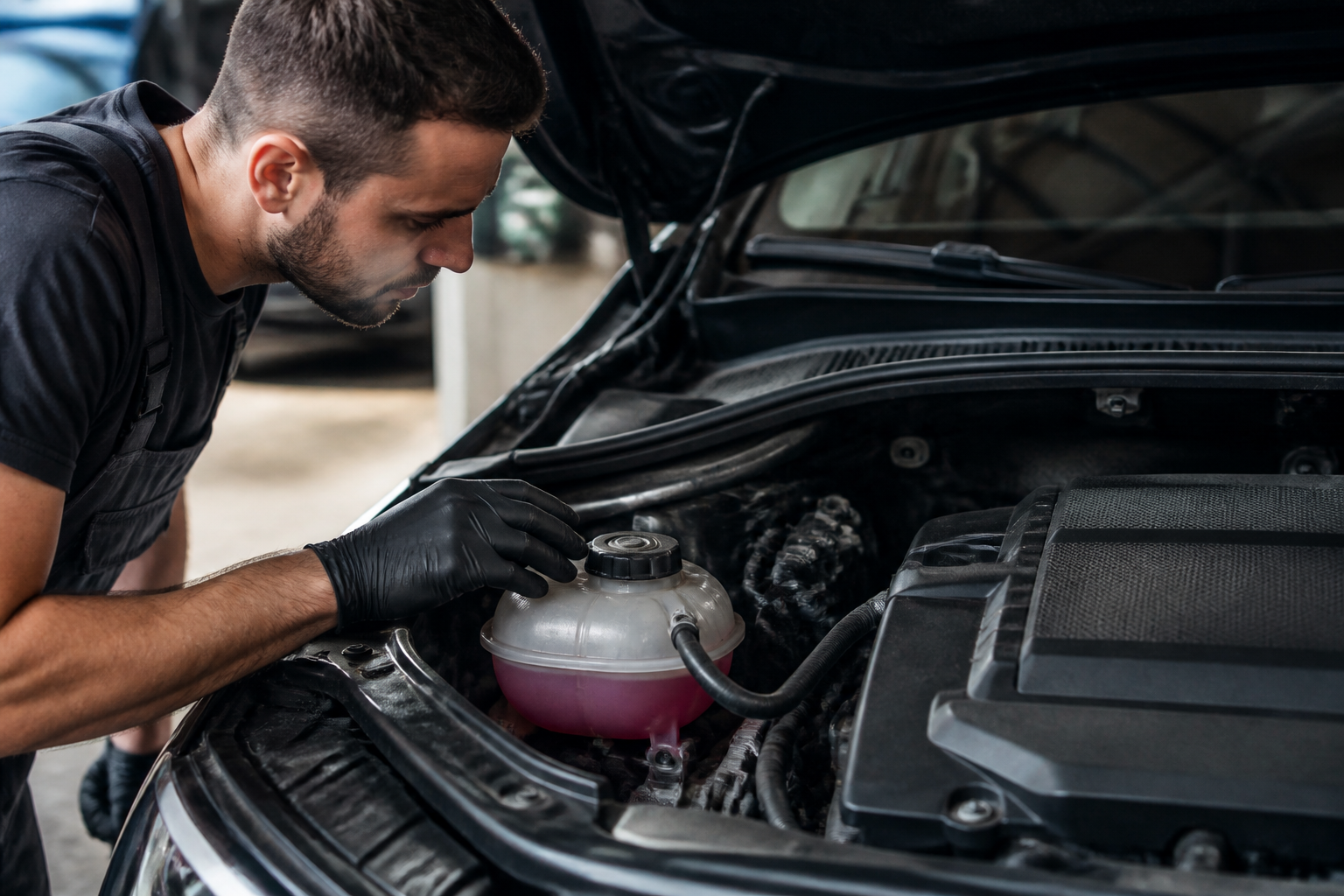
Check the coolant level only when the engine and cooling system are cool, visually inspect the expansion reservoir, and ensure the level is between the MIN and MAX marks. If the level is low, top off only with the correct coolant after the engine has cooled, and consult the maintenance schedule or a dealer if low levels persist, since coolant service may be required at specified intervals.
Key takeaways
- Inspect the coolant expansion tank visually when the engine is cool to avoid pressurized hot coolant.
- Ensure the reservoir level is between MIN and MAX marks; never open the cap while the system is hot or pressurized.
- A low level may indicate a need for maintenance rather than a simple top-off; follow the vehicle’s maintenance schedule for coolant service.
Maintaining proper coolant levels in a Mercedes-Benz isn’t just about avoiding an overheating warning; it’s a safety-critical task that requires a calm, methodical approach. The official guidance across model lines consistently stresses that the cooling system is pressurized and that opening any cap or component of the cooling circuit while the engine is hot can cause scalding or a sudden release of hot fluid. With the engine completely cold, you can read the status of the system by inspecting the expansion (overflow) reservoir and comparing the visible fluid level against the MIN and MAX marks. This simple, non-invasive check forms the first line of defense against overheating and helps you decide whether a top-up or a service is needed.
The exact location of the coolant reservoir varies by model, body style, and generation. In many contemporary Mercedes-Benz cars, the expansion tank sits somewhere accessible in the engine bay—often on one side near the front of the compartment, sometimes obscured by panels or by other components. Vans and some SUVs may position the reservoir slightly differently. Regardless of location, the essential steps stay the same: ensure the engine has cooled completely, carefully remove the cap only after depressurization, and visually confirm that the fluid level is between the MIN and MAX indicators on a translucent tank. If your vehicle uses a separate overflow bottle with a dipstick or clear marks, apply the same MIN–MAX reading principle for a reliable reading.
What to do if the level appears low or exactly at MIN depends on a mix of immediate safety steps and longer-term maintenance planning. Immediate, safety-centric actions include:
- Allow the engine to cool fully before touching any part of the cooling system.
- When you’re ready to check, slowly loosen the expansion-cap to relieve any remaining pressure, then remove it fully only if the system has depressurized. Keep your hands and face away from the opening as residual vapor can be hot.
- Read the level visually against the MIN and MAX marks. If the level is near or slightly below MIN, you may top off after the system has cooled further, using the correct Mercedes-Benz-approved coolant.
Important cautions about topping off:
- Only use the coolant type specified for your model as listed in the owner’s manual or on under-hood labels. Do not mix different coolant chemistries unless the manual explicitly allows it, and follow the dilution requirements if a premixed concentrate is specified.
- Top off gradually if allowed by the manual, and avoid overfilling the reservoir, which can lead to overflow or spillage when the engine heats back up.
Beyond a one-off top-off, persistent low readings signal a potential issue that warrants closer inspection. Common culprits include leaks in hoses, clamps, the radiator, the reservoir itself, or a degraded cap O-ring. In some cases, a sealed system can consume coolant if small leaks occur and evaporate with heat, or a water pump may be on the verge of failing, allowing coolant to escape under pressure. If topping off does not stabilize the level after a short drive, or if you observe recurring loss over days, arrange a professional inspection as part of your scheduled maintenance.
The Mercedes-Benz maintenance literature frames coolant level and condition within a broader service schedule. This means a low level is not always a standalone fix; it can be a cue that coolant service or even a full cooling-system refresh is needed according to the vehicle’s age, mileage, service history, and operating conditions. In other words, a sustained low reading should trigger a check of the entire cooling loop rather than simply a quick top-up.
To help owners navigate real-world scenarios, here are practical decision criteria and caveats drawn from official guidance. Use these as a framework, then refer to your model’s owner’s manual for specifics:
- Safety first: always verify the engine is completely cold before inspecting the expansion tank and never remove the cap if there is any heat or pressure in the system.
- What counts as “low”: if the level sits at or just below MIN, plan a careful top-off after confirming full cooling and the correct coolant type. If the level remains low after topping off and driving, it suggests a potential leak or service requirement.
- Cap handling: when removing the cap, apply steady, gradual pressure to relieve residual pressure. Do not pry or twist abruptly; sudden release can cause scalding.
- Coolant type and mixing rules: always use the Mercedes-Benz-approved coolant for your vehicle. Do not mix with other brands or formulations unless a manual explicitly allows it.
- When to seek service: if the level is consistently low, if you see damp spots or crusty residue around hoses or the reservoir, if you notice overheating, or if frequent top-offs are needed, schedule a diagnostic check as part of your maintenance cycle.
- Maintenance-interval framing: coolant service or replacement may be required at specified intervals. Low levels can be a sign that a planned coolant refresh or system inspection is due, rather than a routine daily fill.
Because reservoir routing and service considerations vary by model family—sedans, SUVs, vans, and electrified variants—the most reliable reference remains your vehicle’s owner’s manual for exact reservoir location and cap instructions. The general principles—cool engine, MIN–MAX read, careful cap handling, and alignment with the maintenance schedule—are transferable across most Mercedes-Benz vehicles.
For readers seeking corroboration, the 2016 Mercedes-Benz Owner’s Manual specifically emphasizes checks on a cool system, safety warnings about opening the cap, and the visual MIN–MAX guidance. The 2026 Mercedes-Benz Sprinter Operator’s Manual reinforces the cold-engine rule and proper cap procedure for a current-generation vehicle. In parallel, Mercedes-Benz Maintenance Booklets place coolant level considerations within the planned maintenance framework, noting that low levels can trigger service actions beyond simple topical topping. Together, these sources provide a coherent, owner-focused approach to managing coolant levels responsibly.
In short, a safe, practical approach to a Mercedes coolant level check is this: ensure the engine is fully cooled, visually verify the reservoir level against MIN and MAX, depressurize the cap safely, use the correct Mercedes-Benz coolant, and follow the maintenance schedule if the level remains low or if you observe related symptoms. If you encounter persistent low readings, leaks, or overheating, arrange a professional inspection guided by the vehicle’s maintenance plan and the safety cautions in the owner’s manual.
Sources