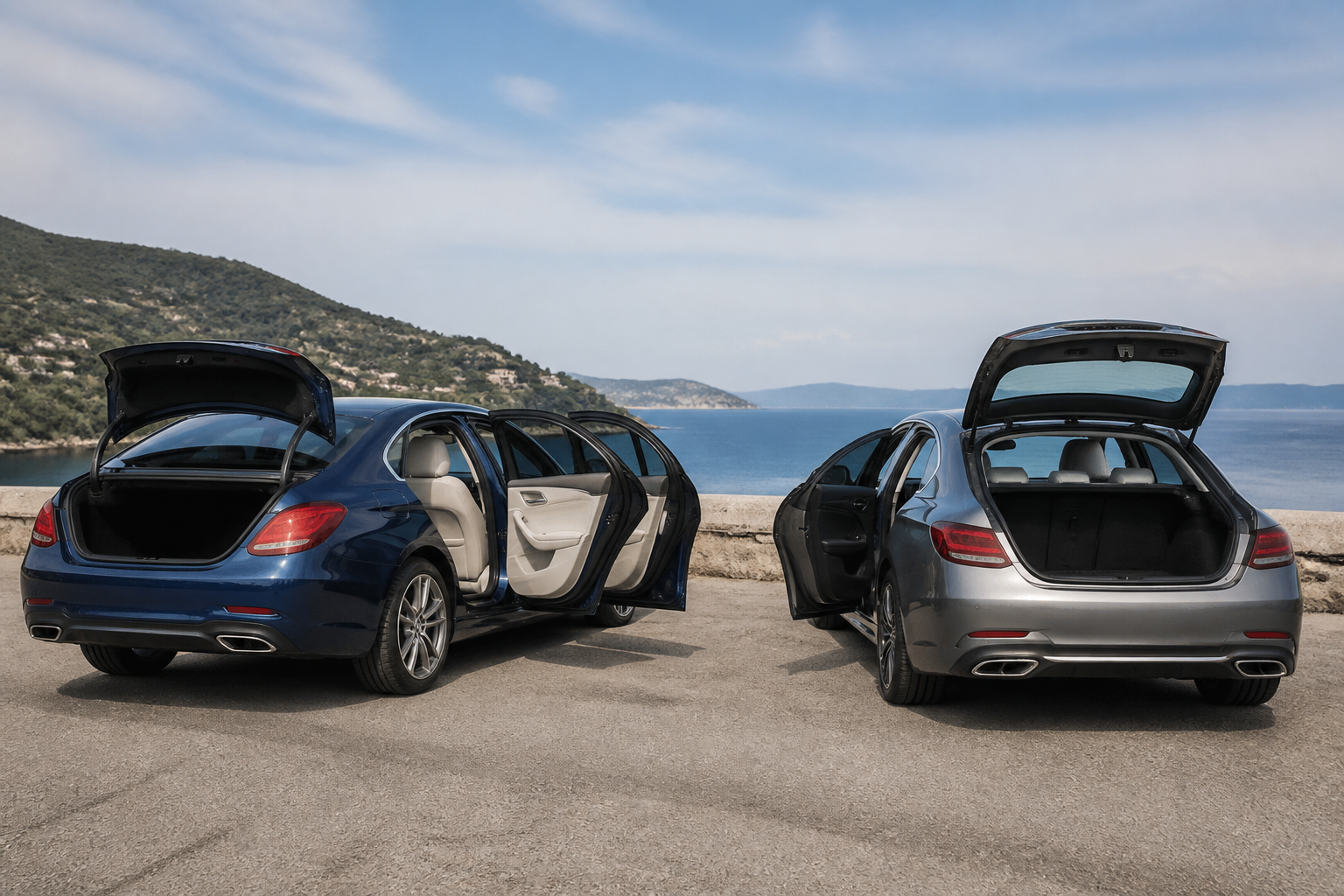
For buyers choosing between the Mercedes-Benz C-Class and CLA-Class, consider rear-seat comfort, cargo space, and five-year ownership cost. The C-Class generally offers more rear-seat headroom and cargo capacity, contributing to greater daily comfort, while the CLA-Class often delivers a lower five-year cost in some configurations. Your choice should weigh whether rear-seat space and trunk capacity or lower long-term cost best aligns with your daily use and budget.
Key takeaways
- C-Class typically provides more rear-seat headroom and cargo space, enhancing everyday comfort.
- CLA-Class can offer a lower five-year ownership cost in certain configurations, appealing to budget-focused buyers.
- Choose based on whether rear-seat room and cargo capacity or lower long-term cost better fit your daily needs and budget.
The Mercedes-Benz C-Class and CLA-Class sit at the premium end of the compact sedan segment, but they appeal to different buyer priorities. This feature-length comparison distills verified source material into a practical decision framework focused on rear-seat comfort, everyday cargo space, and five-year ownership cost. Rather than rely on a single metric, you’ll see how headroom, legroom, trunk volume, and cost-of-ownership interact in real-world use, so you can choose the model that better fits your daily routine, passengers, and budget.
Rear-seat comfort: how much headroom and legroom you gain or lose
Rear-seat comfort is a frequent friction point for buyers, especially when transporting passengers on longer trips or with adult riders. Across the referenced sources, the C-Class generally offers more generous space in rear headroom and legroom than the CLA-Class, which aligns with its larger overall footprint and more conventional sedan stance. The practical upshot is a roomier shoulder-to-shoulder feel and more comfortable seating for typical adult travelers in the back seat, particularly on extended drives or when the rear seats are used regularly for adults or taller passengers.
To navigate the numbers without quoting a specific metric from a single tool, consider how you and your typical passengers sit: if you routinely carry rear-seat adults or frequently ride with two adults and a child seat, the C-Class’s added headroom and legroom tend to translate into a more relaxed experience. If, however, you mostly shuttle a single adult or use the back seat for occasional trips, the CLA-Class’s smaller rear cabin may still feel adequate while delivering other advantages explained below.
Illustrative sources that inform this understanding include Cars.com’s side-by-side tool and Edmunds’ dimensions-focused comparison. They structure rear-seat comfort by listing rear headroom and legroom values across configurations, highlighting how the C-Class tends to lead in interior space while the CLA-Class prioritizes compact efficiency. For reference, these sources provide a framework for comparing configurations rather than a single universal number set.
- Cars.com comparison tool: practical, configuration-level rear-seat metrics and overall comfort framing.
- Edmunds True Cost to Own comparison: cross-checks of ride quality, space, and overall satisfaction as it relates to daily use.
In real-world terms, expect the C-Class to feel more spacious in the rear on most trips, with the CLA-Class feeling a touch more snug but still usable for a quick run to the store or a ride with a single adult back there.
Trunk and cargo space: how much you can actually carry
Cargo capacity is a straightforward but decisive factor for many buyers. In head-to-head assessments, the C-Class typically delivers a bit more trunk volume than the CLA-Class, which makes a noticeable difference when you’re loading groceries, luggage for a weekend trip, or stowing daily cargo like a stroller or sports gear. The practical takeaway is that the C-Class affords greater versatility for everyday errands and modest trips where cargo volume matters more than pure dimensions.
Measurement-driven sources present cargo numbers in a way that helps you translate capacity into everyday use. CarsDirect’s comparison tool, for example, highlights relative cargo volumes and how trunk size translates to real-world practicality across configurations. While the exact liter or cubic-foot figures can vary by trim and options, the trend remains: the C-Class edges ahead of the CLA-Class in trunk space in typical configurations, contributing to fewer compromises when you’re packing larger items or multiple bags.
- CarsDirect comparison tool: side-by-side cargo volume and practical loading notes.
- General tooling from Cars.com and Edmunds: corroborate that rear practicality and cargo capacity often align with the C-Class’s larger footprint.
When planning weekend getaways or daily errands with gear, the small but tangible extra cargo room in the C-Class can reduce the need to juggle items or rearrange cargo on every trip.
Ownership costs: a five-year perspective
Five-year ownership cost is a composite of depreciation, financing, fuel, maintenance, insurance, and ancillary expenses. Across the verified sources, the CLA-Class sometimes shows a favorable five-year cost profile in certain configurations, driven by lower upfront price and potentially lower depreciation in some markets. The C-Class, while generally commanding a higher starting price, can offer more refined interior comfort, perceived quality, and higher resale value depending on the model year, trim, and equipment equipped. The net effect is that the C-Class may incur higher cumulative costs if you pick a higher trim with expensive options, whereas the CLA-Class can be more economical over the same horizon when matched to appropriate powertrains and features.
Edmunds’ True Cost to Own analysis is a commonly cited framing for this comparison. It aggregates typical ownership inputs to yield a five-year “true cost” figure that buyers can use to compare models on a like-for-like basis. In the cited materials, the CLA-Class often comes through as more economical over five years in several configurations, but the C-Class can close the gap with favorable fuel economy at certain powertrains and the potential for lower maintenance costs in later years. It’s important to stress that these figures are sensitive to the exact engine, drivetrain choice (RWD versus potential front-wheel drive in some CLA configurations), trim, local incentives, financing terms, and consumer driving patterns.
When evaluating five-year cost, consider:
- Depreciation: how quickly the model loses value and how mileage, condition, and option mix influence resale.
- Fuel and maintenance: real-world fuel economy versus EPA estimates, and maintenance intervals tied to warranty coverage and wear items.
- Financing and insurance: interest rates, loan terms, and insurance premiums can shift the total cost noticeably depending on your profile.
In practical terms, if your priority is keeping five-year ownership costs lower while maintaining a compact-luxury feel, you may lean toward the CLA-Class in certain configurations. If your priority is interior comfort, rear-seat space, and a slightly larger trunk, the C-Class presents a compelling long-term value, especially for buyers who anticipate higher usage of the back seat and luggage capacity.
Putting the pieces together: who should choose which
To translate the data into a decision framework, map your daily needs to the model’s strengths:
- Prioritize rear-seat comfort and passengers: If you frequently ride with rear passengers, especially adults, the C-Class’s larger rear headroom and legroom typically translate into a more comfortable experience. That improved comfort can be a deciding factor on daily commutes and longer trips alike.
- Need practical cargo flexibility: If trunk space and easy loading for groceries, luggage, or gear are central to your shopping list, the C-Class’s generally larger cargo area helps reduce compromises on what you can carry in a typical week.
- Watch five-year ownership cost closely: If your budgeting emphasis is minimizing overall ownership expense, compare the True Cost to Own estimates for the exact trim and configuration you’re considering, and weigh that against your expected usage of the back seat and trunk. The CLA-Class often presents a favorable five-year total in some configurations, particularly where its price advantage and efficiency shine, but the C-Class may offer a more refined daily experience that can justify higher up-front and ongoing costs for some buyers.
- Consider the drivetrain and packaging: In several markets, the CLA-Class is front-wheel-drive-based in some configurations, while the C-Class typically ships with a rear-wheel-drive layout or more traditional powertrain tuning. This can influence driving feel, handling in daily conditions, and maintenance considerations beyond the cabin and cargo metrics.
Limitations to keep in mind include that measurement figures vary by model year, trim, and regional market, and ownership-cost estimates are contingent on current incentives, financing terms, fuel prices, and maintenance pricing that can change over time. The sources cited here assemble a comparative view from multiple tools, each with its own methodology, so use them as a cross-check rather than a single source of truth.
In summary, if rear-seat headroom and trunk capacity are your top daily-use measures, the C-Class tends to deliver a more accommodating back cabin and larger cargo area. If your priority is a lower upfront purchase price and potentially lower five-year ownership costs in certain configurations, the CLA-Class can be the more economical package while trading some rear-seat space for compact-luxury agility. Use the five-year cost framework alongside space metrics to gauge which model aligns with your realistic driving patterns and financial plan.
Sources consulted include Cars.com, Edmunds, and CarsDirect comparison resources, which present complementary perspectives on space, comfort, and ownership costs. For direct, configuration-specific numbers, refer to the individual tool entries linked in the overview materials.
Sources