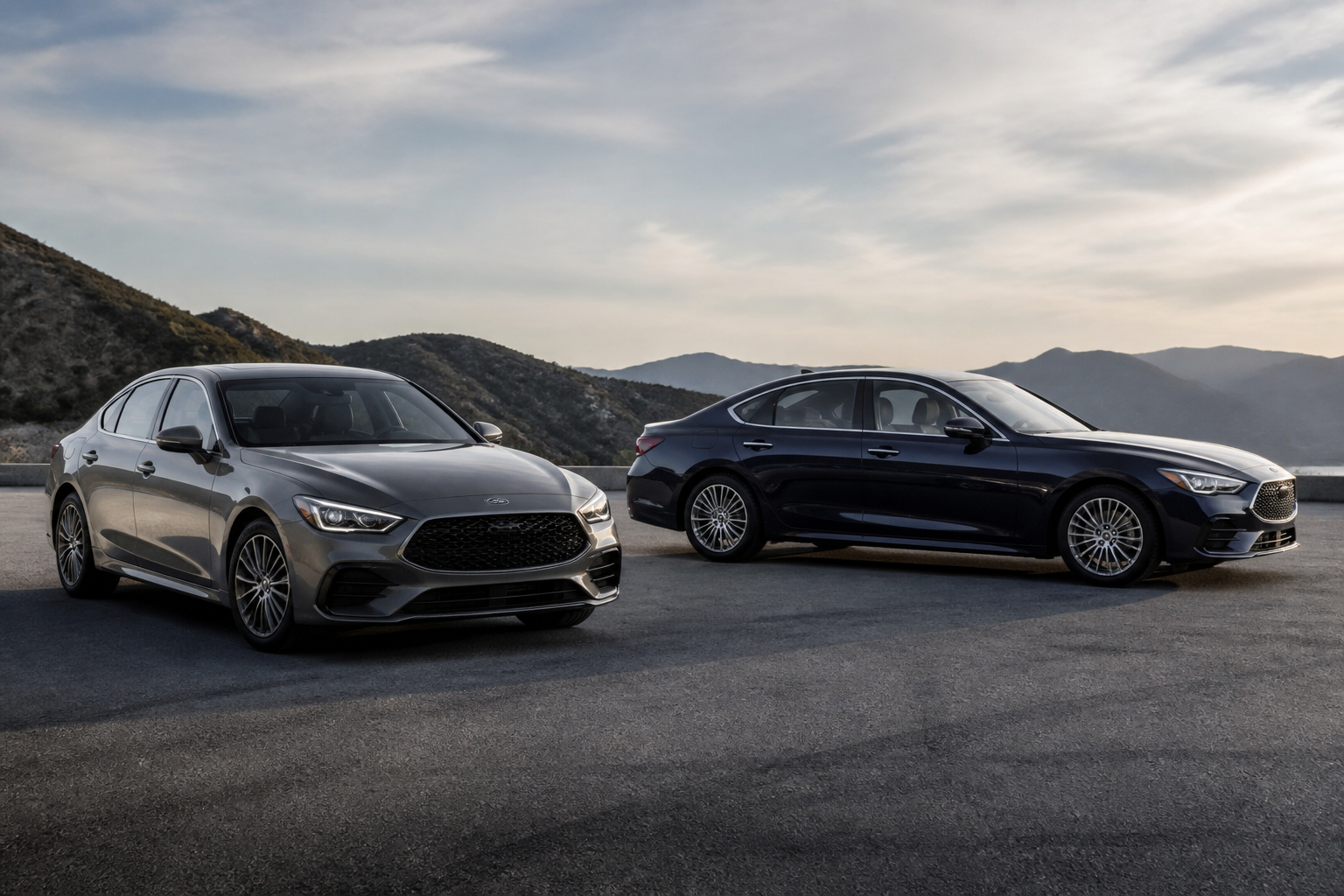
Choose the C-Class for compact, cost-efficient daily driving; choose the E-Class for more interior space, rear-seat comfort, and broader engine options. Space, powertrain variety, and value differences drive the decision.
Key takeaways
- C-Class emphasizes compactness and efficiency with simpler powertrain options.
- E-Class offers more length, more back-seat space, and broader engine choices, including six-cylinder options in some markets.
- Pricing generally rises from C-Class to E-Class, reflecting the increased size and capabilities.
The Mercedes C-Class vs E-Class comparison is designed to help buyers understand not just what each model is, but how their everyday realities differ. Grounded in verified sourcing and practical ownership questions, this article expands on size, powertrain options, and total value to help shoppers decide which sedan lines up with their needs and budget without getting lost in marketing claims.
Size, space, and daily usability
The C-Class trades some interior room for a more compact, city-friendly footprint. In real-world terms, this often translates to a shorter wheelbase and a tighter overall cabin, which can contribute to nimbler low-speed maneuvering, easier parking, and a more sports-sedan feel in urban driving. Front-seat occupants typically experience generous space for a compact sedan, while rear-seat legroom and shoulder space are adequate for adults on shorter trips or in mixed-usage days. For many daily tasks—commuting, groceries, school runs—the C-Class remains pleasantly practical with a noticeably easier entry and exit compared with larger sedans.
The E-Class expands length and wheelbase, which generally yields more rear-seat legroom, better shoulder room, and a bigger trunk. The impact of this extra size is most evident on longer trips, road trips with multiple passengers, and when transporting larger cargo items. In practice, families or carpooling crews often notice a calmer back seat experience in the E-Class, with less encroachment from shoulder or knee contact on longer drives. Even with similar seating configurations, the longer platform gives the E-Class a more forgiving interior, which can translate to reduced driver fatigue and better comfort on extended days behind the wheel.
Practical measurements matter in selection. While exact numbers vary by model year and market, the general pattern holds: the E-Class provides more interior volume and trunk space, which can translate to easier daily packing and more flexible cargo arrangements for routine use such as kid activities, shopping, or travel with luggage. If top priority is maximum cabin room and long-haul comfort, the E-Class tends to be the more capable choice; if urban usability and easy maneuverability are paramount, the C-Class remains a compelling fit.
Powertrain options and performance potential
The C-Class traditionally centers on efficient, turbocharged four-cylinder engines for the baseline experience. This combination emphasizes approachable pricing, solid real-world fuel economy, and confident, if modest, acceleration suitable for everyday driving. For buyers who put a premium on brisk city stops and steady cruising while keeping running costs moderate, the C-Class’s powertrain lineup aligns well with those priorities.
The E-Class broadens the powertrain spectrum. In many markets, it offers additional engine choices, including six-cylinder options and electrified variants in recent generations. This broader lineup provides stronger acceleration, smoother highway refinement, and greater capability at higher speeds, which can be meaningful on long interstate trips or when carrying additional passengers and cargo. The availability of mild-hybrid or more efficient electrified systems also aims to improve urban start-stop efficiency while preserving effortless freeway punch when needed. The trade-off for many buyers is higher entry price and potentially increased maintenance/repair considerations associated with more complex powertrains.
Beyond headline horsepower, real-world performance is about torque delivery, throttle response, transmission calibration, and how well the engine suits the chassis’s character. The E-Class’s engine lineup often delivers more low-end torque and linear power feel, contributing to a sense of effortless speed on ramps and in overtaking scenarios. Electrified variants help flatten torque curves, delivering smooth acceleration at low speeds, which can improve daily drivability in dense traffic environments.
Pricing, value, and ownership considerations
Pricing tends to position the E-Class above the C-Class, reflecting the larger footprint, additional interior space, and broader powertrain choices. That premium manifests in higher starting prices, potentially higher insurance costs, and different depreciation and maintenance profiles as the vehicle ages. When evaluating total ownership cost, buyers should weigh not only the sticker price but also the broader value they receive in space, comfort, technology, and performance over time.
In everyday ownership, the E-Class’s added interior room and expanded powertrain options can justify its higher cost for households that regularly transport rear-seated passengers, undertake longer trips, or seek a more refined, composed ride. The C-Class, with a more approachable price point and efficient powertrains, offers strong day-to-day usability and a compelling value proposition for buyers prioritizing budget, ease of use, and lower running costs.
Model-year and trim variations matter. Feature packages, driver-assistance tech, and standard vs optional equipment can significantly alter perceived value. When comparing, it’s important to align the trims and features you actually intend to buy, not just the base MSRPs. This realistic side-by-side comparison helps avoid overestimating or underestimating total ownership costs and daily practicality.
Which model fits which buyer
The C-Class suits buyers who want a smaller footprint, lower up-front price, and strong daily usability—great for city dwellers and anyone who values efficient operation and agile handling in a compact sedan.
The E-Class appeals to buyers who want more interior space, a calmer rear cabin, and a broader engine lineup to match a wider range of preferences, including higher-speed cruising and long-distance comfort. For households with rear-seat travel needs, frequent highway use, or a desire for greater refinement and technology capability, the E-Class typically represents the more comfortable, capable choice over longer ownership horizons.
To decide between them, consider three practical questions: (1) how many passengers and how much cargo you typically carry, (2) how important quick, confident acceleration and highway performance are to you, and (3) whether the incremental space and broader power options justify the higher price for your usage. If efficient daily use and urban livability trump cabin size, the C-Class remains a strong, value-forward option. If you regularly travel with adults in back or want a more serene ride with a wider performance envelope, the E-Class becomes the more sensible pick.
Notes on interpretation and limitations
The descriptions here reflect common patterns observed across the cited sources and typical model-year progressions. Specifics—such as exact cargo volume, engine availability by market, and feature suites—vary by year, trim, and region. For precise figures and options, consult the current Mercedes-Benz configurator or your local dealer, as mid-year updates and market-specific packages can shift with changes in lineups or option arrays.
Sources and further reading
Contextual guidance from reputable outlets emphasizes the same core themes: the C-Class as the narrower, more economical sedan, and the E-Class as the larger, more versatile option with a broader powertrain and technology slate. For further reading, review Autoblog’s analysis of C-Class vs E-Class differences and Edmunds’ pricing/dimensions comparison, alongside Car and Driver’s coverage of the C-Class driving experience and technology rollout. Useful sources include: https://www.autoblog.com/features/mercedes-benz-c-class-vs-e-class, https://www.edmunds.com/car-comparisons/mercedes-benz-c-class-vs-mercedes-benz-e-class/, https://www.caranddriver.com/mercedes-benz/c-class
Sources
- Mercedes-Benz C-Class Vs. E-Class: 5 Major Differences
- Mercedes-Benz C-Class vs 2026 Mercedes-Benz E-Class - Car Comparison
- 2026 Mercedes-Benz C-Class Review, Pricing, and Specs
Related Mercedes-Benz guides
- Mercedes-Benz Active Brake Assist
- Mercedes replacement tires load index speed rating
- Mercedes-Benz urban diffusor B-Class W246 without towing bar without night package W246-FL
- Mercedes-Benz Urban Diffusor A-Class W176 facelift W176-Facelift-Urban-Diffusor Review
- Mercedes-Benz Roof spoiler G-Class W463A W465 A4657930000 Review