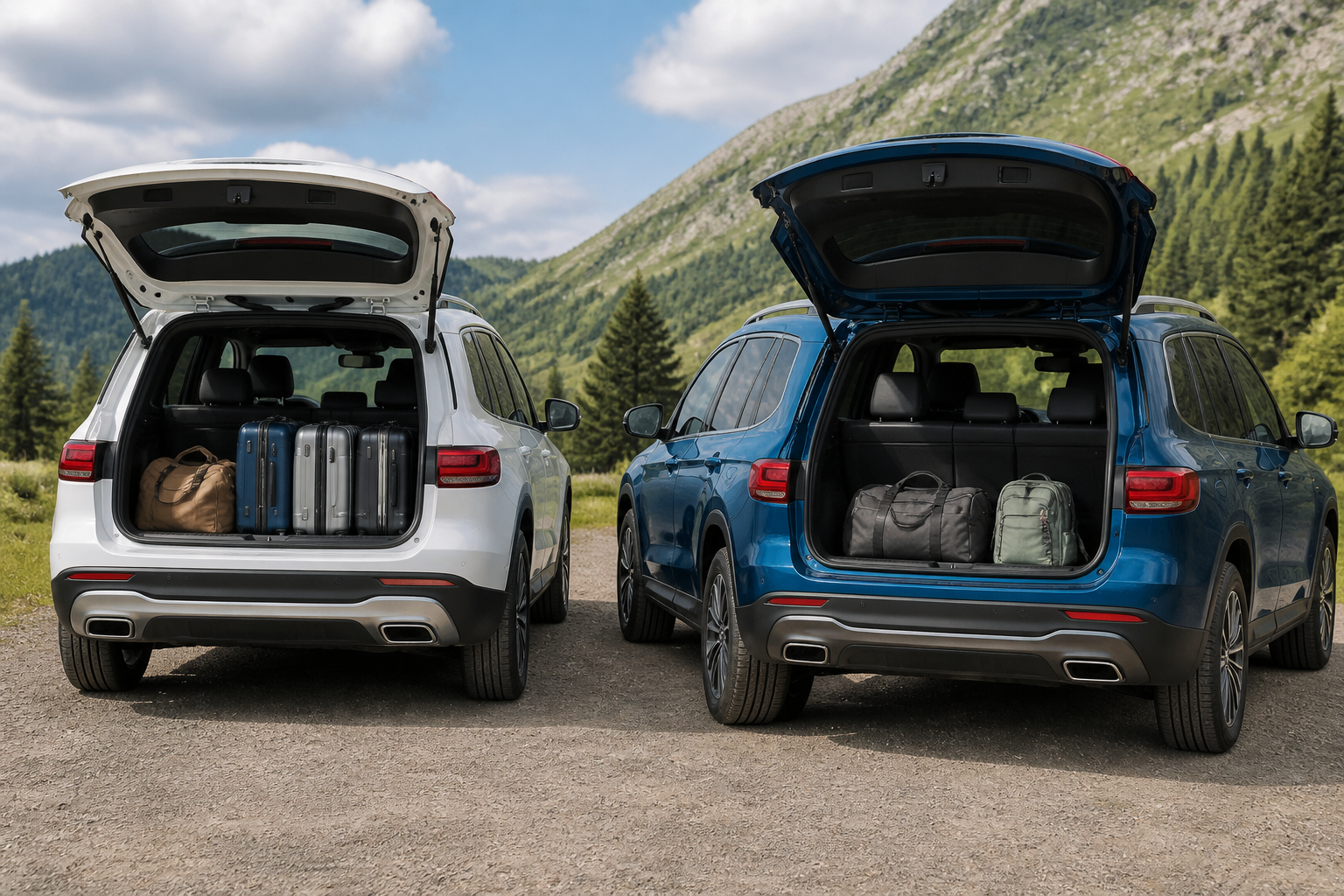
The EQB offers configurable rear seating with up to 61.8 cu ft of cargo space when seats are folded and 40/20/40 second-row plus optional 50/50 third-row configurations, per MBUSA and the EQB Owner’s Manual. These fold/adjust options, along with load-securing guidance, shape everyday cargo practicality for families and are the core basis for comparing EQB to GLB in terms of real-world loading.
Key takeaways
- EQB provides up to 61.8 cu ft of cargo space with rear seats folded, plus flexible 40/20/40 second-row and optional 50/50 third-row configurations.
- Rear-seat folding and a dedicated cargo position expand loading versatility for family use, with explicit load-securing cautions in the Owner’s Manual.
- Comparisons to GLB emphasize similar interior packaging for family loading, with the main difference being propulsion (electric vs gasoline) rather than cargo layout.
- Shoppers should verify exact cargo space with their preferred seat configuration and review seat-folding instructions and safety cautions from official manuals.
Mercedes-Benz offers two compact family SUVs that share a platform and styling cues but diverge in powertrain philosophy and daily practicality. This article expands on verified source material to compare the Mercedes EQB (electric) and the Mercedes GLB (gas) through a family-use lens: how much cargo fits with the 2nd and 3rd rows in use, how the rear seats fold and adjust, and what that means for everyday loading, hatch practicality, and occasional third-row use.
How cargo and seating realities map to family life
Official MBUSA materials describe the EQB as a versatile family-specific member, with rear seating configurations designed to maximize cargo when passenger space isn’t needed. The manufacturer highlights an expandable cargo area when the rear seats are folded, with cited space figures that reflect the effect of different fold patterns. In practice, the EQB’s rear accommodations are built around a 40/20/40 second-row and an optional 50/50-split third row, a setup intended to give families flexibility when loading tall or long items while keeping some seating options available for people and pets.
Supporting guidance appears in the MY24 EQB Owner’s Manual, which explains how the rear bench folds, the steps to engage a dedicated cargo position that enlarges the cargo compartment, and the precautions that follow. The manual emphasizes load securing and warns that the cargo area cover does not substitute for proper restraints when carrying heavy or unsecured items. Taken together, these sources portray the EQB as efficient for day-to-day family use when you plan around folding patterns and securing cargo properly.
Practical loading implications for everyday use
- Maximum cargo capacity depends on the folded configuration of the second row and the presence or absence of a third-row occupancy. The 40/20/40 vs. 40/40 split (and the optional 50/50 third-row) directly affects how long, wide, or tall items can be loaded without removing passengers.
- The ability to convert seating layouts on the fly (for example, two adults in the second row with a long load, or three abreast plus gear) matters for weekend shopping, sports equipment, or family trips with gear in tow.
- Load security remains crucial: ensure seatbacks are locked, seat belt anchors are stowed, and cargo covers are engaged or removed as required to prevent shifting or obstruction during driving.
How the EQB stacks up against the GLB for family cargo and third-row usability
In cross-model discussions, the EQB is typically framed as the electric counterpart to the GLB, sharing interior packaging that accommodates family seating and cargo while differing primarily in propulsion. Contemporary reviews and MBUSA-sourced materials emphasize that both models aim to balance passenger comfort with practical cargo loading, including some form of third-row usability on the GLB, depending on configuration, and a flexible but electronically packaged cargo area on the EQB.
For families evaluating daily loading versus occasional need for a third row, the practical distinction often centers on how each model’s seating configurations influence usable cargo space in standard daily scenarios (school runs, groceries, weekend trips) versus longer-term flexibility (vacation packing, sports equipment, or stowing strollers with rear seats folded). The GLB’s gasoline powertrain remains a straightforward package for buyers who prioritize a familiar drivetrain and a proven interior layout, while the EQB’s electric architecture brings an emphasis on space efficiency, regenerative-energy considerations, and the potential impact of a battery pack on floor height and cargo partitioning.
Interpreting the numbers: what to expect in real-world loading
Based on MBUSA materials and third-party summaries, the EQB’s cargo envelope grows when rear seating is folded flat or configured to prioritize load capacity. The precise maximum figures depend on seat configuration—most notably whether the second row is in a 40/20/40 split or a 40/40 split, and whether the third row is deployed or folded away. The intent of these configurations is to offer a spectrum of options: daily passenger space with enough cargo room for groceries or small-to-mid-size items, and larger cargo space when trips or gear require more room.
On the GLB side, the compact family SUV maintains a similar interior footprint with a conventional gasoline setup. While exact numerical cargo figures may differ slightly by model year and trim, the GLB typically mirrors the EQB in offering flexible second-row folding and, depending on the market and configuration, a usable third row. In practice, shoppers should verify the current cargo capacities with current seat configurations, as small changes in trim levels or upholstery can affect the usable trunk height and width.
Guidance for family buyers: decision criteria and practical steps
- Identify your typical load profile: daily school runs, luggage for a weekend getaway, or sports gear. If you frequently exceed a standard grocery run or carry longer items, prioritize configurations that maximize flat cargo space with second-row and third-row folded or stowed.
- Verify folding patterns and their impact on the floor height and cargo width. The 40/20/40 and 50/50 patterns present different long-item accommodations, so check the actual seating arrangement you’ll use most often.
- Consider how often you’ll need a third row. If you rarely use it, understand how it affects cargo space when folded or stowed versus when in use, and whether the two-row cargo mode is sufficient for your needs.
- Assess load-securement practices. Regardless of powertrain, secure heavy items, use cargo nets or covers as appropriate, and follow the owner’s manual cautions to prevent shifting during driving.
- Factor in total cost of ownership, charging considerations (for the EQB), and fuel expectations (for the GLB). Even with similar interior layouts, propulsion can influence daily practicality beyond cargo space—charging routines and range considerations matter for a family’s schedule.
Bottom line for family buyers
Both the EQB and GLB offer family-friendly interiors with flexible seating and cargo layouts. The EQB’s cargo-capable configurations are particularly relevant for buyers who value an electric drivetrain without sacrificing cargo adaptability, provided they are mindful of how folding patterns and load securing interact with daily routines. The GLB remains a practical gasoline option with a familiar layout and straightforward operation, appealing to families who prioritize traditional fueling and proven performance in daily use. Prospective buyers should confirm exact cargo capacities with current seat configurations for their chosen trim, review the folding logic of the second and third rows, and heed the load-securing guidance in the owner’s manual to ensure safe, practical everyday use.
Sources