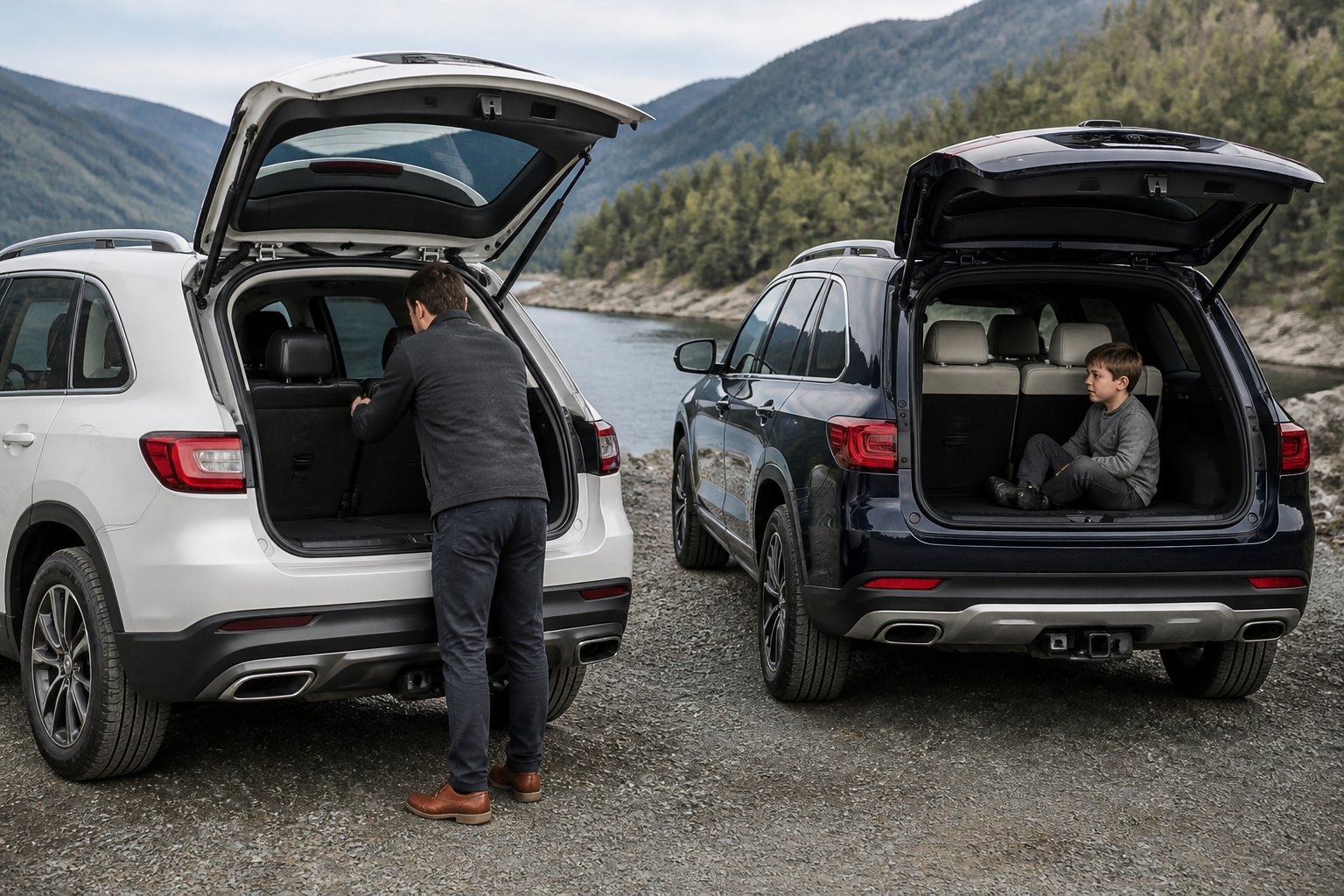
For occasional third-row needs, the Mercedes-Benz GLE generally offers a better balance of seating flexibility and cargo space in everyday use, while the GLS provides true seven-seat capacity when the third row is regularly required. Reference Edmunds’ side-by-side comparison for seating and cargo distinctions and Car and Driver’s positioning of the GLE within Mercedes’ lineup to gauge overall fit.
Key takeaways
- GLE favors five-seat daily use with strong cargo space when rear seats are folded.
- GLS provides seven-seat capacity, beneficial when a third row is needed consistently.
- Edmunds data shows cargo trade-offs between rear seating configurations; GLS has less cargo with seats up.
- Car-and-driver positioning places GLE between GLC and GLS, aiding decision on necessity of stepping up.
- Choose GLE for frequent daily use with occasional third-row needs; choose GLS if seven seats are essential regularly.
Choosing between the Mercedes-Benz GLE and GLS when you only occasionally need a third row is about balancing everyday practicality with occasional increased seating and cargo needs. This expanded analysis draws on verified source material to provide a clearer decision framework, including interior layouts, cargo handling, overall size, and real-world use cases. It also notes model-dependent caveats and how to interpret official figures in everyday driving scenarios.
Seating architecture and its practical implications
The fundamental seating difference remains a primary consideration: the GLE is typically configured for five seats, while the GLS is documented as a seven-seat SUV. For buyers who expect to regularly rely on a full seven-seat arrangement, the GLS offers predictable comfort and space. If the third row is needed only episodically, the GLE’s five-seat setup can translate to better overall daily usability, because a two-row cabin generally yields more comfortable second-row accommodations and easier access for adult passengers.
How frequently do you actually need that third row?
Consider your typical week: carpool days, weekend trips with relatives, or occasional sports transport. If the third row is invoked only a few times per month, the probability of benefiting from the GLS’s extra seat is lower, and the additional exterior footprint, tighter cargo access with the third row in use, and potentially higher running costs may weigh more heavily against it. Conversely, if your plan includes longer multi-family trips or frequent group outings where seven seats are valuable, the GLS becomes more compelling, since the seven-seat configuration is designed to accommodate more occupants more often.
Cargo and space tradeoffs with and without the third row
Cargo capacity metrics illustrate the tradeoffs between seating and load space. When the rear seat is in use, a two-row configuration generally yields more cargo flexibility in the GLE, reflecting its five-seat layout. With the seats folded or removed, the GLE tends to offer a broader cargo envelope than the GLS, which remains constrained by its third-row architecture even when the back seats are not in use.
Interpreting these metrics in context matters: the GLS gains an edge in full-time seven-seat utility, but that advantage diminishes if you rarely invite seven occupants and primarily need cargo space for daily errands. In practical terms, if you routinely transport a full family plus gear, the GLS makes the most sense; if you mostly juggle two adults plus occasional extra passengers, the GLE can outperform the GLS on daily usability while preserving a less crowded interior most of the time.
Size, footprint, and how much the exterior dimensions matter
The GLE sits between the compact GLC and the full-size GLS in Mercedes’ SUV lineup. This positioning has tangible consequences: the GLE remains nimble enough to feel and drive smaller in tight urban environments, with maneuverability benefits and usually simpler parking dynamics. The GLS, by contrast, presents a more substantial footprint that can influence fuel economy, maneuverability, and ease of parking, but it delivers more internal capacity and a more imposing presence on the road.
For buyers who want an occasional third-row experience while preserving daily ease of use, this sizing consideration can tip the balance toward the GLE, provided the low-frequency seven-seat requirement does not translate into reliably needing seven seats for most trips.
Real-world scenarios: when one model clearly fits better
- Family shuttle with mixed passenger counts: If you mostly transport five or fewer people and only rarely need an extra seat, the GLE often delivers superior everyday practicality and cargo flexibility in its standard configuration.
- Seasonal or weekend-only seven-passenger trips: If your occasional third row happens mostly on weekend trips or special occasions, the GLS’s seven-seat layout becomes more advantageous, offering space for additional passengers without rearranging seating as frequently.
- Cargo-centric use with occasional passengers: When you frequently carry gear (strollers, sports equipment, grocery runs) and only occasionally seat additional passengers, compare the cargo volume with the rear seats up and down to quantify which configuration better suits your typical load profile.
Practical decision criteria for buyers
- Occasional third-row need frequency: If the third row is rarely used, prioritize interior flexibility and ease of daily use; otherwise, factor in the GLS’s seven-seat capability.
- Cargo versus passenger priority: If cargo volume with rear seats in use is critical, quantify the usable space when the third row is folded vs. stowed and compare across models.
- Exterior footprint and maneuverability: Consider your typical parking environments and whether the slightly larger GLS would pose practical challenges vs. the more compact GLE.
- Long-term ownership costs: Evaluate not just MSRPs but expected differences in fuel economy, maintenance intervals, and insurance costs related to size and seating configuration.
Ownership costs and operating considerations
Beyond sticker price, real-world ownership costs can shift the decision. Warranty coverage, maintenance cadence, and expected depreciation can vary with the size of the vehicle and the complexity of the seating system. When evaluating monthly or annual cost of ownership, estimate fuel economy differences driven by weight and aerodynamics, and account for insurance tiers that sometimes differ for larger, heavier models with more seating capacity. If the occasional third row translates into infrequent seven-seat use, you may see meaningful savings over the life of the vehicle by choosing the smaller footprint and committing to a near-two-row daily configuration with flexible cargo solutions.
Bottom-line guidance for occasional third-row needs
The GLE often delivers a compelling balance for buyers who prefer flexible seating and robust cargo space without committing to a full seven-seat footprint on a day-to-day basis. The GLS remains the stronger choice when seven seats are a frequent requirement, and when interior comfort for all eight potential occupants is a priority—alongside the more generous overall cargo capability this configuration can offer on trips where everyone travels together.
To inform a well-reasoned decision, align your choice with your actual usage pattern, and use the space comparisons from trusted sources to anchor your evaluation. If possible, arrange a test drive with both configurations to physically feel the seating ergonomics, third-row access, and cargo handling in real-world tasks.
Sources: Edmunds: 2025 Mercedes-Benz GLE-Class vs GLS-Class comparison, Car and Driver: 2026 Mercedes-Benz GLE-Class review