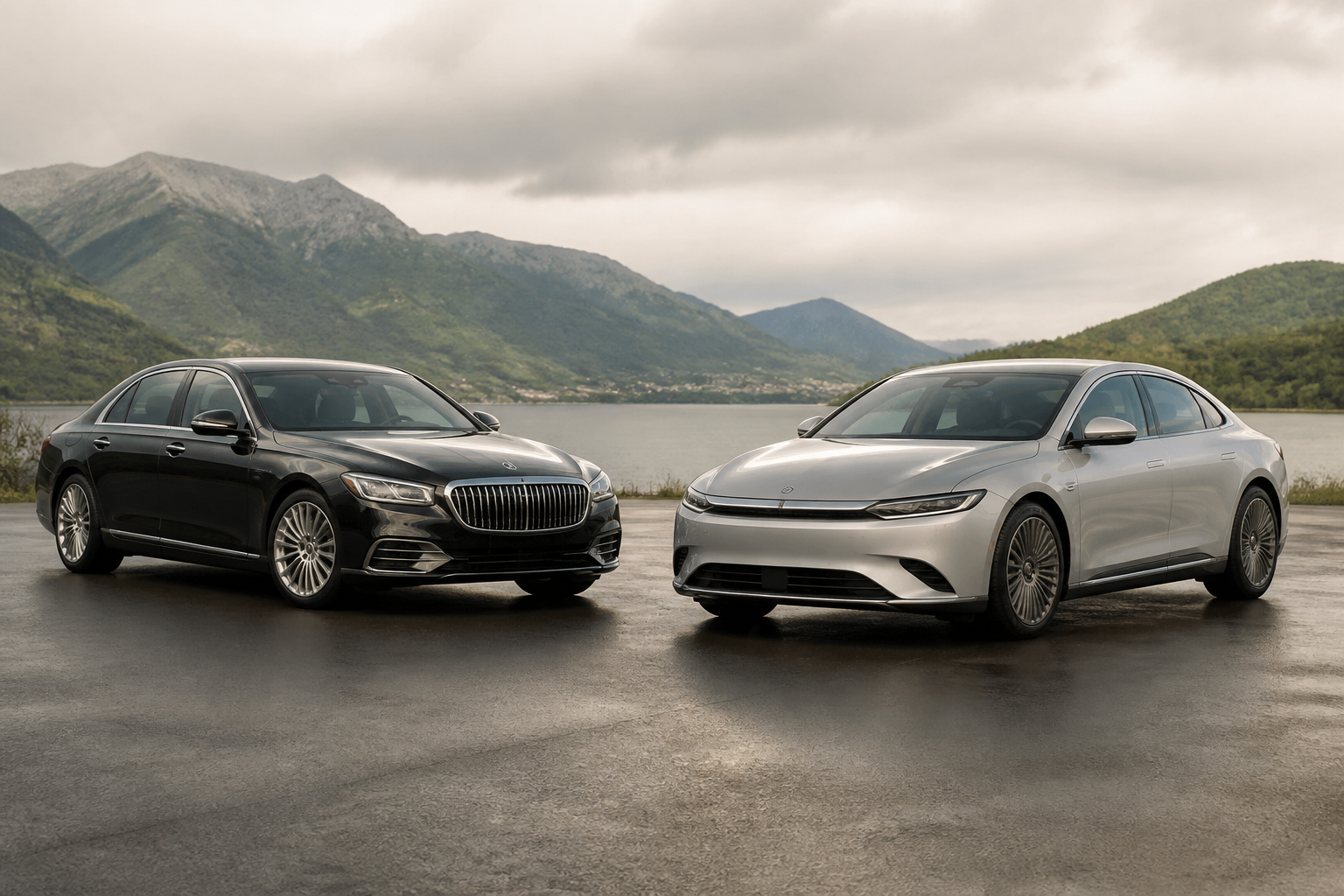
The Mercedes EQS offers a flagship electric alternative to the S-Class, designed to mirror the S-Class luxury experience but not as a one-for-one replacement. Real-world decisions hinge on whether EV-specific trade-offs (charging, range, drivetrain feel) align with your priorities, or whether the traditional S-Class luxury and conventional ownership fit your lifestyle better.
Key takeaways
- EQS is a flagship aimed at S-Class buyers but isn’t a direct electric replica of the S-Class.
- EQS adds electric-drive advantages and tech refinement, with trade-offs in EV-specific usability versus the S-Class’ conventional flagship experience.
- S-Class remains the traditional benchmark for flagship luxury and familiar ownership routines; compare comfort, space, and drivetrain expectations to gauge fit.
- Consult specific reviews (Cars.com and MotorTrend) to understand how each car is positioned relative to the other and to inform a personalized purchase decision.
Mercedes-Benz’s two flagship sedans—the all-electric EQS and the traditional internal-combustion S-Class—aim to satisfy upscale buyers, but they approach luxury through different tech and ownership logics. This expanded guide dives deeper into real-world implications, offering a practical framework for shoppers who must decide between an EV flagship and a conventional flagship. It stays anchored in verified source material while adding decision criteria, caveats, and scenario-based examples to help readers map their priorities to the two cars.
Executive brief: how buyers should frame the choice
Viewed side by side, the EQS targets the same luxury DNA as the S-Class but substitutes electric propulsion and battery management for some gasoline-driven dynamics. The decision comes down to: (1) how important the absence of exhaust noise and immediate electric response feels in premium comfort, (2) the value you place on EV-specific benefits such as charging convenience, lower running costs per mile, and tax incentives, and (3) how practical you need the car to be on a daily basis, including space, cargo, and long-range planning. The EQS is positioned as a high-end electric alternative rather than a direct one-to-one replacement for every S-Class attribute, and that distinction matters when you assess ownership practicality and long-term ownership costs.
Real-world comfort and refinement: cabin, acoustics, and ride
In both the EQS and the S-Class, Mercedes-Benz emphasizes cabin serenity, high‑grade materials, and sophisticated sound insulation. Reviewers consistently rank ride quality and interior quietude among the EQS’s strongest attributes, with the electric platform enabling tranquil propulsion at highway speeds. However, the shift to electric powertrain architecture also introduces EV-specific characteristics—such as instant torque delivery and different weight distribution—that influence steering feel, chassis behavior, and ride calibration. The S-Class remains tuned to deliver traditional petrol‑ and hybrid‑driven refinement with familiar throttle response and engine cadence, which some buyers associate with a longer, proven luxury experience.
From a practical perspective, the EQS’s interior layout emphasizes spaciousness and a clean visual presentation aided by environmental controls, screens, and a strong sense of quiet at speed. The S-Class maintains Mercedes’ established control philosophy, with tactile interfaces and a driving experience shaped by familiar engine/transmission feedback. For shoppers who value uninterrupted serenity and a modern, tech-forward environment, the EQS offers a compelling engagement. Those who prioritize a more conventional, familiar “engine note and feel” may lean toward the S-Class.
Space, practicality, and everyday usability
Both sedans accommodate four adults comfortably, but the datasets and reviews highlight nuanced differences in practicality. The EQS benefits from a physics-friendly battery pack that allows generous cabin space and a unique rear-seat environment in some configurations. Cargo layouts and uneven weight distribution can influence how much usable luggage space is available under real-world loading scenarios, especially when considering charging cables, adapters, or travel necessities. The S-Class, with its long-standing packaging, provides a robust trunk and predictable load space across trim levels, aligned with customers who routinely carry larger or more varied cargo for business or family needs.
From a daily-use standpoint, owners should consider: how often you travel with more than two adults in the back seat, how important rear-seat climate control and amenities are, and how the vehicle’s charging routines would fit into your routines if you choose the EQS as a daily driver. If you frequently shuttle teams or passengers, the S-Class’s familiar space and layout may feel more immediately practical, whereas the EQS can excel in a refined, tech-forward environment with ample rear-seat controls and a quiet cabin.
Ownership costs, charging, and maintenance realities
Ownership economics shape the decision in meaningful ways. The EQS introduces EV ownership considerations—electric range, charging availability, and the time needed to replenish battery capacity. Real-world range varies with driving style, climate control use, topography, and wheel/tire choice, so buyers should model typical trips against published figures and consider charging infrastructure availability along the routes they frequent. Public charging networks, home charging setup, and the potential for reduced fuel costs are central to the EV equation, but they rely on local electricity pricing, access to fast charging, and vehicle efficiency in real-world conditions.
The S-Class continues to operate within the familiar fuel-based ownership framework, where fuel economy, maintenance intervals, and potential service-related costs—like transmission servicing or exhaust-system components—play determinative roles. While maintenance regimes can be less complex for modern luxury sedans compared with earlier generations, there are still cost and downtime considerations tied to service intervals, part availability, and the dealer network. Prospective buyers should quantify total cost of ownership over a chosen horizon (e.g., 5 years or 60,000 miles), considering potential incentives for EVs, tax credits where applicable, and any extended warranties or service plans offered by Mercedes-Benz.
Charging behavior, infrastructure, and daily planning
For the EQS, charging behavior becomes a daily planning factor. Range anxiety is reduced by the car’s energy efficiency and the convenience of home or workplace charging, but long trips require trip planning that accounts for charging stops, charger compatibility, and DC fast-charging availability. The EQS’s usability in everyday life depends on how seamlessly charging integrates with your routines, including whether you have access to a reliable charging setup at home and whether your typical routes accommodate charging stops without significant detours.
The S-Class, by contrast, relies on internal combustion flexibility. Refuelling is usually quick and predictable, and refuelling infrastructure is widespread in most regions. For buyers who prioritize minimal planning around a single daily driving pattern, the S-Class reduces the cognitive load associated with battery management, but it ties ownership to ongoing fuel costs and periodic maintenance of an internal-combustion drivetrain.
Technology, user interface, and long-term ownership experience
The EQS’s technology suite centers on a sophisticated infotainment stack, driver-assistance features, and a design language aimed at a modern, minimalistic cabin experience. Reviewers often point to the wide screen array and the way software updates can expand capabilities over time, but they also note potential complexity and the need for adaptation to new control paradigms. The S-Class shares Mercedes’ latest software offerings and driver-assistance features but tends to deliver a more traditional interface feel, which some buyers appreciate for its familiarity and ease of use. Both cars are designed to keep you connected, assisted, and entertained, but their approach to user interaction and system depth can influence long-term satisfaction depending on whether you prefer a more radical, software-forward environment or a time-tested, familiar control scheme.
What buyers should consider when deciding
- Luxury priorities. If you place supreme quiet, instant torque delivery, and EV‑centric tech in the foreground, the EQS delivers a compelling flagship proposition. If you value the established S-Class balance of refinement, traditional drivetrain feel, and familiar control layouts, the S-Class remains the safer default flagship in a conventional ICE format.
- Trip patterns and charging access. Evaluate how often you take long trips, the availability of charging along your common routes, and whether you have home charging capability. The EQS excels when charging logistics align with your life; the S-Class offers simpler refueling for those with limited charging access.
- Total cost of ownership. Model the five-year cost implications, including purchase incentives for the EQS, potential maintenance differences, and projected fuel vs. electricity costs. Real-world costs will vary by region and usage, so build a personalized projection before deciding.
- Resale and service network. Mercedes-Benz maintains strong dealer support in many regions, but EVs can have different depreciation trajectories and service considerations. Consider your proximity to a qualified service center and the availability of battery-related service options over time.
Bottom-line guidance for luxury shoppers
The EQS represents Mercedes-Benz’s high-end electric interpretation of flagship luxury. It is not a perfect substitute for every S-Class trait, but it brings a forward-looking approach to comfort, technology, and emission-free driving. The S-Class remains the reference for traditional flagship luxury, with familiar driving dynamics, a well-established interior, and straightforward refueling logistics. Shoppers should weigh whether their lifestyle, charging access, and long-term ownership goals align more closely with an EV flagship or a conventional ICE flagship. Reviews that compare these two vehicles—such as Cars.com’s EQS assessment and MotorTrend’s S-Class coverage—provide a practical lens for evaluating how EV-specific trade-offs map to real-world use and long-term satisfaction.
For readers seeking a single, source-grounded takeaway: there is no universal winner. The right choice depends on how you prioritize electric propulsion, charging practicality, and the traditional luxury signals you expect from a Mercedes flagship. Both vehicles embody the brand’s refinement and leadership in their respective paradigms, and both warrant careful testing against your daily routines and ownership expectations.
Sources
- 2024 Mercedes-EQ EQS450+ Sedan Review: Not Quite an Electric S-Class
- 2024 Mercedes-Benz S-Class Expert Review
Related Mercedes-Benz guides