To tow safely with a Mercedes-Benz GLE, confirm your vehicle has the optional trailer hitch installed for the higher rating, verify the exact towing capacity and payload for your configuration, and carefully separate trailer weight from interior cargo. Calculate tongue weight and payload to avoid overload, and plan whether you’ll carry gear inside or on the trailer. Use the live guidance from Car and Driver and Edmunds to verify the exact figures for your GLE variant before towing.
Top takeaways
- The 7,700 lb towing figure requires the optional hitch and proper configuration.
- Towing capacity, payload, and cargo are distinct; confirm each for your exact GLE setup.
- Calculate payload by subtracting tongue weight and hitch weight from payload limit, then account for passengers and cargo inside the SUV.
- Decide whether gear goes in the cabin or on the trailer based on available interior space and total weight.
- Always verify equipment installation and weight limits against official documentation before towing.
The Mercedes-Benz GLE offers strong towing versatility, but getting it right requires confirming the exact hitch configuration, the vehicle’s true towing capacity for your build, and the payload you can carry alongside a trailer. This guide translates live guidance from Car and Driver and Edmunds into a practical, owner-focused checklist you can use before hitching a trailer or hitch-mounted accessory. The aim is to help you make evidence-based decisions about whether to tow, what you can tow safely, and how to allocate loads between trailer and cabin.
Direct answer: essential checks before towing with a GLE
- Verify that your GLE has the optional trailer hitch installed and correctly configured if you plan to approach the higher towing rating. The 7,700-pound figure is contingent on the right hitch and setup, and may not apply to every configuration.
- Separate towing capacity, payload, and cargo. Do not assume the 7,700 pounds covers all trims or body styles. Confirm the exact figure for your vehicle’s engine, drivetrain, body style, and equipment.
- Assess payload limits: the combined weight of hitch weight, passengers, luggage, and any hitch-mounted gear must stay within the vehicle’s published payload specification.
- Evaluate whether you’ll carry gear inside the SUV or on a trailer. Interior cargo space changes with seat configuration, so plan accordingly for the trip.
- Match trailer weight distribution with the vehicle’s capabilities, including tongue weight and any necessary brakes or weight-distribution equipment, before purchasing or attaching the trailer.
Why hitch configuration matters for the GLE
Independent reviews stress that the headline 7,700-pound towing capacity relies on a properly installed and configured trailer hitch. If your GLE has a different body style or trim, or if the hitch is not the correct class or properly coded for the vehicle, the maximum may be lower. The GLE Coupe, for example, can differ in cargo accommodations, which can influence the practical feasibility of towing large loads compared with the standard SUV. This makes it essential to confirm the exact configuration tied to your vehicle before planning a tow.
Edmunds reinforces the separation of towing capacity, payload, and cargo load, offering concrete examples of payload allowances and cargo space. This helps owners decide whether they will maximize space inside the cabin or rely more on a trailer for the load, especially when families or crews travel with gear beyond what a trailer alone would carry.
Practical planning steps include confirming: the installed hitch type and its tongue weight rating, the trailer’s gross weight, and any weight distribution or braking requirements. These verifications prevent exceeding the GLE’s limits and help achieve stable, predictable towing performance.
Practical steps you can take now
- Check your VIN-based build sheet or owner’s manual to confirm whether the optional trailer hitch is installed and which hitch code applies to your GLE.
- Identify the exact quoted towing capacity for your configuration (engine, drivetrain, body style) and compare it to the trailer’s gross weight and tongue weight.
- Calculate payload: subtract the hitch weight and trailer tongue weight from the GLE’s published payload, then add passengers and interior cargo to ensure you remain within limits.
- Weigh the trade-off: if the trailer’s weight approaches your payload limit, consider relocating gear inside the vehicle or reducing interior load.
- Review towing-support features: verify tires, stability control, sway control compatibility, and braking requirements for the trailer, as these affect safety and performance.
Decision criteria for choosing a GLE towing setup
- Hitch availability and compatibility: Is there a factory-installed hitch that matches your trailer type and weight class?
- Towing capacity vs payload: Does the combined weight of the trailer and tongue fit within the vehicle’s payload and chassis limits?
- Cargo strategy: Will you primarily tow or carry gear inside the cabin? Do you need interior space or a larger trailer?
- Tire, brake, and weight-distribution considerations: Are tires rated for the load? Does the trailer require additional braking or sway-control equipment?
Benefits and trade-offs
- Benefits: A properly configured hitch can unlock higher towing capability; clear separation of capacity and cargo assists precise planning; accurate payload calculations protect against overload and instability.
- Drawbacks: The maximum towing figure is configuration-dependent, so not every GLE can tow 7,700 pounds; additional components or equipment may be required for the full-rated setup.
Practical scenarios
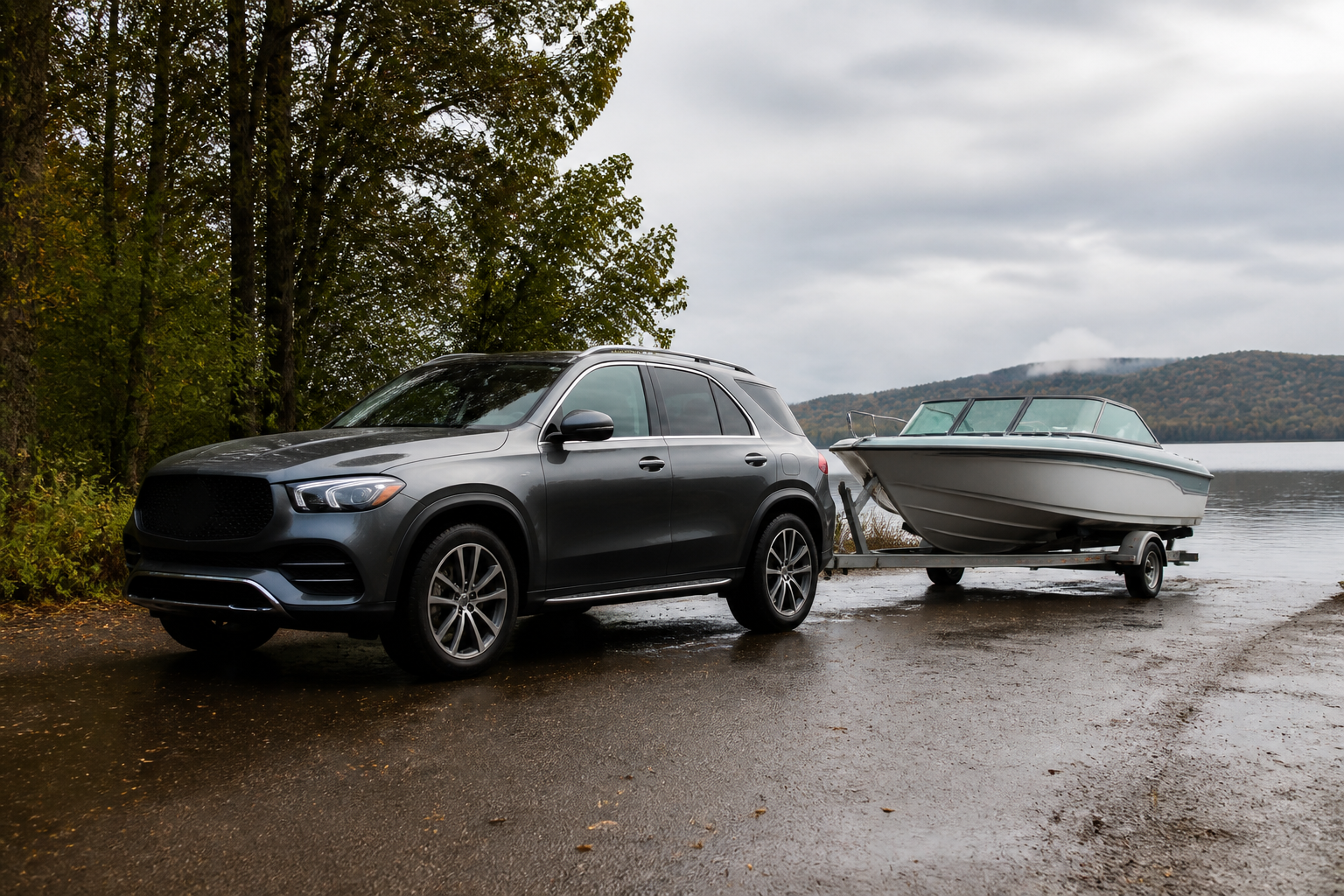
- Boat trailer: For a moderate boat, ensure the trailer weight plus tongue weight is within your verified GLE capacity for your exact configuration and hitch.
- Large equipment or camping gear: If interior cargo nears capacity, reassess whether towing remains practical or if you should maximize cabin loading instead of towing.
Limitations and caveats
Don’t rely on the headline figure alone. Manufacturing changes, regional variants, or optional equipment can alter the actual towing numbers for your specific GLE. Always verify through your vehicle’s documentation, dealer records, build sheet, or the official towing-specs for your exact configuration. The trailer itself also has weight distribution nuances—tongue weight, hitch class, and braking requirements all influence safe operation and vehicle handling, especially in crosswinds, hills, or with elevated loads.
Practical tips for safe towing with a GLE
- Perform a dry run with an empty trailer to check hitch alignment, light wiring, and braking control, then load gradually to verify handling at each weight increment.
- Keep the tongue weight within the recommended range for your hitch class and trailer type; excessive tongue weight can reduce steering feel, while too little can cause trailer sway.
- Ensure the trailer is equipped with functioning brake controls and that the vehicle’s stability/traction systems are configured for towing; disable or adjust as recommended by Mercedes-Benz for trailer use where applicable.
- Reverify pressures and tire load ratings on both vehicle and trailer tires with a full load; underinflated tires are a leading cause of tow-related incidents.
Conclusion
Before towing with a Mercedes-Benz GLE, confirm that your exact vehicle configuration supports the intended trailer weight, verify the installed hitch, and calculate payload with passengers and cargo. This disciplined approach helps you stay within safe limits, supports stable towing performance, and helps you decide whether to tow or prioritize interior cargo space for the trip. By treating towing capacity as configuration-dependent rather than a universal badge value, you can plan more accurately and avoid overloading or instability on the road.
Key sources: Car and Driver and Edmunds guidance on GLE towing and hitch setup, payload, and cargo considerations. https://www.caranddriver.com/mercedes-benz/gle-class; https://www.edmunds.com/mercedes-benz/gle/2026/suv/features-specs/
Sources
- Mercedes-Benz GLE towing: why the 7,700-pound headline requires the right hitch setup
- Mercedes-Benz GLE towing: why the 7,700-pound headline requires the right hitch setup
Frequently asked questions
How do I verify that my GLE has the correct hitch installed?
Check the build sheet or owner’s manual for hitch code, confirm with your dealer or service department, and inspect the vehicle for the specific hitch type and mounting hardware.
What happens if I tow beyond the GLE’s payload?
Overloading the payload can affect braking, steering, and stability; it can also exceed gross vehicle weight limits, increasing risk and potentially damaging components.
Can I tow without the factory hitch?
Towing without the appropriate hitch or beyond the allowed configuration is not recommended and may void warranty or compromise safety. Use the proper hitch and follow manufacturer guidance.
Related Mercedes-Benz guides