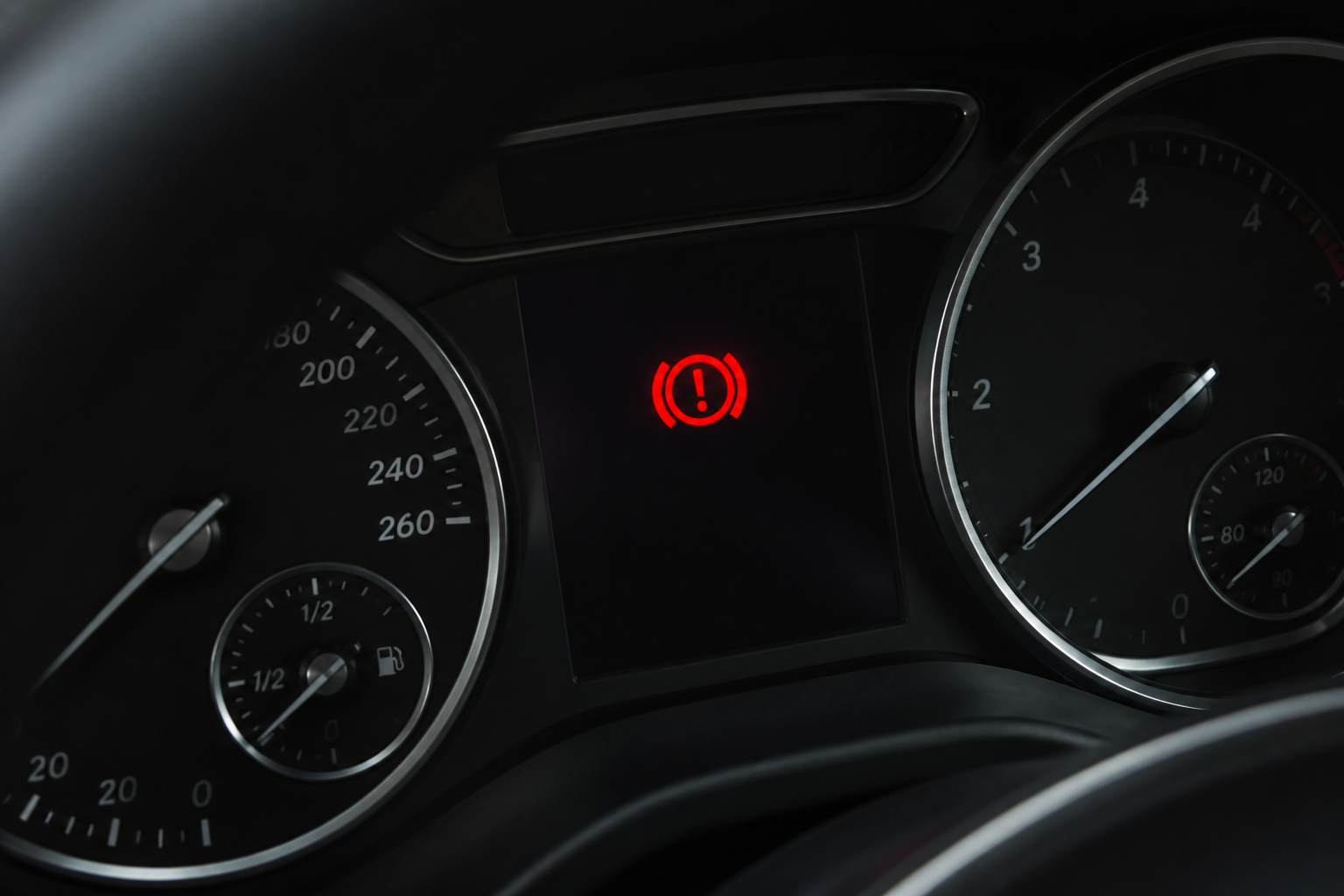
If the red brake warning lamp lights up with a warning tone, perform immediate owner checks as the manual suggests (verify messages in the display and check the brake-fluid level), and arrange a prompt inspection at a qualified workshop to diagnose low fluid, pad wear, or leaks. These conditions warrant professional service without delay to ensure brake system safety.
Key takeaways
- A red brake warning lamp with a warning tone indicates a potentially unsafe brake condition that requires immediate attention.
- Owner checks should focus on other display messages and brake-fluid level to help guide the next steps.
- Professional inspection is advised promptly to assess brake fluid, pad wear, and leaks for safe operation.
Red Brake Warning Lamp on a Mercedes: Immediate Owner Checks, Likely Causes, and Next Steps
A red brake warning lamp appearing on a Mercedes-Benz dashboard is a critical signal that something in the brake system requires attention. When this lamp comes on, often accompanied by an audible warning tone, it should prompt immediate owner-focused checks and a plan to have the system inspected by a qualified technician. The goal is to distinguish between a low brake-fluid level, typical wear indicators, and a potential leak or more complex brake-system fault, before the situation worsens. This article translates verified owner guidance into a practical diagnostic flow you can follow safely, keeping in mind model-dependent nuances and the limitations of at-home checks.
Key context from Mercedes-Benz owner literature and related safety documentation emphasizes three core steps: verify additional on-dash messages, assess whether the warning tone is present, and then act promptly to have the brake system inspected. Because braking performance is central to vehicle safety, treating any red brake warning as urgent is prudent, even if your driving situation seems normal on a short trip.
Owner-first checks you can perform immediately
- Note the exact message and any accompanying display text. Look at the multifunction display or instrument cluster for specific wording such as “Check brake fluid,” “Brake pads,” or other brake-related warnings. Some vehicles use a combination of warnings that together indicate the likely fault area.
- Test the warning tone behavior. If the tone repeats or remains continuously audible, this generally signals an active brake-system fault rather than a transient cosmetic warning. Do not assume it will go away on its own.
- Check the brake-fluid level visually if your model provides a transparent reservoir or level indicator. Some vehicles show fluid level on the master cylinder reservoir with markings for full and low. If the fluid level is clearly low, this strongly points to a fluid-supply issue that must be addressed promptly. (Note: Only perform this check if you have a safe, level surface and can access the reservoir without opening hot surfaces or low-pressure lines.)
- Assess braking feel and behavior before moving the car. If you notice a soft or spongy brake pedal, a pulling tendency, grinding noises, or a significant drop in braking performance, treat it as a high-priority safety issue. Avoid aggressive driving or long-distance travel until the system is diagnosed.
- Map any recent maintenance or leaks. If you recently replaced brake components, serviced the lines, or observed fluid puddles under the car, communicate this information to your technician, as it helps pinpoint potential leaks or incorrect installations.
These steps are designed to help you gather observable, reportable information for the service visit. They do not replace professional diagnostics, as the brake system comprises hydraulics, wear sensors, and electronic control logic that require proper testing equipment and approved service procedures.
Likely causes owners should consider before a workshop visit
- Low brake-fluid level. This condition can stem from pad wear (the caliper piston retraction reduces clearance and may reveal worn pads) or from a hydraulic leak in a line, connection, or the master cylinder. A reduced fluid level lowers the hydraulic pressure available for braking and can trigger the red warning.
- Brake-pad wear indicators. Many Mercedes-Benz models monitor pad thickness and trigger a warning when wear approaches a threshold. If one axle’s pads wear to that threshold, the dashboard might display a corresponding message or symbol, sometimes in combination with the red light and tone.
- Leak and brake-fluid integrity issues. Leaks anywhere in the system—calipers, lines, or connections—can reduce fluid quantity and pressure, compromising braking performance and potentially allowing air into the hydraulic circuit.
- Electrical or sensor-related notifications. Some models run wear-monitoring logic that communicates status via the instrument cluster. In rare cases, a sensor or controller fault can trigger a warning independently of actual hydraulic condition, though this is typically accompanied by other diagnostic cues.
Why you should escalate to a workshop immediately
Mercedes-Benz and safety-focused regulatory documents consistently recommend prompt professional inspection whenever a red brake warning lamp is illuminated with a warning tone. The brake system is central to vehicle stopping capability, and any potential loss of hydraulic pressure, fluid, or pad thickness can escalate into dangerous situations if left unaddressed.
Practical diagnostic approach at the workshop often includes:
- Measuring the brake-fluid level and inspecting the reservoir and cap for signs of leaks or contamination.
- Visually inspecting brake pads at each axle for thickness and wear indicators; if wear is detected on one axle, examining the others as part of standard practice.
- Checking for hydraulic leaks around calipers, lines, joints, and the master cylinder, and verifying the integrity of the brake fluid under pressure testing.
- Scanning the vehicle’s brake-system fault codes with proprietary diagnostic tools to identify sensor, module, or valve faults that may accompany the warning.
Note that certain model-year variations may influence the exact sequence of checks or the display wording. If you own an older or newer model, your vehicle’s owner manual will outline the precise messages that can appear and the recommended immediate actions. In general, a red brake warning with a persistent tone is not safe to ignore, even if you are near home and can arrange service soon.
What to tell your technician
Prepare a concise brief for the technician to speed diagnostics:
- Describe the exact lamp behavior: red light, any flashing patterns, and whether a warning tone is present • observed display messages in the instrument cluster or multi-information display.
- Note recent driving events: hard braking, heavy loads, or trips on rough roads that might affect braking components.
- Indicate any fluid concerns: whether you visually checked the brake-fluid level and if the reservoir showed low levels or signs of leakage.
- Share any maintenance history linked to braking components, leaks, or hydraulic services.
With the information you provide, the technician can prioritize checks for fluid level, pad wear, and leak integrity, and then proceed with a comprehensive brake-system diagnostic. This approach aligns with both Mercedes-Benz owner guidance and the NHTSA’s emphasis on brake-pad wear monitoring and vehicle messaging when wear status is detected.
Practical considerations and limitations
Model-dependent caveats matter. Some vehicles display more granular brake-fluid data or use different indicators for pad wear and fluid condition. In certain cases, the red warning lamp may appear in coordination with other fault warnings that require a broader diagnostic approach, including ABS/ESP systems that interact with braking behavior. If the vehicle is equipped with electronic brake-pressure modulation or advanced driver-assistance features, technicians may also assess how these systems interact with the warning to rule out false alarms or sensor faults.
While the at-home checks can help you prepare for service, they cannot substitute for a professional brake-system inspection. A qualified shop will perform a hands-on evaluation under proper safety procedures, pressure checks, and, if needed, brake-bleeding, pad replacement, or line repair to restore full braking capability.
Sources