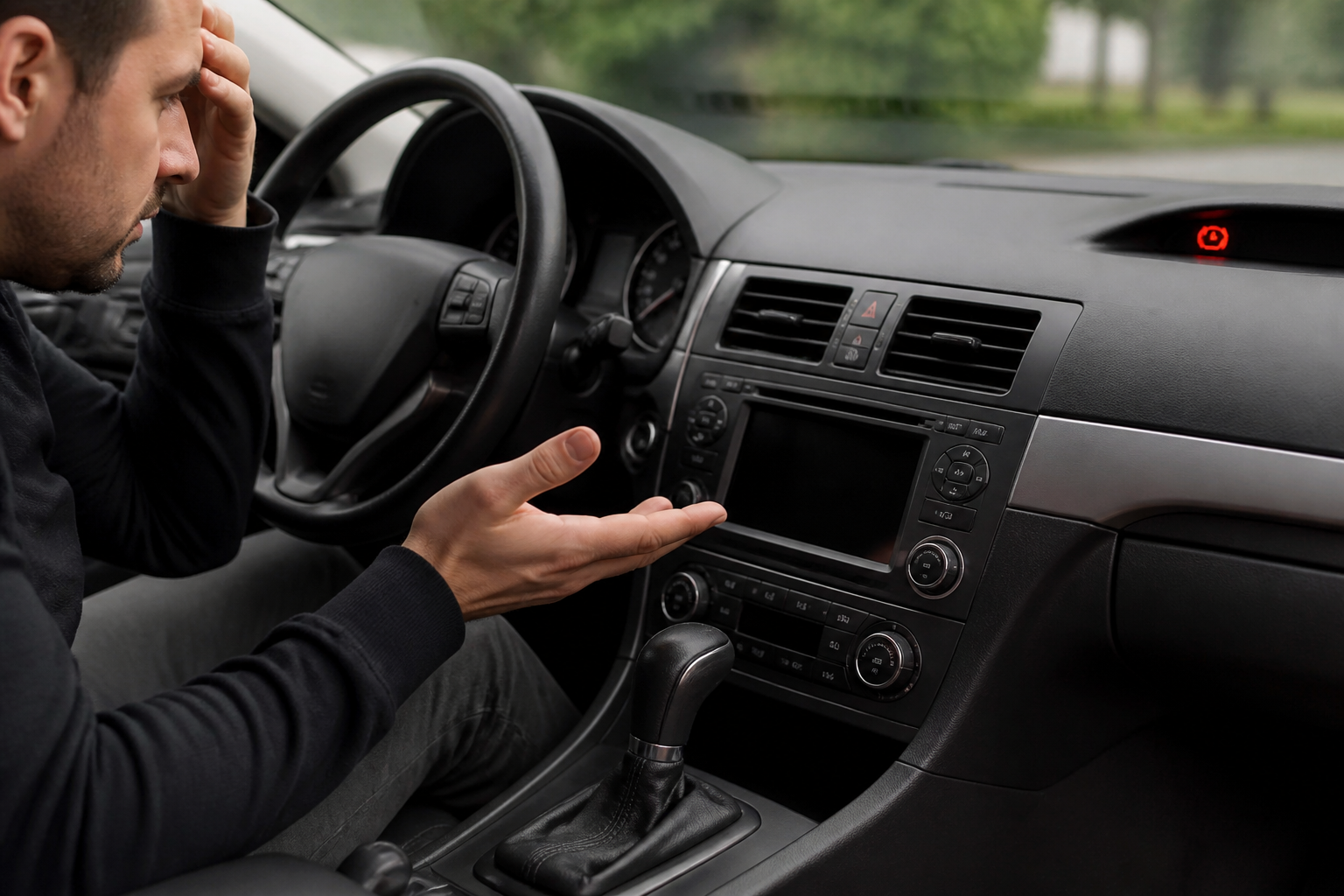
If your Mercedes-Benz SRS/airbag warning lamp stays on or behaves abnormally, it indicates a potential fault in the airbag or restraint system. Immediate steps: (1) treat it as a safety-critical condition; (2) limit driving if possible and arrange urgent diagnosis at an authorized Mercedes-Benz service center; (3) consult the owner’s manual guidance on lamp behavior and follow through with a professional check as soon as possible.
Key safety takeaways
- SRS warning lamp behavior (on, off, or timing) signals system status: a fault should not be ignored.
- Abnormal lamp behavior requires prompt diagnostic service at an authorized Mercedes-Benz center.
- Airbags deploy rapidly; a malfunctioning SRS may affect deployment or restraint efficiency and must be addressed urgently.
Mercedes-Benz SRS airbag warning lamp: what it means and what to do next
The SRS (Supplemental Restraint System) airbag warning lamp is a critical safety indicator on Mercedes‑Benz models. It signals the health and readiness of the vehicle’s restraint systems, including airbags, pretensioners, seat occupancy sensors, and related control circuitry. Understanding how the lamp is supposed to behave during ignition and startup, and what abnormal behavior implies, helps owners triage safely and schedule timely diagnostics.
In typical operation, the SRS warning lamp lights during the ignition self-check, then should extinguish within a few seconds after the engine starts. If the lamp stays on, or if it flickers, or if it does not follow the expected start-up pattern, the system has detected a fault. A malfunctioning SRS can affect airbag deployment timing or restraint performance in a crash, and it can also indicate issues with components such as wiring, sensors, or the control unit. Treat any persistent or intermittent warning as safety-critical and arrange professional inspection promptly at an authorized Mercedes‑Benz center.
This guidance aligns with the official statements you’ll find in Mercedes‑Benz owner materials: normal operation is a clear, predictable self-check cycle, with the lamp coming on briefly at ignition and turning off soon after the engine starts. Deviations from this pattern are not normal and warrant diagnostic attention. Because modern safety systems are increasingly integrated, a SRS fault can involve multiple subsystems, including occupant classification and seat wiring, which is why a comprehensive fault code readout is essential to identify the root cause.
How to interpret lamp behavior in the field
- Lamp extinguishes within a few seconds after engine start: This is generally consistent with a healthy SRS self-check. No immediate action beyond following the maintenance schedule is required, though you should still observe for any future warning changes.
- Lamp stays on after startup or remains lit during driving: This indicates a fault state. Do not assume the system is functional; arrange diagnostic testing promptly.
- Lamp lights during ignition and then briefly reappears while driving: This pattern can indicate an intermittent fault or a fault that is active during monitoring rather than initial deployment. Diagnostic inspection is recommended.
- Lamp flickers or behaves erratically: Any irregular or non-typical behavior should be treated as a fault condition and checked at the earliest opportunity.
It’s important to note that the SRS is a safety-critical system. Even if an airbag has never deployed, a fault state may prevent proper deployment in a crash or could cause unrelated safety components to be inoperable. For that reason, Mercedes‑Benz manuals emphasize diagnosing and repairing the system at an authorized service center rather than attempting field repairs yourself.
What to do immediately if the SRS lamp behaves abnormally
- Do not ignore a warning that persists or recurs. Treat any abnormal lighting pattern as a fault condition that requires professional diagnosis.
- Limit driving when necessary. If you must drive, keep trips short, avoid high-speed or aggressive driving, and plan a diagnostic visit at the earliest feasible opportunity. Consider using vehicle storage or a tow service if the route is long and the fault is clearly unresolved.
- Consult your owner’s manual for initial guidance. The manual describes expected SRS self-check behavior and when a malfunction is indicated. If the lamp does not illuminate at ignition or does not extinguish after starting, treat it as a fault and seek service promptly at an authorized Mercedes‑Benz center.
- Obtain a professional diagnostic. A trained technician will retrieve fault codes from the airbag control unit and associated modules, inspect wiring harnesses, sensors, and connectors, and determine whether a component replacement, wiring repair, or software update is required. Do not attempt to service airbag components yourself.
Diagnostic work is typically performed with a dedicated Mercedes‑Benz diagnostic tool that can read stored fault codes and live data. The goal is to identify whether the fault is a sensor issue, a wiring fault, a module communication problem, or a fault that requires a component replacement. In many cases, software updates to the SRS control module or related systems are part of the remedy, which is another reason to rely on an authorized center with current tooling and service data.
The broader safety context
Authorities stress the rapid deployment nature of airbags and the consequences of a malfunctioning system. The NHTSA notes that airbags deploy extremely quickly, and incorrect operation can increase injury risk. Importantly, once an advanced air bag deploys, it cannot be reused and must be replaced, making prompt diagnosis crucial even when no deployment has occurred. This context reinforces why owners should treat the SRS warning lamp as a high-priority safety notice rather than a routine fault.
Practical considerations and limitations
- Vehicle age and configuration matter. Older MB models may present slightly different self-check timing or lamp behavior, but the core principle remains: deviation from the expected ignition cycle warrants investigation.
- Interdependencies exist. The SRS interacts with occupant classification, seat wiring, and other safety systems. A fault in one area can manifest as a warning in another, so a holistic diagnostic approach is essential.
- Do not rely on temporary reset tricks. Clearing codes or disconnecting power to reset the lamp is not a proper fix for an SRS fault and can mask a real safety problem. A proper diagnostic and repair is required.
- Document symptoms for the technician. Note exact lamp behavior, whether it happens on ignition, after starting, or during driving, and any accompanying dashboard messages. This information helps the technician reproduce the fault scenario and verify repair success.
Sources and further reading
Authoritative references that describe expected SRS lamp behavior and the importance of timely inspection include:
- NHTSA: Vehicle Air Bags and Injury Prevention
- MBUSA: 2013 C-Class Sedan Operator’s Manual (SRS and warning lamp behavior)
- MBUSA: 2012 SL Operator’s Manual (SRS safety-system warnings)
Bottom line: treat any abnormal SRS warning lamp behavior as a safety-critical fault and seek an authorized Mercedes‑Benz service diagnostic as soon as possible. Prompt diagnosis helps ensure occupant protection systems perform as designed when they are needed most.