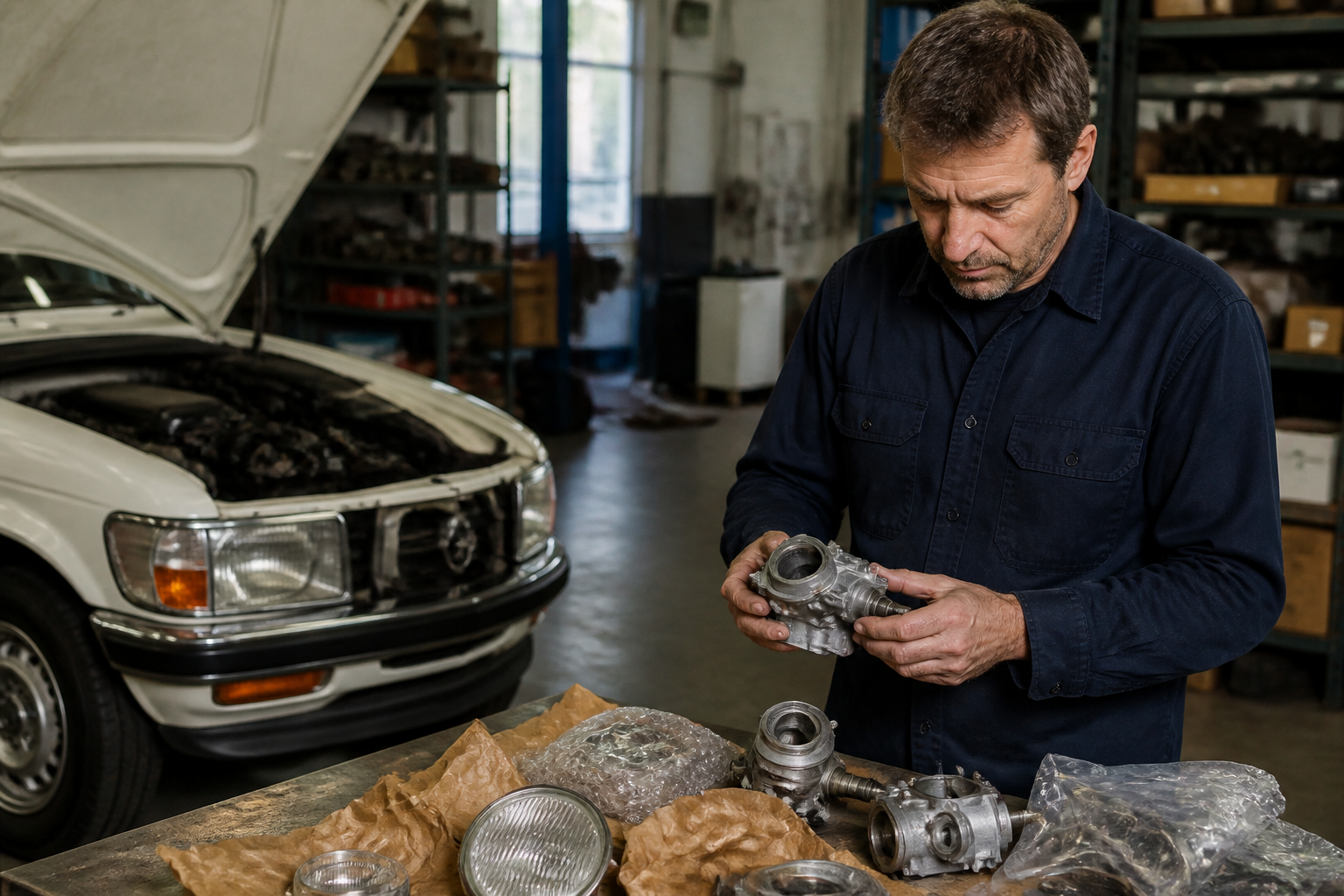
Use the Mercedes-Benz Classic Parts Search first. If the part is not found, submit a “Request” for non-availability to check remanufacture feasibility. If needed, contact an authorized Mercedes-Benz service partner for further checks, and explore fallbacks such as repair measures or sourcing via authorized dealers or the free market. The Mercedes-Benz Classic Center in the U.S. can also assist with official parts inquiries.
Key takeaways
- Start with the Classic Parts Search for precise part numbers; it indicates production status and may require VIN/vehicle data via a partner.
- Submit a “Request” when a part is not available to have product management review remanufacture feasibility.
- If online search fails, contact an authorized service partner or the Classic Center for guidance and potential sourcing options.
Mercedes-Benz Classic Parts When a Part Is NLA: How to Request, Who to Contact, and What to Do Next
When a Mercedes-Benz classic or discontinued spare part isn’t found in the usual catalogs, owners and service teams need a reliable, repeatable sourcing workflow. This article expands on the official process, adds practical decision criteria, and highlights model-dependent caveats to help you move from a part-not-found situation to a defensible maintenance plan. It stays faithful to official channels while providing actionable context for real-world ownership and service decisions.
1) Begin with the Mercedes-Benz Classic Parts Search
The starting point is the Mercedes-Benz Classic Parts Search. If you know the exact part number, you can quickly confirm availability, price, and lead times for genuine parts. If you don’t have a part number or the search returns no results, you’ll usually be prompted to enter vehicle data (VIN, model, year, equipment variants) via a participating service partner to broaden the search and improve compatibility matching.
- Part-number-led lookup: Direct visibility into stock status, price, and typical delivery windows for parts that are still produced or held in regional distribution.
- VIN-based search: For older models with unusual configurations, supplying vehicle data can surface compatible components or correct cross-references more reliably than a generic part number search.
- Remanufacture status: The system may flag remanufacture feasibility for non-produced parts, signaling potential future production or alternative engineering solutions.
2) Submit a “Request” for non-available parts
If the exact item isn’t currently produced, submit a Request through the Classic Parts Search. This action communicates demand to product management and prompts a review of remanufacture feasibility from both engineering and business perspectives. A Request is a data signal rather than a guarantee of production, but it keeps the part on a watchlist for potential future consideration.
- What a “Request” accomplishes: Captures documented demand, informs feasibility discussions, and flags the part for potential remanufacture evaluation.
- What it does not guarantee: Remanufacture depends on technical viability, cost, expected volume, supply chain factors, and regulatory considerations.
- Follow-up and monitoring: Requests are periodically re-evaluated as tooling, supplier ecosystems, and customer interest evolve. Expect communications or status updates through the official channels.
3) When the online system can’t locate the part
If the Classic Parts Search returns nothing and a Request has not yielded a result, the next step is to engage an authorized Mercedes-Benz service partner. A technician at the partner level can perform a deeper, more granular check, confirm cross-compatibility, and explore sourcing paths through official channels beyond the online catalog.
- Dealer/partner engagement: Experienced staff can verify part numbers, identify cross-compatibility with other models, and determine regional stock differences.
- Documentation readiness: Prepare the vehicle VIN, exact model variant, trim level, and any aftermarket substitutions so the consultant can make a precise assessment.
4) Official contact points and support channels
The Mercedes-Benz Classic Center (notably in the United States) is a central resource for classic-vehicle parts and restoration consulting. It can guide owners to the appropriate part sources, provide referrals to dealers, and help interpret whether a given part is truly no longer produced or if a workaround exists.
- Classic Center contact options: Use the official channels published for classic-part inquiries (email, phone, and physical address) to initiate a structured parts consultation.
- What to expect in response: Expect information about available options, potential lead times, and recommended alternatives if the exact part cannot be sourced.
5) Practical fallback options if the part remains unavailable
When a part is confirmed NLA and remanufacture isn’t feasible in the current cycle, several legitimate routes exist. Each option carries trade-offs related to authenticity, fit, performance, and ongoing maintenance. Decisions should be documented and revisited if conditions change.
- Repair or adaptation measures: In some cases, a functional repair, modification, or adaptation can restore operation without compromising safety, provided a qualified technician documents the process and justifies the change against the vehicle’s standards.
- Authorized substitutes: Dealers or the Classic Center may suggest late-model parts adapted for older vehicles or officially sanctioned interchange components that preserve reliability while aligning with current engineering practices.
- Independent free-market sourcing: If official routes aren’t available, third-party sourcing may be considered. Rigorously verify authenticity, condition, and compatibility; require corroborating documentation and a professional inspection before installation.
- Provenance and documentation: Maintain a complete maintenance history for the vehicle with part numbers evaluated, decisions made, and any modifications. This assists future owners or restorers in understanding the vehicle’s longitudinal care.
6) Model- and variant-specific caveats
Sourcing success can vary by model family, generation, and equipment. Early or highly specialized variants may have fewer cross-compatibilities, while some mid-generation parts surface more readily due to shared platforms. Always prioritize genuine parts through official channels and verify compatibility against the vehicle’s original specifications before committing to a non-standard path.
7) Practical workflow checklist for owners and workshop teams
- Identify the exact part number if possible; collect vehicle details (VIN, model year, trim, options).
- Search the Classic Parts Search for direct availability and remanufacture indicators.
- If not found, submit a non-availability “Request” and monitor for status updates.
- Contact an authorized service partner for a hands-on check and to explore recommended alternatives.
- Consult the Mercedes-Benz Classic Center for guidance and referrals when needed.
- Evaluate fallback options (repair, authorized substitutes, or certified third-party sourcing) and document the final decision.
Limitations and caveats
The official workflow is robust for many parts, but it does not guarantee immediate availability and does not replace professional judgment. Remanufacture feasibility rests on engineering feasibility, tooling availability, cost considerations, and market demand. Some regions may face longer lead times or limited access to certain channels. Always confirm the latest steps with the official Classic Parts resources, as processes can evolve with program updates and regional variations.
Notes on sources and official context
The guidance presented here reflects official information from Mercedes-Benz Classic Parts Search and the Classic Center, contextualized for owners and workshop teams. It is intended to provide a coherent, end-to-end workflow that aligns with the documented practices for locating hard-to-find parts while avoiding speculation about specific part availability. Core references include the Classic Parts Search Help page, the MBUSA Classic Center About Us page, and related materials describing how the Classic Center supports hard-to-find parts and may refer to local dealers for procurement.
For quick reference, consult the official sources: Mercedes-Benz Classic Parts Search Help, Mercedes-Benz Classic Center – About Us, and the overview documentation describing the Classic Center’s role in facilitating parts access, including referrals to local dealers when needed.
Sources