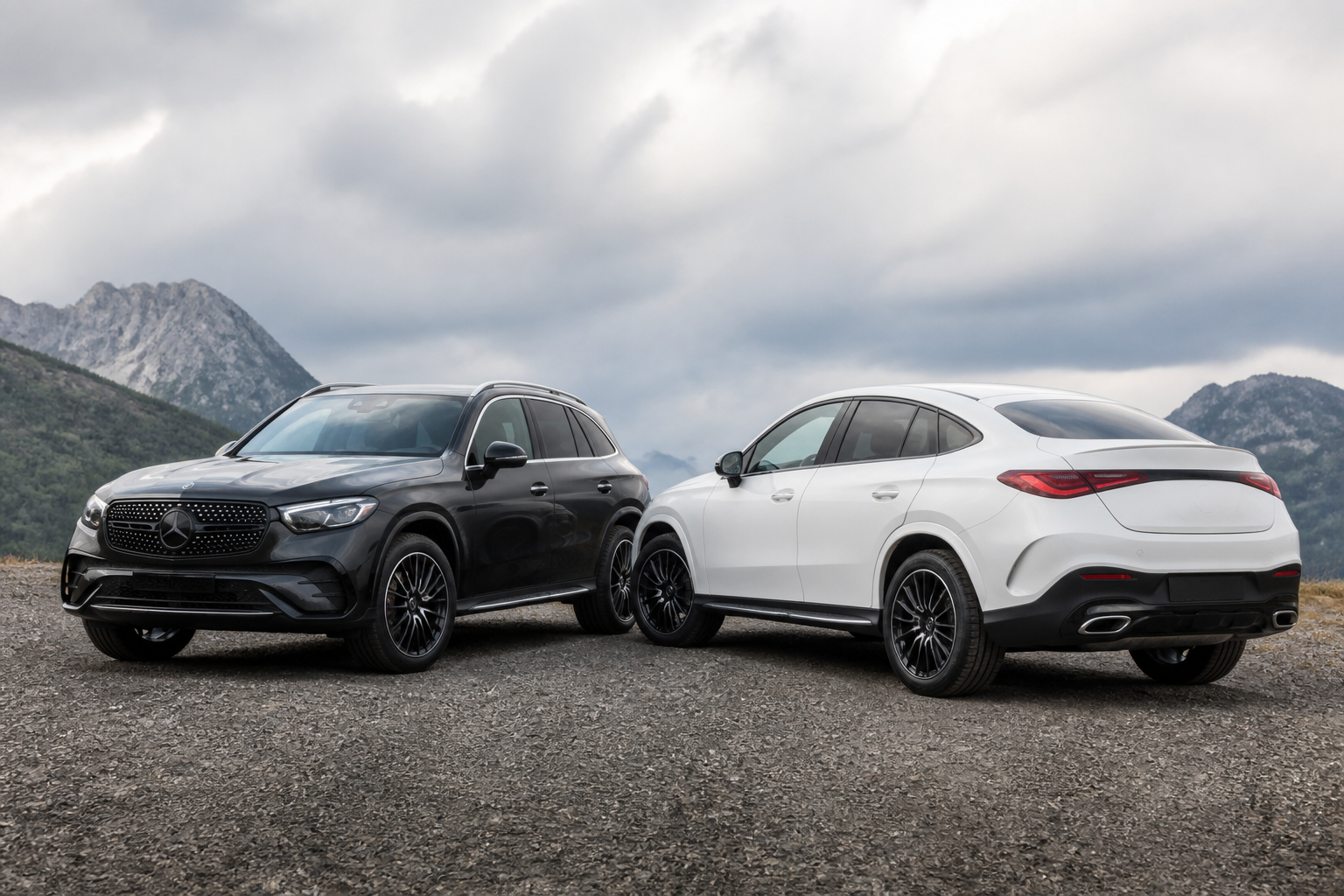
For typical everyday storage, the 2024 GLC SUV generally offers more cargo space behind the second row and with the seats folded than the GLC Coupe, making it the more practical choice for groceries, strollers, and weekend luggage. The Coupe trades some cargo capacity for a sportier profile and styling, with smaller rear storage in both measured states.
Key takeaways
- GLC SUV behind-second-row cargo: about 21.9 cu ft vs Coupe’s 19.2 cu ft (SUV slightly larger in this measure).
- Folded-second-row cargo: SUV around 56.3 cu ft vs Coupe’s 52.6 cu ft (SUV still larger).
- Coupe offers style and possibly better rear visibility but less practical storage for larger loads.
The 2024 Mercedes-Benz GLC lineup remains a practical choice for daily errands, with cargo capacity figures published by Mercedes-Benz USA and corroborated by automotive press coverage. This article expands the side-by-side look at the two closely related body styles—the GLC SUV and the GLC Coupe—through the lens of real-life storage needs, focusing on cargo volume behind the second row and with the second row folded, then noting any tradeoffs in headroom and visibility tied to the coupe silhouette. Where figures come from official sources, we translate them into everyday loading scenarios to help buyers decide which configuration aligns with their typical use case.
Cargo volumes in real-life terms: behind the second row and with the seats folded
The official GLC Coupe cargo numbers from MBUSA state 19.2 cubic feet of cargo volume behind the second row, and 52.6 cubic feet when the second row is folded. These figures establish the baseline practicality of the coupe when rear seating is in use and when it is stowed for larger loads. Independent measurements and automotive press summaries corroborate that the GLC SUV generally offers a larger rear cargo area. For example, Car and Driver’s specifications indicate behind-the-second-row cargo space of 21.9 cubic feet for the standard GLC SUV, with a maximum of 56.3 cubic feet when the rear seats are folded flat. Edmunds’ side-by-side comparison also cites similar numbers that reflect the practical gap between the two bodies in everyday loading tasks. In practical terms, this means that routine groceries or mid-sized weekly shopping are more effortlessly contained in the SUV, while the Coupe remains workable for smaller, more frequent trips and occasional longer items when the seats are down. The exact fit will depend on item shapes and stacking, as well as how often the vehicle is loaded with full-height items that may challenge the rear opening.
To visualize the difference, imagine a standard grocery run, a family shopping trip with a stroller, or a weekend bag set. The SUV’s larger behind-second-row space allows a taller stack or wider item with less need to angle or compress items. The Coupe, with its more coupe-like rear opening and lower roofline, can still swallow typical grocery runs and luggage for a weekend away, but may require more planning about item dimensions or occasional seat folding to maximize usable length and height.
Tradeoffs: what you give up and what you gain with the Coupe
Choosing the GLC Coupe brings a distinctive silhouette, a lower roofline, and often stylistic and aerodynamic benefits that some buyers value for visual appeal and rearward visibility. However, the cargo-area versus footprint tradeoff is real. The Coupe’s smaller cargo figures reflect its two-door-like shape and sleeker rear profile, which typically reduces the rear opening height and overall maximum cargo volume. By comparison, the SUV maintains a taller cargo area with a larger rear aperture, aiding loading of taller or bulkier items and providing more straightforward luggage arrangement when seats are not down. Practical buyers who regularly transport strollers, large grocery runs, or stacked suitcases are more likely to find the SUV’s cargo envelope easier to use without rearranging items.
Another aspect of the tradeoff is how the rear seats fold and the resulting flat-load space. In both bodies, folding the rear seats increases total cargo length, but the SUV preserves a generally more forgiving amount of vertical space when items are tall, while the Coupe may require careful placement or partial folding of seats to maximize load length. If your typical trips involve rigid or high-volume loads (for example, a stroller with a folded frame, a week’s worth of groceries for a family, or multiple suitcases), the SUV layout tends to offer more straightforward accommodation.
Practical scenarios: translating numbers into everyday loading tasks
Consider three common use cases that buyers often encounter. First, a weekly grocery run with multiple tall containers and a few larger items like a case of beverages. The SUV’s larger behind-second-row space generally allows for easier stacking and less need to rearrange items in the cargo area. Second, a family outing with a stroller, a portable kid’s playset, and a medium-sized cooler. The SUV again tends to offer more usable height and a broader base for placing the stroller and cooler side by side. Third, a weekend trip with two overnight bags and a small carry-on. Both bodies can accommodate this, but the Coupe may require more thoughtful packing or partial folding of the rear seats to achieve a flat, unobstructed load floor, especially if tall suitcases are involved.
Headroom, visibility, and the coupe silhouette: the non-cargo tradeoffs
Beyond cargo figures, the Coupe’s styling and roofline influence rear passenger headroom and rearward visibility. The lower rear roof can marginally reduce headroom and increase shoulder space constraints for rear passengers compared with the SUV. In daily driving, rear visibility is often impacted by the Coupe’s sloped rear window and sportier window line, which some drivers may perceive as a tradeoff for the sleek profile. These considerations matter when deciding between two vehicles that otherwise share mechanical underpinnings and powertrains.
Bottom-line guidance for real-life storage needs
For buyers where everyday storage capacity is a primary decision factor, the GLC SUV is typically the more capable choice, thanks to larger cargo behind the second row and a more generous folded-load volume. Those who prioritize the Coupe for its styling, a sportier driving character, and a lower roofline may still find the cargo space adequate for lighter weekly errands, shorter weekend trips, or smaller loads, provided they are mindful of item dimensions and use of rear-seat folding. In scenarios that regularly involve bulky groceries, multiple large bags, or gear for family activities, the SUV wins on practicality without forcing compromises in basic daily loading.
Practical recommendation: assess your typical weekly loads, then compare not just the published numbers but your actual item sizes. If you often haul tall items or substantial groceries in a single errand, the SUV is likely the safer pick. If your uses skew toward passenger-focused comfort, style, and shorter, less frequent shopping trips, the Coupe remains a compelling option.
Sources: Mercedes-Benz USA – 2024 GLC Coupe cargo volumes (19.2 cu ft behind second row; 52.6 cu ft with second row folded); Car and Driver – GLC SUV cargo volumes and relative practicality; Edmunds – GLC vs GLC Coupe comparison. See official page: https://www.mbusa.com/en/future-vehicles/2024-mercedes-benz-glc-coupe and comparative references: https://www.caranddriver.com/mercedes-benz/glc-class/specs/2024/mercedes-benz_glc-class_mercedes-benz-glc300_2024 and https://www.edmunds.com/car-comparisons/mercedes-benz-glc-class-vs-mercedes-benz-glc-class-coupe/.
Sources