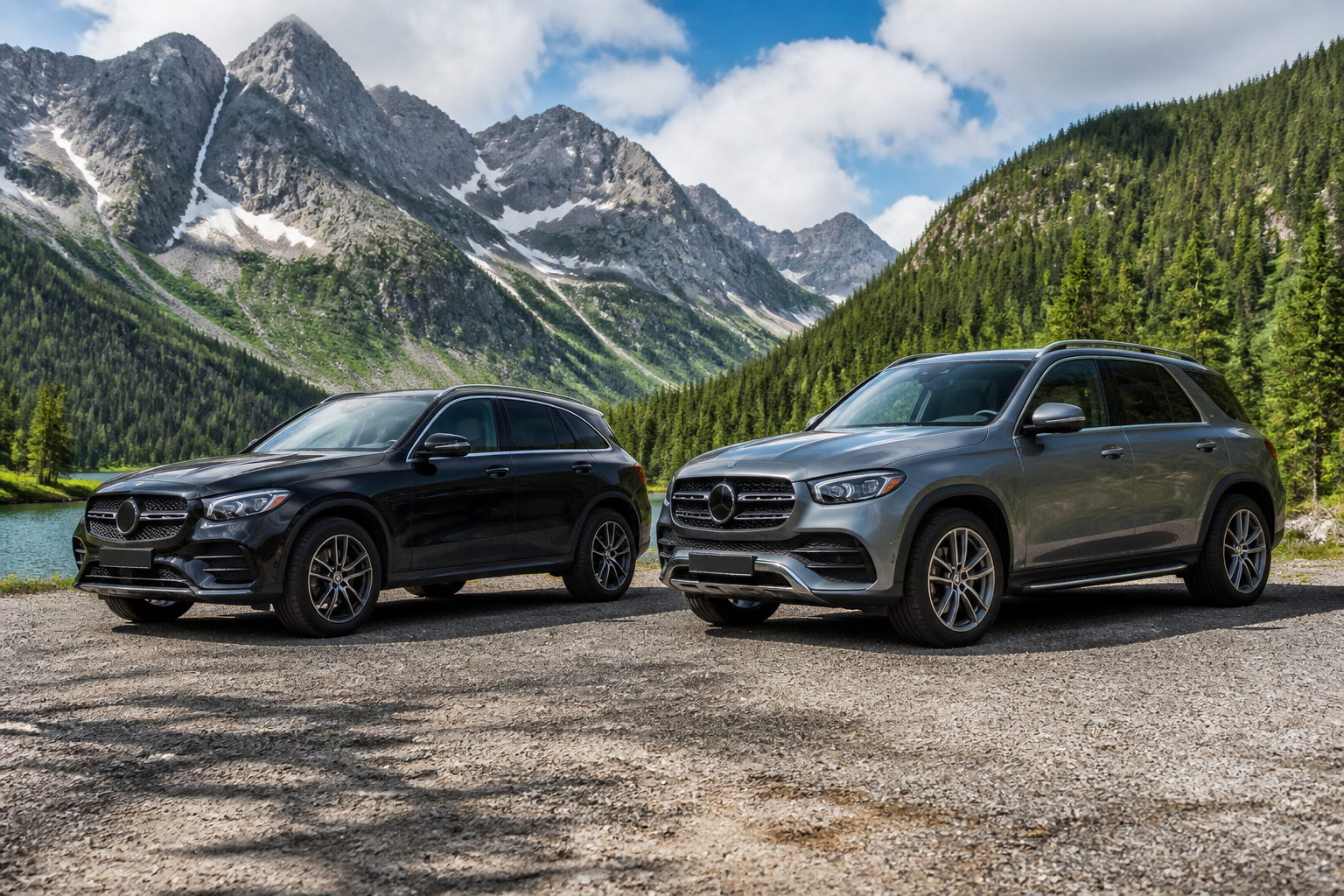
For a five-year ownership view, the Mercedes GLC is the lower-cost, smaller footprint option best suited to buyers prioritizing price and urban practicality, while the Mercedes GLE offers more space and a higher-end feel for families needing extra room and premium presence, justifying its higher ownership costs.
Key takeaways
- GLC favors lower upfront and ongoing costs with a compact footprint.
- GLE offers more interior space and a more premium lift in the lineup.
- Five-year ownership cost signals generally align with the size/price gap: GLC cheaper to own, GLE more capable but costlier.
The Mercedes-Benz GLC and GLE sit at opposite ends of the same family, delivering distinct packages of size, daily practicality, and refinement. This expanded guide builds on verified sourcing to anchor a buyer’s decision in five-year ownership reality—not just sticker price—so you can determine where the balance point lies for your family’s needs and budget.
How size and space shape everyday life
The GLC is the more compact option, optimized for urban practicality, easier parking, and simpler loading in tight spots. Its smaller footprint translates to nimble handling, easier maneuvering in congested streets, and typically lower upfront costs that matter if your garage or driveway is modest or if your regular trips involve a lot of city errands with car seats and gear. The GLE, by contrast, offers more interior volume, a roomier second row, and greater cargo capacity. For families with growing gear needs, frequent longer trips, or a desire for a more premium interior with additional headroom and comfort, the GLE’s larger footprint becomes a clear practical advantage rather than a badge-and-blade upgrade alone.
That size delta also shapes how each model fits within Mercedes’ broader lineup. The GLE is positioned as the mid-size SUV that sits between the compact GLC and the full-size GLS, a stance echoed by reputable reviewers when describing its role in the family of Mercedes SUVs. The result is a vehicle that adapts more readily to taller passengers, longer-duration trips, and cargo stacks that exceed what the GLC can reasonably manage.
Capability and family role
In everyday terms, “capability” blends seating comfort, cargo versatility, towing potential, ride refinement, and technology availability. The GLC delivers solid capability for most urban and suburban families, with a confident chassis, composed ride, and a balance of efficiency and agility that makes daily driving less tiring. The GLE steps up in size and, in many trims, in refinement and feature availability, delivering an environment that can handle longer commutes, weekend getaways, and cargo volumes that stretch the GLC’s limits without sacrificing rear-seat comfort.
Both models share Mercedes’ emphasis on safety and driver-assistance systems, but real-world practicality hinges on how you use the rear seats and the cargo area. If you regularly carry multiple child seats, participate in carpool rotations, or haul gear for sports and hobbies, the extra space of the GLE reduces compromises. If a compact footprint and easier daily handling are paramount, the GLC remains a capable, comfortable choice that does not demand a premium on space you don’t need.
Pricing and the five-year total-cost perspective
Pricing and ownership costs over a five-year horizon are a central decision driver. Generally, the GLC starts with a lower sticker price and tends to show a leaner five-year ownership-cost profile when you factor depreciation, financing, taxes/fees, fuel, maintenance, and insurance. The GLE’s larger footprint, higher base price, and mid-to-upper tier positioning in the lineup tend to translate into higher five-year costs, though the gap narrows when you select efficient powertrains, favorable financing, and options that support higher resale value and dependable maintenance costs.
Independent comparisons consistently show a meaningful cost signal: upfront price differences matter, and depreciation plays a significant role in the five-year tally. Insurance, fuel, and maintenance costs vary with powertrain choice and usage. In a five-year frame, a buyer prioritizing lower total ownership expense may lean toward the GLC, particularly if their daily duties align with the GLC’s size and capability envelope. Buyers who need more space, a roomier interior, and a stronger presence within the Mercedes lineup may find the higher five-year cost of the GLE justified by long-term usability and perceived prestige.
Real-world ownership economics also depend on regional incentives, financing terms, and the buyer’s annual mileage. For households with higher usage and a five-year horizon, the GLE’s interior volume and versatility can translate into better perceived value when you weigh comfort and practicality against the premium price.
Which one is right for you? A practical decision checklist
- Daily footprint: Do you park in tight spaces often, or is garage space plentiful enough for a larger SUV?
- Passenger and cargo needs: How many adults and how much cargo do you routinely carry on weeknights, weekends, and vacations?
- Budget and cost discipline: Is keeping five-year ownership costs low more important, or is prioritizing interior space and a premium feel worth a higher initial outlay?
- Usage pattern: Are long highway trips and frequent family journeys common, or are most trips short-range with lighter loads?
- Long-term value: Do you expect the vehicle to stay in the family for five years or more, making resale value and perceived prestige relevant?
For buyers who answer “compact footprint, lower ongoing cost, and easier daily usability” to most questions, the GLC is typically the pragmatic pick. If the answer leans toward “more space, more seat comfort, and a mid-size luxury SUV that can handle growing needs with a premium feel,” the GLE is the stronger candidate, even with a higher five-year outlay.
Notes on interpretation and model caveats
All findings here are grounded in published, verifiable comparisons and editorial analyses. Specific five-year cost figures vary by market, option packages, financing terms, and local incentives. Depreciation trajectories differ by trim and equipment, and the resale value impact of optional features depends on market preferences. Real-world fuel economy, insurance pricing, and maintenance costs depend on driving behavior, regional service pricing, and maintenance history. Treat the five-year cost narrative as a planning framework rather than a guaranteed forecast, and pair it with current local pricing data and personal usage projections.
Simple conclusion: which one should you buy?
Choose the GLC if you prioritize tighter city maneuverability, a lower upfront price, and a five-year ownership footprint focused on efficiency and practicality. Choose the GLE if interior space, passenger comfort, and a stronger presence in the Mercedes lineup matter more, with the understanding that you’re trading some five-year cost efficiency for greater versatility over the same period.
Further reading and sources
- Edmunds: Mercedes-Benz GLC vs Mercedes-Benz GLE comparison (2026)
- Cars.com: GLC 300 vs. GLE 350
- Car and Driver: 2026 Mercedes-Benz GLE-Class review, pricing, and specs
Related Mercedes-Benz guides
- Mercedes-Benz ownership cost to own maintenance repairs warranty
- How to install and use the Mercedes-Benz Wallbox for safe home charging
- How to plan a maintenance budget around Mercedes ASSYST reminders and Service A/B interval
- Finding and diagnosing AIRMATIC leaks before compressor failure
- Brabus Rocket Emblems and Badges Review TC-20522