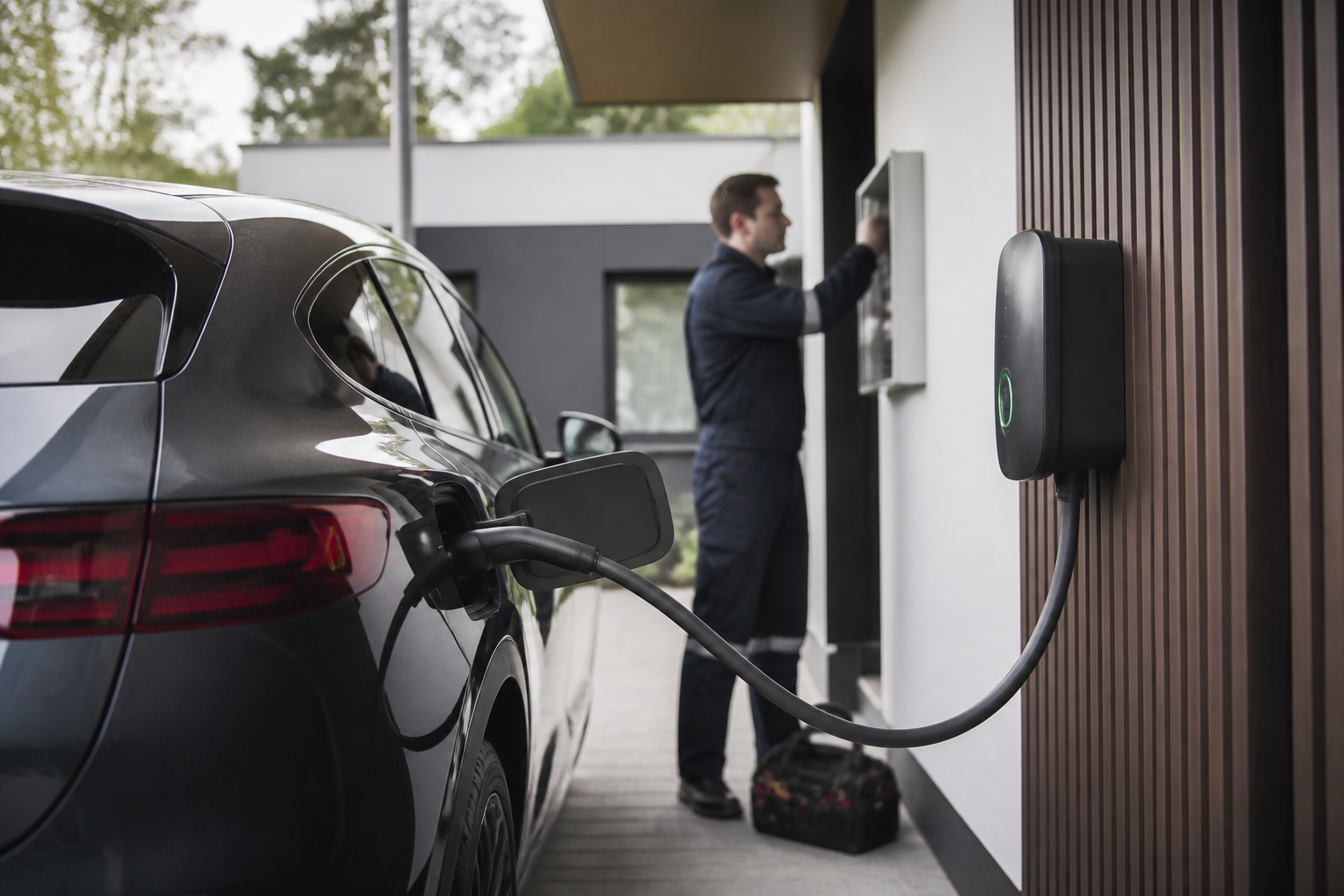
To install and safely use the Mercedes-Benz Wallbox for home charging, have a licensed electrician perform the Level 2 installation in accordance with the official Mercedes-Benz Wallbox installation manual, ensure the circuit amperage matches the Wallbox rating, and use safety-certified equipment. Plan cable length and mounting location to minimize wear, and follow app-based configuration for monitoring and control. Refer to Mercedes-Benz’s wallbox installation documentation and DOE guidance for home charging safety.
Key takeaways
- Level 2 home charging is feasible with proper equipment and installation.
- Use a licensed electrician and safety-certified hardware for code-compliant setup.
- Plan amperage, cable length, and mounting location to ensure reliable, safe daily use.
- Consult Mercedes-Benz official installation manual and DOE guidance for best practices and compliance.
- Overnight charging benefits should be weighed against installation costs and home electrical capacity.
Introduction: Planning safe, convenient home charging with Mercedes-Benz Wallbox
For Mercedes-Benz owners and prospective buyers with an electric or plug-in hybrid model, the Mercedes-Benz Wallbox represents a dedicated, Level 2 home charging option designed to deliver overnight replenishment with predictable performance. This guide helps you evaluate installation options, understand what the Wallbox provides in daily use, and work through practical decisions about capacity, safety, and cost. The aim is to enable an overnight charging routine that respects local electrical codes, protects your vehicle battery, and minimizes disruption to your driveway and home electrical system.
What the Mercedes-Benz Wallbox is, and how it fits into home charging
The Mercedes-Benz Wallbox is a purpose-built, Level 2 AC charging station intended for residential use. It connects to a dedicated circuit and supplies higher power than Level 1 charging, reducing charging times overnight for compatible vehicles. The official installation and operating guidance emphasizes safe electrical integration, correct wiring, and app-based configuration so the unit functions as intended from day one. It is typically used alongside the Mercedes-Me Charge ecosystem to monitor charging status and manage energy use. When planning installation, buyers should consider electrical capacity, expected daily driving and charging needs, and the physical layout of the charging point on the driveway or garage wall.
Key decision criteria before you install
- Electrical capacity and service panel load: Determine the available amperage on your home’s electrical service and whether the existing panel can accommodate a Level 2 circuit (commonly 20–50 A circuits depending on vehicle and wallbox model). A licensed electrician can perform a load calculation and advise on necessary service upgrades or simultaneous-use loads (HVAC, water heater, other EVs).
- Cable routing and mounting: Plan a path from the meter to the wallbox that minimizes exposure to weather, moisture, and physical damage. Consider conduit, stubbed wiring, and surface-mounted vs. recessed mounting. Proper strain relief and cable management reduce wear and simplify maintenance.
- Cable length and amperage rating: Longer cables incur higher voltage drop and cost. The Wallbox should be paired with a cable that matches the circuit rating and vehicle inlet distance. Typical guidance favors keeping the run short enough to minimize losses while still accommodating parking alignment.
- Safety standards and certification: Use safety-certified equipment and an installation that complies with local electrical codes. Safety certification helps ensure protection against electrical shock, fire, and improper grounding. The electrician’s inspection should verify ground fault protection and proper overcurrent protection for the circuit.
- Cost and ownership considerations: Include hardware cost, installation labor, potential panel upgrades, and any charging-time energy management features. Overnight charging is usually economically favorable, but peak-rate policies or time-of-use tariffs can influence annual electricity costs.
- Vehicle compatibility and charging goals: Confirm the Wallbox supports your Mercedes model’s charging standard and connector type, and align your charging plan with daily driving needs (e.g., miles per day, arrival time, and desired state of charge).
How to plan the installation safely: steps and expectations
Begin with a product-specific installation plan using the official Mercedes-Benz Wallbox Installation and Operating Manual as a reference. While the exact steps may vary by model and local code, the core process remains consistent: assess service capacity, route and mount the unit, connect to the dedicated circuit, perform system checks, and configure the companion app for monitoring and control.
Key steps typically include:
- Hire a licensed electrician to perform a circuit analysis and determine the appropriate circuit size (ampacity) for the Wallbox and vehicle charging needs.
- Prepare the mounting location with a suitable weather- and impact-resistant enclosure or wall surface suitable for outdoor or indoor use, as specified by the installation guide.
- Install a dedicated 240 V circuit with properly rated wiring, conduit, and circuit protection (breaker/AFDD as required by local code).
- Connect the Wallbox per the manufacturer’s wiring diagram, ensuring correct polarity, grounding, and strain relief on the cable entry.
- Verify ground fault protection, insulation integrity, and secure fastenings. Use any approved commissioning steps outlined in the manual to confirm proper operation.
- Register and configure the Wallbox in the Mercedes-Me Charge ecosystem if you plan to use app-based features, such as charging status notifications or energy management.
Daily use: charging habits, safety, and maintenance
With the Wallbox installed, daily use centers on predictable, safe charging. Keep these practices in mind:
- Follow the manufacturer’s recommended charging current to optimize charging speed while staying within circuit limits and cable ratings. If your vehicle regularly arrives with a higher state of charge, you may adjust settings to avoid overworking the circuit during peak hours.
- Use the Mercedes-Me Charge app (or equivalent companion software) to monitor charging status, receive alerts for misconnected cables, and schedule charging during off-peak periods where available.
- Inspect the installation periodically for wear on the cable, plug, and enclosure. Look for signs of weathering, cracking, or moisture ingress, and address issues promptly with professional service.
- Keep the area around the wallbox clear of obstructions, and ensure adequate drainage if the unit is mounted outdoors to minimize corrosion and water-related faults.
- In the event of an abnormal charging behavior (unexpected shutdowns, tripping breakers, or error codes), consult the installation manual and contact Mercedes-Benz support or a qualified electrician rather than attempting DIY troubleshooting beyond basic resets.
Understanding safety, codes, and certification nuances
The Wallbox and its installation sit at the intersection of vehicle charging needs and home electrical safety. Two core ideas matter most: equipment safety certification and code-compliant installation. Safety-certified hardware—from the Wallbox enclosure to the charging cable and connectors—helps protect against shock and fire hazards and ensures compatibility with electrical protection devices in your home. Code compliance involves proper wire sizing, dedicated circuits, ground fault protection, and correct overcurrent protection. If you live in a region with stricter standards or newer code amendments, a licensed electrician will ensure your setup remains compliant and safe over time.
Cost considerations and value proposition
Beyond the sticker price of the Wallbox itself, budgeting for home charging includes installation labor, potential service-panel upgrades, and any demand-management features you enable. Overnight charging generally aligns with favorable energy costs where time-of-use tariffs favor nighttime consumption. It’s prudent to request a written estimate that itemizes hardware, labor, permits (if required), and any ancillary materials such as conduit, mounting hardware, or additional protective enclosures. The long-term value comes from predictable, faster charging that supports daily-use patterns and can enhance the resale appeal of a Mercedes-EV or plug-in hybrid by offering robust home charging capability.
What amperage and cable length should you choose for your install? (FAQ addressed)
The optimal decision hinges on balancing your vehicle’s maximum charging rate, the wallbox’s supported amperage, and the length of the cable run. In practice:
- Choose the highest practical continuous current that your home circuit and vehicle inlet can safely handle without overheating, commonly 32 A or 48 A for many Level 2 setups, but your installer may advise a different value based on load calculations.
- Keep the cable length as short as feasible to minimize voltage drop, while ensuring the car’s inlet aligns with the wallbox location for convenient parking and charging access.
- Ensure the supplied or recommended cable is rated for the chosen amperage and is rated for outdoor use if installed outside.
Conclusion: turning your Mercedes-Benz Wallbox into a reliable home charging hub
Installing a Mercedes-Benz Wallbox is a practical step toward a confident, convenient, and relatively economical home charging routine. By working with a qualified electrician, using safety-certified equipment, and planning around daily driving patterns and local codes, you can achieve a setup that delivers predictable overnight charging without compromising electrical safety or driveway aesthetics. The result is a charging experience that complements Mercedes-Benz ownership with clarity, control, and confidence.
Sources
- Installation Instructions for the Mercedes-Benz Wallbox (USA) (hardware install + operating manual guidance)
- Charging Electric Vehicles at Home (what to buy, safety-certified equipment, and why it matters)
Frequently asked questions
What amperage should I choose for my home Wallbox install?
Select amperage based on your electrical panel capacity, vehicle charging rate, and desired charging speed; a licensed electrician can determine the best fit.
What cable length is recommended for typical garages?
Choose a length that reaches the Wallbox from the panel with spare slack for routing, avoiding tight bends or excess tension on the cable.
Do I need a permit or HOA approval for installation?
Many jurisdictions require compliance with electrical codes and may require permits; check local rules and HOA guidelines before starting.
Related Mercedes-Benz guides
- How to plan a maintenance budget around Mercedes ASSYST reminders and Service A/B interval
- Mercedes wet-road driving: what to do if the car begins to aquaplane
- Finding and diagnosing AIRMATIC leaks before compressor failure
- How to evaluate a Certified Pre-Owned Mercedes to avoid hidden repairs
- Brabus Rocket Emblems and Badges Review TC-20522