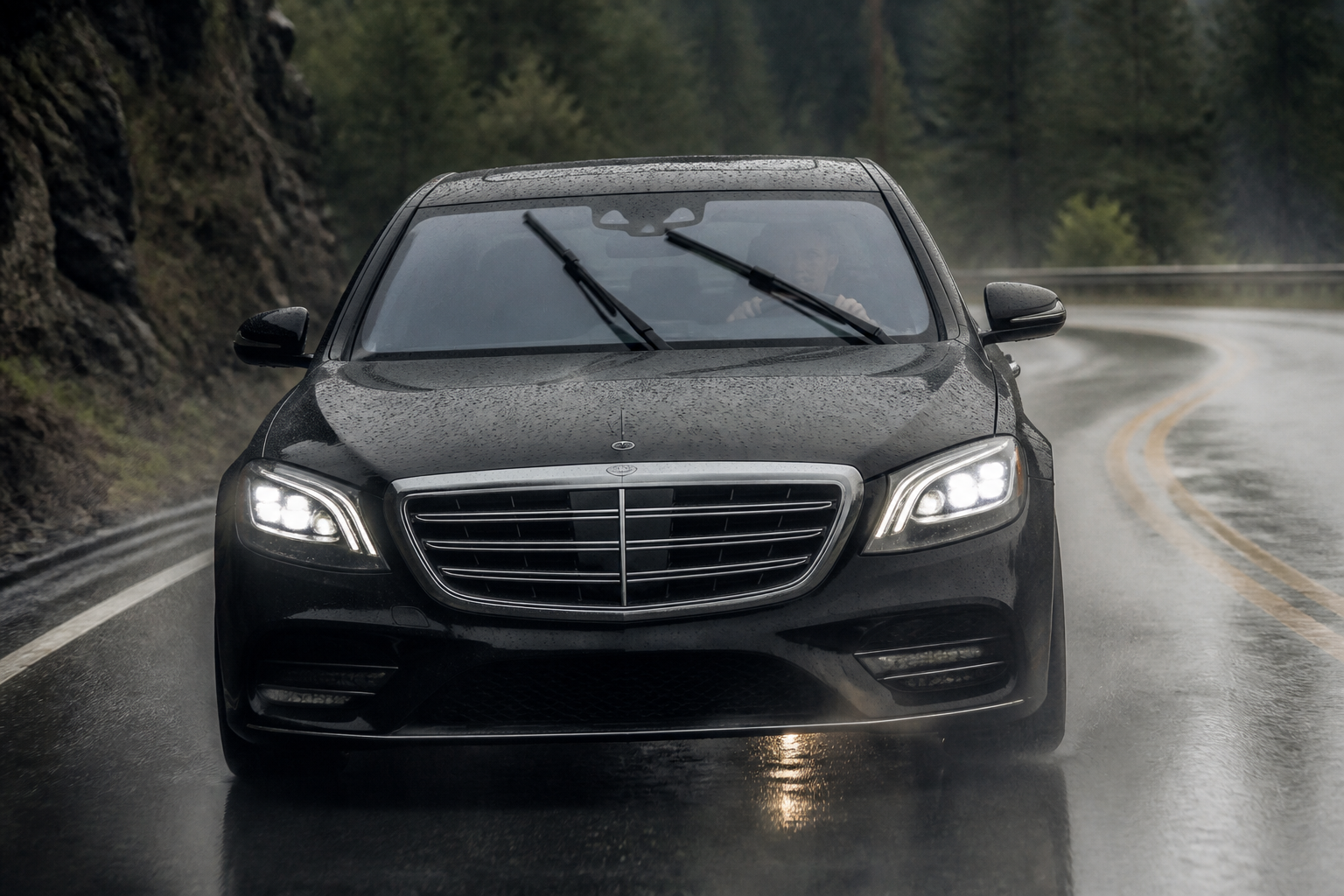
To reduce hydroplaning risk when aquaplaning begins on a Mercedes, ease off the accelerator smoothly, avoid sudden steering or braking, and wait for traction to return before applying brakes firmly. After exiting standing water, test brakes gently to restore braking feel.
Key takeaways
- Hydroplaning occurs when water prevents tyre-road contact; cues include a floating sensation and reduced steering response.
- Use smooth inputs: gradual throttle reduction, steady steering, and non-urgent braking after grip returns.
- Regular tyre maintenance (tread depth and inflation) and cautious speeds on wet roads are essential for prevention.
- Mercedes guidance emphasizes slow, controlled actions; independent sources corroborate easing off the throttle and avoiding abrupt brakes.
- After fording through water, allow brakes to dry and recheck braking performance.
Introduction: understanding and responding to aquaplaning on Mercedes-Benz vehicles
Hydroplaning, or aquaplaning, occurs when a tire can no longer evacuate water fast enough and loses firm contact with the road. In wet conditions, even well-maintained Mercedes-Benz cars can be momentarily less controllable as a water film builds up ahead of the contact patch. The goal of this article is to translate official guidance into practical, action-oriented steps you can apply in real driving scenarios, with attention to tire physics, common driver habits, and the limitations of driver-assist systems in deep water, all while avoiding overreliance on any single technology.
How aquaplaning starts: the physics and the early cues
Aquaplaning begins when road water cannot be displaced quickly enough by the tire tread. A wedge of water forms between the tire and the road surface, reducing friction and steering grip. Several factors influence onset, including water depth, vehicle speed, tire width and tread design, tire wear, and inflation pressure. Even with modern traction aids and all-season tires, hydroplaning risk rises with speed and with shallow or worn tread. The vehicle’s weight distribution and any suspension geometry can also affect how quickly a driver experiences a loss of contact patch grip.
Practical takeaway: never assume that advanced drive settings automatically prevent hydroplaning. Awareness of your tires’ condition and your speed relative to standing water is the first line of defense.
Recognizing early cues: what you might feel before grip fades
Useful signals often precede a full loss of control. Mercedes-Benz guidance emphasizes a calmer, deliberate response: you may notice a change in steering feel, a lighter or “numb” wheel input, or a sense that the car is riding on a film of water rather than contacting the road. Independent sources reinforce that you might also notice the vehicle’s braking feel changing after exiting a deeper surface water. At the same time, environmental cues such as street grooving, tire spray, and traffic patterns can indicate elevated hydroplaning risk.
Cues to monitor during rain
- Unusual lightness or delay in steering response
- Feeling of floating or a vibrating steering wheel under steady rain
- Reduced braking effectiveness after driving through water or after fording a shallow pool
- Visible water pooling along tire tread patterns or in wheel ruts
Immediate actions: what to do the moment you sense aquaplaning
The core objective is to maintain vehicle direction with as little steering and brake input as possible, allowing the tires to re-engage with the road. Follow these steps in sequence, and practice them in safe, controlled conditions to build muscle memory.
- Ease off the accelerator smoothly and avoid abrupt throttle modulation. Sudden reductions in speed can unsettle the car or cause weight transfer that worsens loss of grip.
- Do not brake hard or steer abruptly. Abrupt inputs can push the vehicle into a wider hydroplaning arc or increase weight transfer to the front tires at the moment grip returns unpredictably.
- Keep the steering steady and minimal. If you must correct, use small, progressive inputs rather than sharp turns. The aim is to maintain a straight or gently corrected trajectory as tires regain traction.
- Wait for contact patch restoration. Traction typically returns gradually as the water film breaks and the tires reestablish contact. Avoid overcorrecting while the grip is sporadic.
Following through: how to brake after hydroplaning
Once grip returns, braking should be progressive and controlled. If you have ABS, apply steady pressure and allow the system to modulate braking force. If you don’t have ABS, use a gentle, threshold-braking approach—press, release, and reapply as needed to prevent wheel lock. Mercedes-Benz guidance emphasizes that braking effectiveness can be reduced after driving through standing water, so anticipate the possibility of longer stopping distances and adjust your speed accordingly in wet conditions.
Prevention and preparation: reducing hydroplaning risk before you drive
While in-the-mitness guidance focuses on response, preventive steps are essential to minimize hydroplaning risk. These include maintaining proper tire tread depth, keeping tires inflated to recommended pressures, and avoiding excessive speed in rain. Tire width and tread pattern matter: more tread depth and evenly worn tires help evacuate water more effectively. For drivers of heavierMercedes models or those with wider tires, note that water displacement characteristics can differ with tire geometry and load; heavier loads and dynamic cornering can increase hydroplaning susceptibility at a given speed and water depth.
Practical scenarios: what to do in common wet-road situations
Scenario A: Light to moderate rain with shallow standing water in wheel ruts. Action: maintain steady speed, avoid abrupt steering inputs, and monitor tire feel as you pass over the water. If cueing suggests loss of grip, ease off the accelerator smoothly and prepare to reengage traction gradually.
Scenario B: Heavier rain with significant surface water. Action: reduce speed to a safer margin below the typical hydroplaning threshold for your tire width and tread depth. Apply steady, controlled braking only after you sense the tires have reconnected with the road.
Scenario C: Puddles in deeper water near intersections or highways. Action: slow significantly before entering, and cross them with minimal steering if possible; as you exit, re-evaluate braking pressure only after traction returns.
Limitations and caveats: what to know about MB guidance and independent tips
Mercedes-Benz provides a practical framework for wet-road driving, emphasizing smooth inputs and careful braking after aquaplaning. Independent sources extend this with more mechanistic explanations—tire tread depth, inflation pressure, and water depth all shape hydroplaning onset. However, none of these sources guarantee complete immunity to hydroplaning, and no vehicle system can fully overcome the complexity of water on the road at all speeds. Real-world results depend on tire condition, road design (including rubber grooves and rut depth), vehicle load, weather intensity, and driver reaction time.
Summary: turning knowledge into safer practice
Action during aquaplaning is about reducing speed, avoiding abrupt inputs, and allowing the tires to regain contact with the road before reapplying braking. Preparation matters: verify tire tread depth and inflation, replace worn tires, and adjust driving to the conditions. By combining Mercedes-Benz manufacturer guidance with independent, evidence-based tips on tread wear and tire dynamics, drivers can build a practical approach to surviving wet-road encounters with minimized risk.
Sources
- Mercedes wet-road driving: what to do if the car begins to aquaplane
- Safe Driving Tips: Avoid Hydroplaning
- What Causes Tire Hydroplaning?
What to do immediately when you feel hydroplaning
What is the first action if you sense aquaplaning?
Ease off the accelerator gradually and keep steering straight or with a steady course to maintain direction.
Should you brake during aquaplaning?
Avoid abrupt braking; brake gently only after you regain traction to prevent loss of control.
What maintenance helps prevent hydroplaning?
Maintain adequate tread depth and correct inflation; ensure tires are not worn beyond safe levels and are suited for wet conditions.