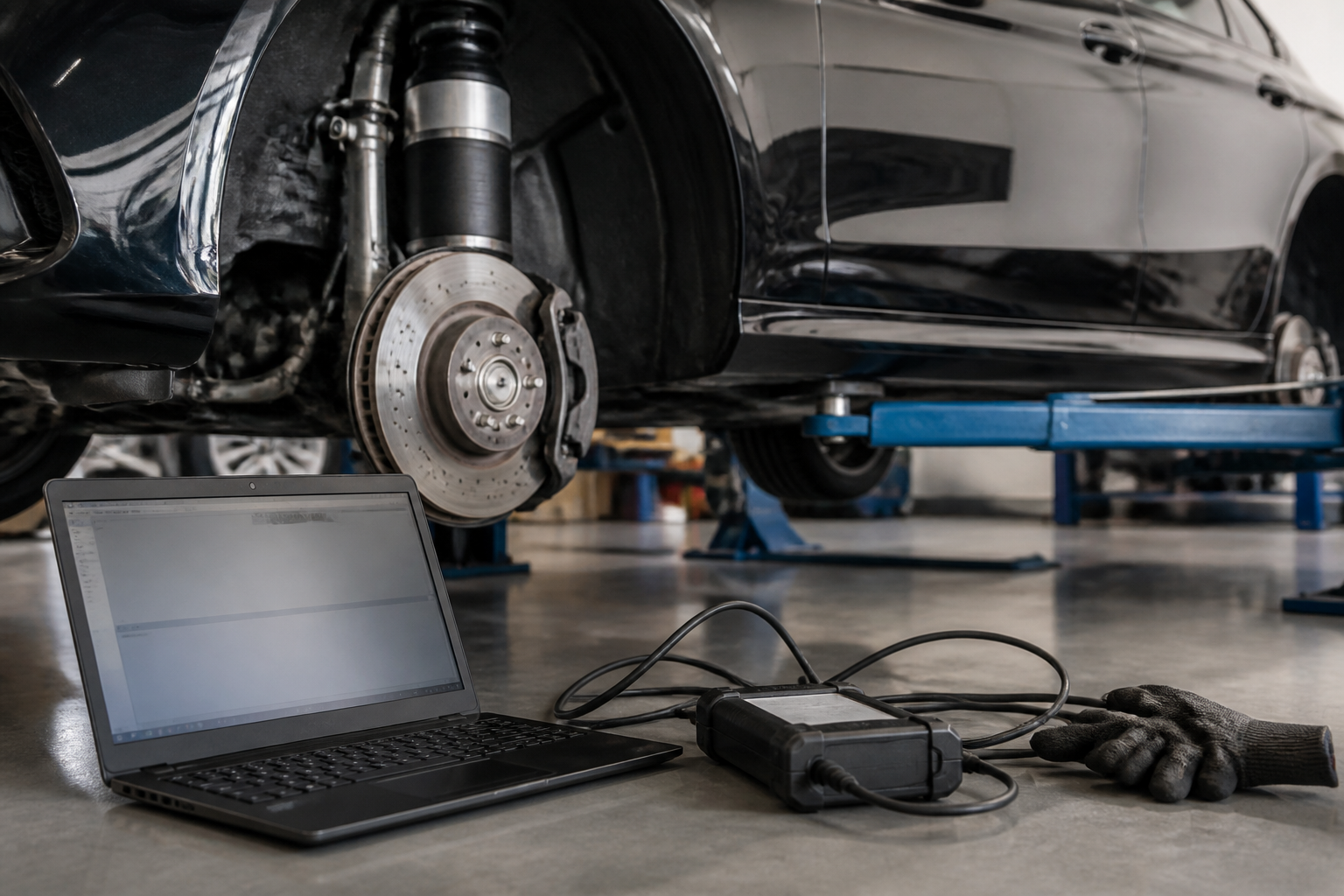
Begin with a structured diagnostic triage to identify whether an overnight sag or hissing sound comes from an air-spring leak, a valve-block fault, or a compressor issue. Confirm the leak path, assess compressor health, and decide between repair, remanufacture, or replacement based on durability and cost. This targeted approach reduces unnecessary part changes and improves long-term reliability.
Key takeaways
- Use a triage flow: confirm leak path first, then assess compressor health to guide repair decisions.
- Air-spring leaks and valve-block leaks require different repair strategies; compressors often drive the replacement decision.
- Remanufacture can be a cost-effective option for some components when durability and warranty coverage are favorable.
- Avoid driving if a warning suggests the suspension is at risk or on the bump stops to prevent further damage.
- Document a clear diagnostic process and recommended actions to improve ownership confidence and planning.
Mercedes-Benz air suspension systems, led by AIRMATIC, blend comfort with capability. When a corner drops overnight, or the ride grows suddenly harsher, owners face a diagnostic crossroad: Is the leak in the air spring, the valve block, or the compressor? This guide outlines a structured triage that helps differentiate leak paths, establishes a repair sequence, and clarifies when replacement or remanufacture is warranted. It draws on diagnostic practices from specialist shops and safety-focused assessments from regulatory and technical sources.
Direct answer: diagnose first, then decide on repair steps
Begin with symptom verification and a tiered inspection. Overnight sag and a hissing sound on wake-up point toward a leak somewhere in the air-spring path, but the exact component—air strut, valve block, or compressor—will determine the best fix. A misdiagnosis can lead to unnecessary parts replacement and higher costs. Use a methodical diagnostic flow: confirm a leak path, assess compressor health, and decide whether to repair, remanufacture, or replace. The outcome hinges on the leak’s location, the condition of the compressor, and the feasibility of a durable fix.
H2: Diagnostic framework: leak path, compressor, and valve blocks
Three primary leak paths commonly appear in AIRMATIC systems:
- Air-spring leaks (air strut bag micro-leaks) – often visible as overnight sag at a specific corner.
- Valve-block leaks – can cause slow or intermittent pressure loss and uneven settling.
- Compressor-related faults – a failing relief valve or insufficient pump performance can mimic or compound other leaks.
Key diagnostic steps include: a controlled observation of rise/fall after vehicle parking, listening for hiss at the wheel arches, performing checks for 12V/ground conditions and software status when applicable, and correlating symptoms with failed-to-warn indicators from the vehicle’s diagnostic suite. These steps align with the diagnostic philosophies used by specialists and regulator-informed guidance that discourages assuming a single component failure without evidence.
H3: Systematic diagnostic steps you can follow
- Confirm overnight drop: note which corner settles and by how much, then observe if the drop is accompanied by a hiss on wake-up.
- Inspect for accessible leaks: with the vehicle safely parked, listen at each air strut and valve block for hissing or audible leaks.
- Check the compressor and related controls: ensure the compressor cycles, and look for warning lamps or codes that indicate a system fault or software issue.
- Isolate components: if one corner shows a persistent leak, test the corresponding air strut first; if all corners are even, assess the compressor and valve blocks across the manifold.
- Review replacement feasibility: if the air strut is damaged beyond a reliable repair, replacement or remanufacture may be the durable option; otherwise, a leak-path-specific repair can be pursued.
H2: Repair path vs remanufacture vs complete replacement
Decision criteria center on durability, cost, and the practicality of a repair restoring the original performance. Common guidelines include:
- Air strut leaks: minor bag micro-leaks may be repaired with seals or cartridge replacements in some cases; however, repeated or structural damage often favors replacement with a new or remanufactured strut to restore reliability.
- Valve-block leaks: these can sometimes be repaired with serviceable seals, but many technicians recommend replacing the valve block as a single unit to ensure consistent response and to avoid repeat failures.
- Compressor faults: compressor wear or relief-valve failure typically warrants replacement or remanufacture, particularly if performance is inconsistent or the unit shows signs of overheating or abnormal noise.
Crucially, diagnostic-first decisions reduce the risk of chasing symptoms rather than treating the root cause. The best path depends on the exact leak path, compressor health, and the vehicle’s usage profile.
H2: Practical scenarios and cost-aware planning
For owners, practical decisions often hinge on a few real-world conditions:
- Low miles with a single corner sagging overnight likely points to a localized air-spring leak; consider targeted air strut service or replacement of the leaking unit.
- Uneven settling on multiple corners with a hiss at wake-up suggests valve-block leaks or multiple micro-leaks; a valve-block service or replacement may be warranted.
- Locker-style or repeated low-ride warnings with poor compressor performance supports compressor replacement or remanufacture as a durable fix.
Owners should weigh the costs of a full replacement versus targeted repairs. While replacement restores reliability, remanufactured components can offer a cost-efficient middle ground without compromising safety or ride quality. Always factor the vehicle’s age, mileage, and the likelihood of future leaks when budgeting repairs.
H2: Safety, recalls, and maintenance planning
Safety considerations are paramount when air suspension behaves unexpectedly. A system that drops at a corner or alarms during operation can affect handling and braking. Follow the vehicle’s warning messages and avoid driving when a warning indicates that the suspension is at risk of damage or the vehicle is near the bump stops. Regular inspection of hoses, fittings, and the air-spring boots helps to catch leaks early before compressor wear accelerates.
H2: What to do next: getting a diagnosis you can trust
Work with a technician who follows a triage-led approach: identify the leak path first, confirm compressor health, and then decide on a repair sequence. This reduces the risk of unnecessary parts replacement and aligns with manufacturer- and specialist-sourced diagnostic guidance used in reputable shops. For owners seeking peace of mind, request a written diagnostic flow with test criteria and expected outcomes for each potential path.
Bottom line
AIRMATIC leak diagnosis should proceed as a staged, evidence-based process. By distinguishing between air-spring leaks, valve-block faults, and compressor issues, you can select the most durable and cost-effective repair path—repair, remanufacture, or full replacement—while preserving Mercedes-Benz performance and ride quality.
Sources
- Why Your Mercedes AirMatic Suspension Is Failing and What To Do About It
- Mercedes Air Suspension Hissing While Parked — AIRMATIC Diagnosis
- Functional Impairment of 48 V On-board Electrical System
Frequently asked questions
What confirms a leak path and when is replacement warranted?
A confirmed leak path typically shows a persistent loss of ride height or pressure with a distinct leak signature at a corner (air-strut) or manifold (valve block). Replacement is warranted when a repair cannot reliably restore seal performance or when the component shows repeated failure after repair.
Can I drive with an AIRMATIC warning?
Driving with an active AIRMATIC warning is not recommended. If the system indicates a potential leak or pressure loss, limit driving and seek professional diagnosis to prevent further damage to the suspension or related components.
Should I repair or replace the air strut if there’s a small leak?
Small, localized leaks may be repairable in some cases, but durability varies. If leak recurrence is likely or the strut shows structural wear, replacing with a new or remanufactured unit often offers better long-term reliability.
What role does the compressor play in a leak diagnosis?
The compressor maintains pressure; if it runs excessively, lacks pressure, or shows abnormal cycling, it may indicate a fault that contributes to or masks a leak elsewhere. Diagnosing compressor health helps determine the best repair strategy.
Related Mercedes-Benz guides