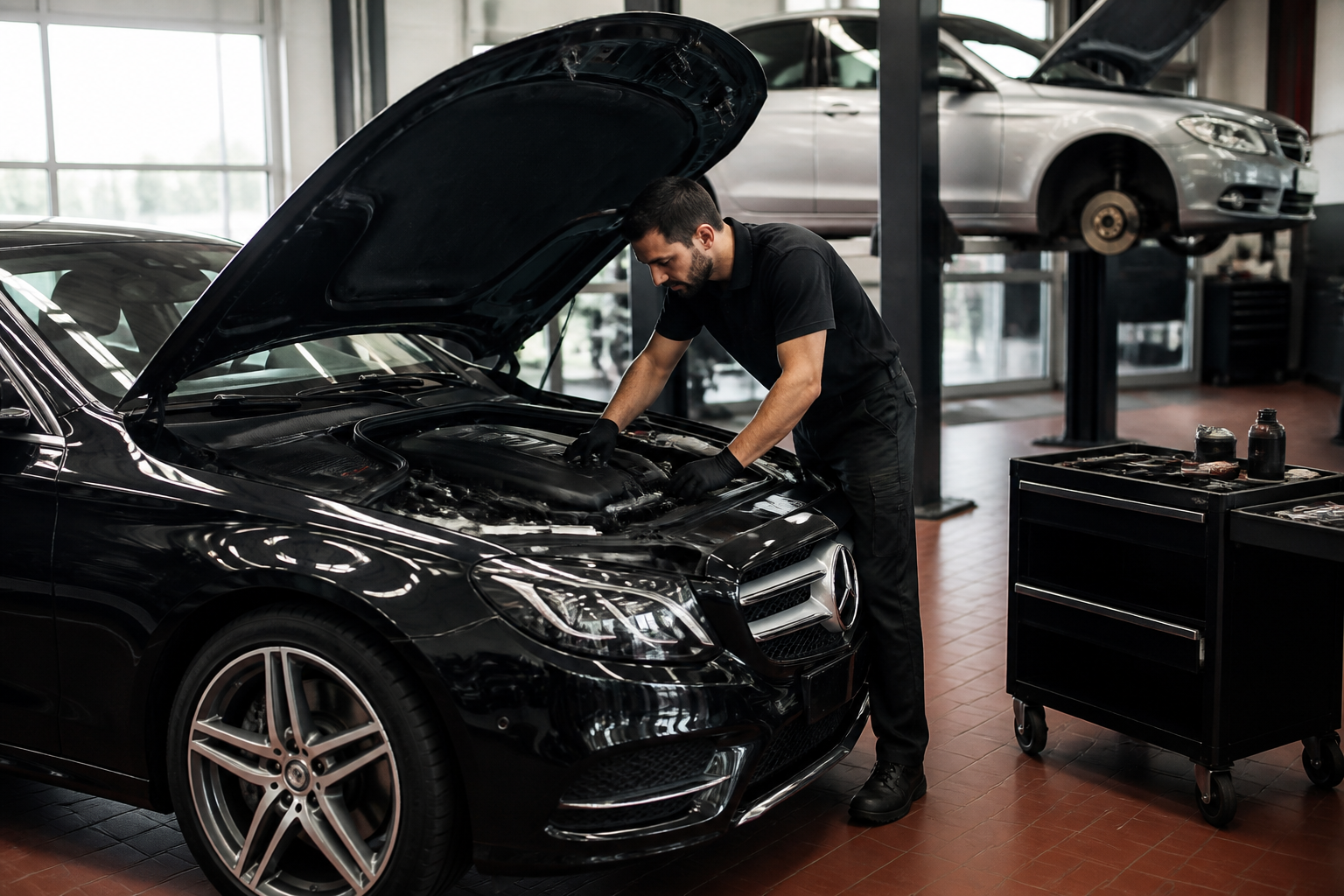
Realistic 5-year Mercedes-Benz ownership costs include depreciation, financing, insurance, fuel, taxes/fees, and a notable maintenance/repairs category. Mercedes-Benz offers Prepaid Maintenance to lock in future service costs and an Extended Limited Warranty to provide post-w factory coverage, both designed to convert variable maintenance risk into predictable expenses within a 5-year budgeting window.
Key takeaways
- 5-year cost-to-own models split ownership spending into maintenance/repairs plus other drivers like depreciation and insurance.
- Prepaid Maintenance can reduce future maintenance cost uncertainty by locking in prices for scheduled services.
- Extended Limited Warranty adds coverage after the original factory warranty ends, helping budget for potential post-warranty repairs.
Defining a Realistic 5-Year Cost to Own for Mercedes-Benz
For prospective and current Mercedes-Benz owners, the 5-year cost to own is not just the sticker price or the sticker price plus financing. It’s a composite of several major expense categories that collectively determine how affordable ownership is over a typical window. Analysts generally segment this into depreciation, financing costs, insurance, taxes and fees, fuel, and maintenance and repairs. A model-based approach—where a representative configuration, mileage, and usage pattern are plugged into a cost-to-own model—helps set expectations and compare ownership scenarios across models and markets. In practical terms, the true 5-year cost to own translates into the amount you need to budget above the monthly loan or lease payment, not just at purchase, but across the vehicle’s first few years of service life.
The truth is that maintenance and repairs often become a meaningful slice of total ownership, especially for luxury brands where service intervals, parts quality, and labor rates differ from mainstream models. A reputable cost-to-own resource can break out maintenance and repairs as a distinct line item, which is essential when you’re evaluating risk tolerance and budgeting flexibility. In evaluating Mercedes-Benz, sources that model these 5-year costs typically show maintenance and repairs as a separate category, alongside depreciation, financing, and insurance. This separation clarifies how routine servicing, wear-related maintenance, and occasional repairs contribute to out-of-pocket expenses over time. Edmunds: 2025 Mercedes-Benz E-Class Cost to Own
What to expect in the 5-year window
- Maintenance: Routine service, tire rotations, brake fluid flushes, oil changes, and other scheduled work tied to your vehicle’s maintenance plan or manufacturer recommendations. For higher-end models, some maintenance items may occur more or less frequently based on drivestyle and climate.
- Repairs: Unexpected or wear-related repairs beyond routine maintenance. Luxury vehicles can incur higher repair costs due to specialized parts and labor, especially after the factory warranty expires.
- Variability: The 5-year window is particularly sensitive to mileage, usage (city vs. highway), and the model’s reliability profile. A well-documented model with favorable maintenance intervals will typically show lower per-mile maintenance costs than a model with more frequent service or higher repair risk.
In practical budgeting terms, you should expect a portion of your total cost to be allocated to maintenance and repairs, with the exact amount contingent on model choice, mileage, and how aggressively you shift maintenance intervals. When you compare models or consider extended coverage, understanding this maintenance/repair slice becomes a key differentiator in total ownership cost. For a framework you can reference, see Edmunds’ model that breaks out maintenance and repairs within the broader cost-to-own estimate. Edmunds – True Cost to Own (5-year breakdown)
How Mercedes-Benz Prepaid Maintenance Works as a Budgeting Tool
Mercedes-Benz offers Prepaid Maintenance as a way to lock in future routine maintenance costs for scheduled service. The program is positioned as a way to reduce cost uncertainty by prepaying for expected services over a defined horizon. Notably, new-vehicle purchases often include an integrated service package for up to two years, after which customers can extend prepaid maintenance for additional periods. This mechanism shifts uncertain, variable future payments into a predictable, fixed cost, a feature many buyers find attractive when constructing a 5-year budget.
Key considerations when evaluating prepaid maintenance include:
- Scope of coverage: Prepaid plans typically cover scheduled maintenance items rather than major component failures. They are most effective when your usage pattern aligns with the plan’s included services and intervals.
- Time horizon: The plan often guarantees pricing for a set period or service interval length. If your ownership horizon is longer than the plan, you may need to project ongoing costs beyond the prepaid window.
- Dealer network: Maintenance performed under prepaid terms is typically honored at authorized Mercedes-Benz dealers, ensuring access to brand-specific service and trained technicians.
- Financial trade-off: Compare prepaid pricing against projected out-of-pocket expenses for routine maintenance under standard pay-as-you-go arrangements, factoring in potential price inflation over time.
Mercedes-Benz’s official materials frame prepaid maintenance as a hedge against rising service costs and as a convenience feature that eliminates the administrative burden of paying for routine service at the time of service. When planning a 5-year budget, prepaid maintenance can be attractive if you anticipate a steady maintenance cadence and want to lock in predictable costs. Details and exact pricing can vary by model and market; consult the official Prepaid Maintenance page for current terms. Prepaid Maintenance
How Mercedes-Benz Extended Limited Warranty Fits Into a 5-Year Budget
The Extended Limited Warranty (ELW) is designed to extend coverage beyond the standard New Vehicle Limited Warranty, providing additional protection for a defined period after the factory warranty expires. For buyers who want to cap the risk of unusually costly repairs once coverage ends, the ELW offers a predictable warranty line item that can be incorporated into the 5-year planning horizon.
Important points about the ELW:
- Coverage window: The ELW adds protection after the initial warranty period, with a defined duration and terms that specify what components and systems are covered.
- Authorized service: Repairs claimed under the ELW are typically handled at authorized Mercedes-Benz dealers, preserving access to brand-approved parts and technicians.
- Administration: The plan is marketed and administered through Mercedes-Benz USA and its financial services ecosystem, which can influence claim procedures and eligibility.
From a budgeting standpoint, the ELW can convert the risk of a major, unexpected repair into a known, insured cost. If your 5-year horizon extends beyond the factory warranty, factoring the ELW into your out-of-pocket projection can help you decide whether the premium expense delivers value relative to the probability of repair events in your model and usage scenario. The official ELW overview provides specifics on coverage terms and claims handling. Extended Limited Warranty
Putting It All Together: A Practical 5-Year Budget Toolset
To translate these programs into a real-world budgeting approach, consider a structured comparison across three scenarios for a given Mercedes-Benz model: baseline maintenance pay-as-you-go, prepaid maintenance only, and prepaid maintenance plus an extended limited warranty. Here’s how to approach it:
- Estimate baseline 5-year maintenance/repairs: Use model-specific maintenance intervals and typical repair cost data from credible sources (such as Edmunds’ cost-to-own breakdown) to project maintenance and repair outlays under normal service, tire, brake, and wear patterns.
- Quantify prepaid maintenance value: Obtain the prepaid maintenance quote for your model and compare it to the estimated 5-year pay-as-you-go maintenance costs, adjusting for inflation and any changes in service pricing over time.
- Consider the ELW premium: Add the ELW cost to the prepaid maintenance scenario to see how total coverage affects your 5-year cash flow portion, and weigh it against the probability and potential magnitude of post-warranty repairs for your configuration.
- Assess model- and usage-specific risk: A higher-mileage or more performance-oriented configuration may have different maintenance demands and repair risk, which can shift the break-even point between the options.
- Keep total cost in frame: Don’t isolate maintenance or warranty costs; integrate them with depreciation, financing, insurance, and fuel to compare true ownership cost across models and trims.
In practice, the goal is not just to minimize costs but to align the ownership cost profile with your cash flow, risk tolerance, and peace of mind. The Edmunds model and Mercedes-Benz’s own program descriptions provide a consistent reference frame for these calculations, while your personal driving pattern will determine the final numbers. Edmunds – True Cost to Own (5-year breakdown)
Limitations and Model-Dependent Caveats
While these budgeting tools can be powerful, they come with caveats worth noting:
- Model specificity: Maintenance schedules and repair costs vary significantly by model, drivetrain (gasoline vs. hybrid vs. EV), trim level, and regional pricing. A cost-to-own study focused on one model may not perfectly predict another.
- Usage variability: There is no one-size-fits-all mileage profile. Higher annual mileage or abuse can elevate maintenance and repair costs beyond typical estimates.
- Covered items vs. total costs: Prepaid maintenance covers routine items; it does not insure against major powertrain failures or cosmetic damage. ELW handles a subset of major repairs, not every possible failure.
- Inflation and plan pricing: The value of prepaid maintenance and ELW depends on future pricing and policy terms, which can change over time and by region.
Bottom Line for Mercedes-Benz Buyers
Realistic 5-year ownership costs for Mercedes-Benz vehicles include more than sticker price and financing. A robust budgeting approach recognizes maintenance and repairs as a meaningful, model-dependent expense. Mercedes-Benz’s Prepaid Maintenance and Extended Limited Warranty provide tools to reduce cost uncertainty and spread expected costs over time, helping buyers tailor a 5-year plan to their risk tolerance and cash-flow preferences. When evaluating a new or used Mercedes-Benz, consider how these programs fit your specific ownership scenario and compare them against credible, model-specific cost-to-own benchmarks to arrive at a decision that aligns with your financial goals and driving needs.