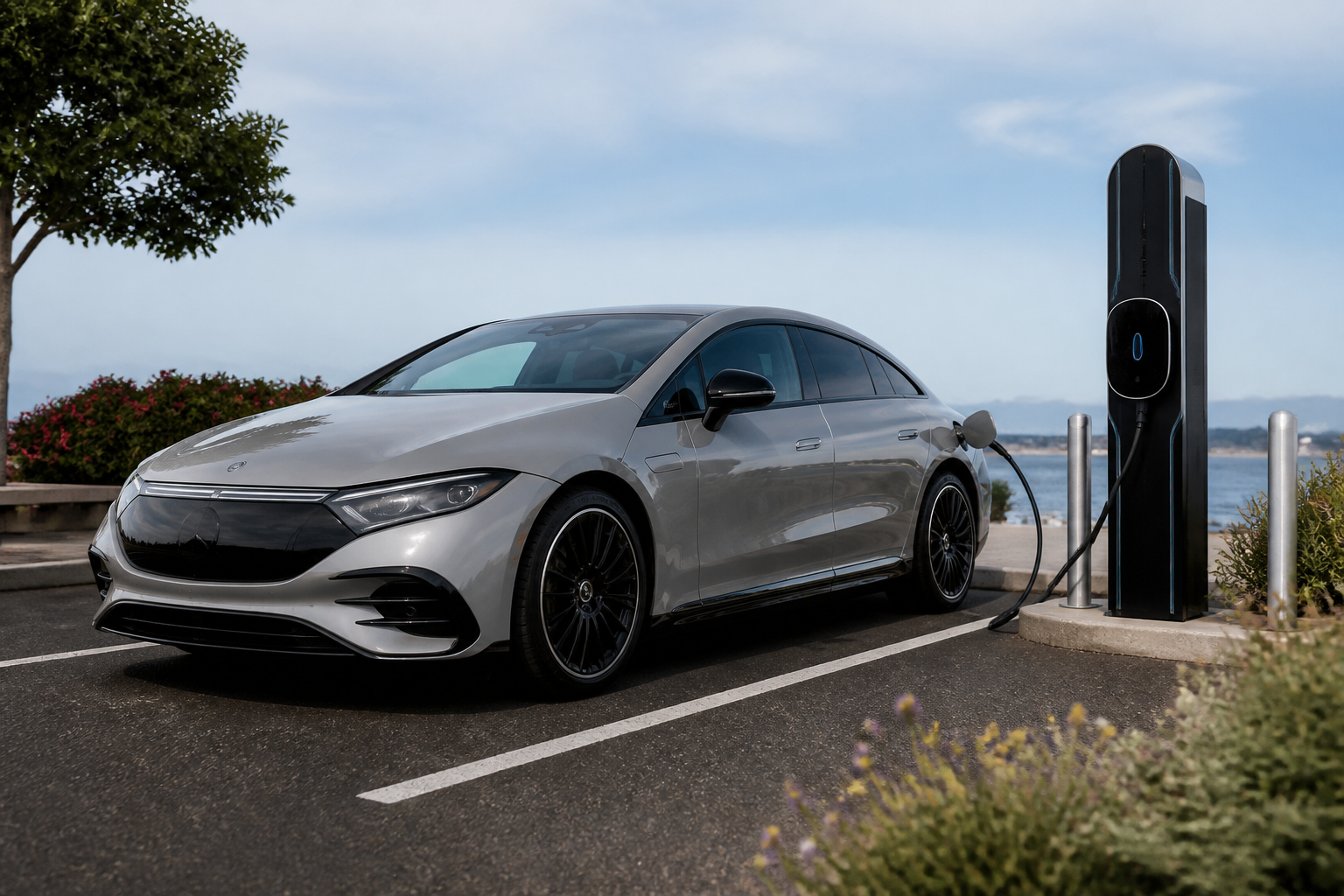
A Mercedes-Benz EV can offer lower total ownership costs over time than a comparable ICE luxury sedan, mainly due to lower maintenance and predictable charging costs, but it depends on upfront price, financing, local energy rates, incentives, and resale value. To evaluate, compare purchase price and financing, insurance, estimated home and public charging costs, maintenance, and projected resale value over your planned ownership horizon.
Key takeaways
- Running costs for EVs can be lower over time due to charging efficiency and reduced maintenance.
- Upfront price and financing terms heavily influence TCO; incentives can shift the break-even point.
- Home charging is typically the most economical energy source; public charging adds cost variance.
- Battery health and resale value are important for long horizons and model-dependent outcomes.
- Always run a model-specific TCO with local incentives, energy prices, and financing to choose wisely.
Direct comparison of Total Cost of Ownership (TCO) between Mercedes-Benz electric vehicles (EVs) and traditional luxury internal-combustion engine (ICE) sedans. While EVs typically have higher upfront prices, their operating costs—especially charging, maintenance, and potential tax incentives—can narrow or surpass the gap over the ownership life. This guide breaks down cost factors, offers practical estimation methods, and highlights model-dependent caveats so buyers can make a defensible decision.
Executive summary: the TCO landscape for Mercedes-Benz EVs vs ICE sedans
Across comparable segments, Mercedes-Benz EVs often show lower running costs due to fewer moving parts, smooth regenerative braking, and predictable energy pricing. However, the higher upfront price, potential battery replacement considerations, and charging infrastructure needs mean the break-even horizon can vary widely by mileage, region, and financing terms. A disciplined TCO approach considers: purchase price and financing, insurance, charging costs, maintenance and repairs, depreciation, and resale value.
Key cost components in Mercedes-Benz TCO
1) Purchase price and financing
EVs usually command a higher sticker price than ICE rivals in the same segment. Financing costs depend on loan terms, down payment, credit profile, and regional incentives. With longer loan terms or lease structures, the monthly burden, and total interest paid, will influence TCO more than sticker price alone.
2) Insurance premiums
Insurance for EVs can be higher due to specialized components and repair costs, but some markets provide favorable rates for low-maintenance electric drivetrains. Get quotes that reflect your typical annual mileage, location, and coverage limits.
3) Charging costs and efficiency
Charging costs depend on electricity rates, charging speed (AC vs DC fast charging), and vehicle efficiency (kWh/mi or kWh/100 km). In many regions, home charging is the most economical method, with public charging adding incremental costs. Efficiency improvements in Mercedes-Benz EVs reduce energy needed per mile, improving TCO over time.
4) Maintenance and repairs
EV maintenance benefits from fewer moving parts, no oil changes, and regenerative braking usage that can reduce brake wear. Tires, suspensions, and high-voltage components still require inspection and service, so budget for periodic checks and potential component replacements as with ICE vehicles.
5) Depreciation and resale value
Depreciation often trends differently for EVs depending on battery health, model desirability, and market sentiment. Residual values for Mercedes-Benz EVs can be favorable in segments with high demand for clean, quiet luxury, but battery warranties and perceived long-term reliability influence resale.
6) Taxes, incentives, and incentives timing
Local incentives (purchase rebates, extended tax credits, or reduced registration) can meaningfully reduce TCO. Some regions also offer favorable charging credits or surcharges for EV owners. Always verify current programs and eligibility windows for your jurisdiction.
Model-agnostic planning: how to estimate TCO for Mercedes-Benz EVs vs ICE sedans
- Set the ownership horizon (e.g., 5 years, 7 years). Longer horizons tend to amplify charging savings and depreciation differences.
- Estimate purchase price and financing terms for the specific Mercedes-Benz EV and a comparable ICE luxury sedan.
- Project annual mileage and fuel/electricity costs using local electricity rates and ICE fuel prices.
- Estimate maintenance costs based on manufacturer maintenance schedules and typical premium for high-tech components.
- Incorporate battery warranty terms and potential replacement costs or battery degradation openly based on model specs.
- Include insurance quotes and any region-specific EV incentives.
- Compute annual TCO and cumulative TCO over the horizon; identify the break-even point.
Practical scenarios and decision criteria
Scenario A: High-mileage urban commuter
For drivers who rack up 15,000–20,000 miles per year, EVs can deliver meaningful per-mile savings through energy efficiency and reduced maintenance, provided charging access is convenient and affordable.
Scenario B: Occasional long trips with reliable home charging
Mercury-friendly charging options (home plus public networks) can offset higher upfront costs if charging is reasonably priced and vehicle range meets daily needs without excessive DC charging fees.
Scenario C: Luxury sedan with high depreciation risk in your market
If the ICE counterpart maintains high resale values and your market has limited EV demand, the traditional sedan may show a lower TCO despite growing EV interest elsewhere.
Benefits and drawbacks at a glance
- Benefits of Mercedes-Benz EVs: lower maintenance in many cases, smooth operation, potential incentives, quiet cabin, and strong residual value in certain markets.
- Drawbacks: higher upfront price, charging access and time considerations, battery replacement uncertainty in very long horizons, and regional incentive variability.
Conclusion: making an informed choice
The TCO comparison between Mercedes-Benz EVs and traditional ICE luxury sedans is highly model- and region-dependent. Buyers should run a personalized TCO scenario that includes local energy costs, financing, and incentives. For many buyers, the EV path offers compelling long-term savings in running costs, with the caveat that the break-even period and resale outlook hinge on charging convenience, battery health, and market demand for electrified luxury.
Mercedes-Benz EV TCO vs ICE luxury sedan: sample estimates (illustrative use)
| Cost element | Mercedes-Benz EV (5-year horizon) | ICE luxury sedan (5-year horizon) | Notes |
|---|---|---|---|
| Purchase price | $X | $Y | Assumes base trims; differences vary by model and options |
| Financing total | $A | $B | Loan terms and down payment affect both sides equally |
| Insurance (annually) | $C | $D | Premiums vary by driver and region |
| Charging costs (estimated) | $E | $F | Home charging vs public rates; EVs often cheaper to drive per mile |
| Maintenance & repairs | $G | $H | EVs typically lower for routine maintenance but battery checks matter |
| Depreciation / resale | $I | $J | Model desirability and battery health influence resale |
| Incentives & taxes | $K | $L | Region-specific; can reduce initial cost for EVs |
| Total 5-year TCO | $M | $N | Sum of above elements |
Frequently asked questions
What costs are included in TCO?
TCO includes the purchase price (and financing), insurance, energy or fuel costs, maintenance and repairs, depreciation/resale value, taxes and incentives, and any charging infrastructure costs.
How does resale value affect TCO for EVs?
Resale value reduces TCO by offsetting depreciation. Battery health, model demand, and market acceptance influence resale; strong demand for electrified luxury can improve residuals.
How to estimate charging costs?
Estimate annual mileage, choose a reasonable efficiency (kWh/mi), multiply by local electricity rate, and consider mix of home and public charging; adjust for on-peak/off-peak pricing if applicable.
Do EVs always have better TCO than ICE?
Not always. Higher upfront price and limited incentives in some regions can offset energy savings. Personal driving patterns and incentives largely determine which path yields lower TCO.
How long is the break-even period for an EV?
Break-even varies by model, usage, and incentives but often falls in the 4–7 year range for many customers; long-range use and favorable incentives can shorten it.
Does battery replacement impact TCO?
Yes. If battery degradation requires replacement, it can significantly affect TCO depending on warranty coverage and battery costs.
Should I include charging infrastructure in TCO?
If you install a home charger or plan frequent public charging, include equipment costs, installation, and potential subsidy eligibility.
How do incentives affect TCO across regions?
Incentives reduce upfront costs or taxes, effectively lowering TCO; availability and eligibility windows vary by country, state, and vehicle eligibility.