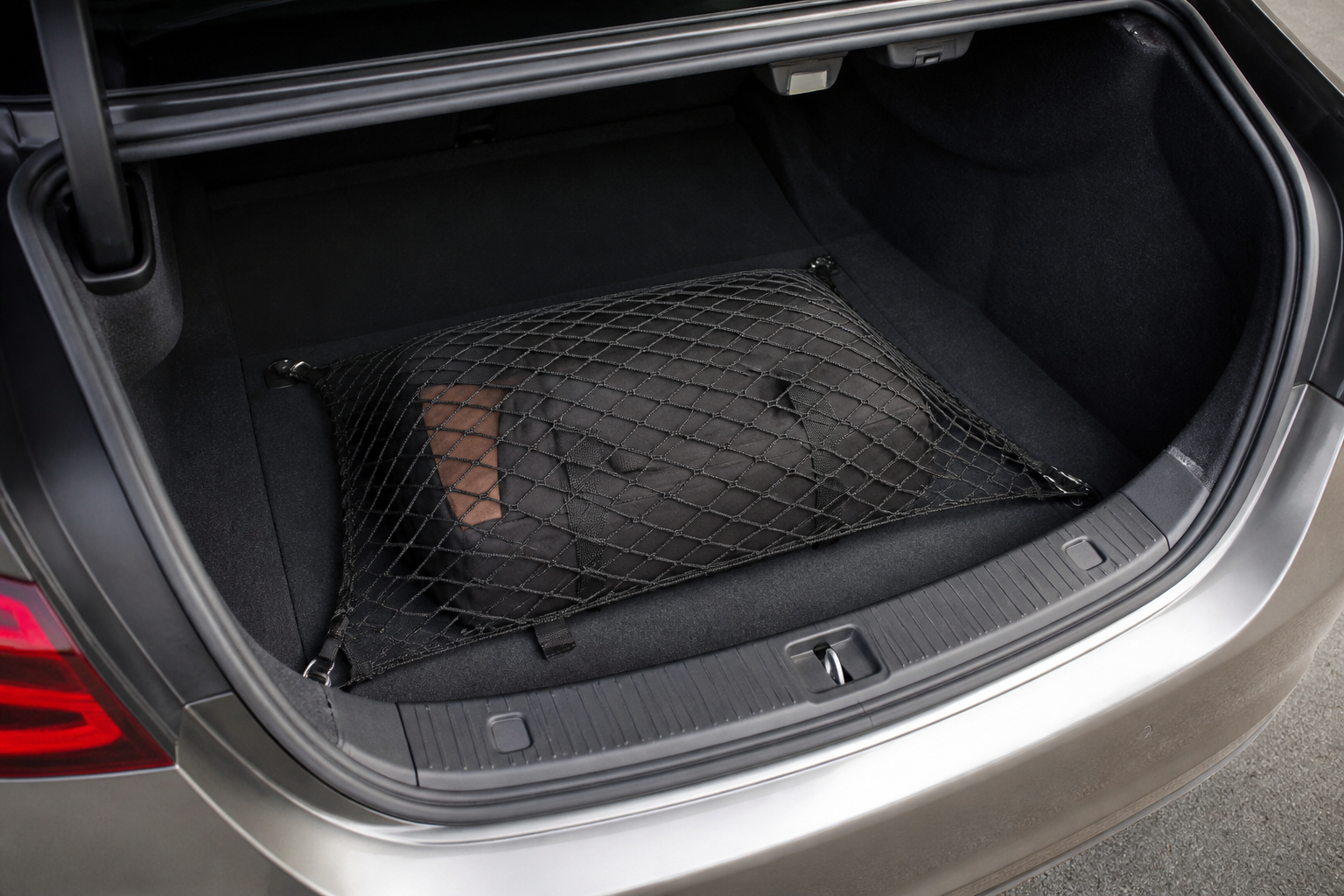
Genuine Mercedes cargo nets and trunk organizers are vehicle-matched accessories intended to reduce cargo movement in normal driving, but they are not a guarantee against shifting heavy or bulky items in a crash or sudden stop. Use floor-mounted tie-down points with these accessories, follow installation guidance (which may require extra components or professional fitting), and always recognize their limits: secure, distribute weight, and don’t rely on them for heavy items.
3 Key takeaways
- Genuine Mercedes cargo nets and organizers are designed to work with vehicle tie-down points to reduce cargo movement.
- They are not designed to restrain very heavy or bulky loads in a collision or sudden stop.
- Some installations may require additional components or professional installation to ensure proper use.
Overview: Using genuine Mercedes cargo nets and organizers
Mercedes-Benz offers trunk and cargo-management accessories designed to help secure items during daily driving and leisure trips. Marketed as vehicle-matched, genuine solutions, these products aim to reduce cargo movement within the vehicle’s normal operating envelope and through routine stop-and-go conditions. They are specified to work with the car’s integrated tie-down infrastructure, including floor-mounted hooks and dedicated cargo-management anchors found in configurations such as EASY-PACK luggage nets and parcel nets that Mercedes specifies for particular trunk layouts.
Official materials emphasize that unsecured cargo can become hazardous in a collision or during sudden braking. Cargo nets and organizers are described as aids to organization and restraint, but they are not universal fixes for every payload scenario. Some installations may require additional components or professional installation to ensure proper fit and function, especially for setups that integrate with factory anchor points or require dealer-installed hardware to achieve full security performance.
How to use cargo nets and tie-down points correctly
To maximize safety and effectiveness, follow these practical steps when using Mercedes tie-down points and genuine cargo-management accessories:
- Locate the correct anchors: Identify the vehicle’s floor-mounted tie-down hooks and points designed for securing loads. These anchors are built to receive the compatible webbing, hooks, or nets from the official accessory line.
- Attach per instructions: Connect the cargo net or organizer to the designated points exactly as the accessory instructions describe. Ensuring correct attachment prevents looseness that could worsen movement during driving or in a sudden stop.
- Distribute weight evenly: Place items in a balanced fashion and use the net or organizer to minimize shifting. Heavier items should be placed closer to the vehicle’s centerline or anchor points, with lighter items filling gaps to reduce rattle and movement.
- Acknowledge load limits: Do not exceed the stated weight capacity of the accessory. Heavier items should be restrained with additional methods if needed to prevent movement beyond what the net can safely manage.
- Check compatibility and fit: Some configurations require additional components or professional installation to complete the setup. If in doubt, consult an authorized Mercedes-Benz dealer or refer to the accessory’s installation guide.
What these accessories can and cannot do
Official guidance emphasizes that cargo nets and organizers help prevent cargo from slipping under ordinary driving conditions. They are intended to manage movement within the vehicle’s normal operating envelope and are not designed to restrain objects that are extremely heavy or bulky in the event of a crash. In other words, they reduce movement and improve organization, but they are not a substitute for proper stowage and comprehensive load securing practices.
Real limits and safety boundaries
Even with genuine trunk/cargo accessories, practical limits apply that are important for everyday owner use:
- In a collision or abrupt stop: Unsecured or inadequately secured cargo can become hazardous. Accessories are part of a broader securement strategy, not a guarantee against cargo movement in severe events. Use them in conjunction with appropriate restraints for the payload.
- Weight and bulk considerations: Heavy or oversized items may bypass the effectiveness of nets and organizers. Prioritize safe placement, distribution of weight, and, when needed, alternative restraint methods for such loads.
- Installation and integration: Some installations may require dealer involvement or additional components to ensure proper function and anchor integrity. User-installed parts should follow the official instructions to avoid compromising system performance.
- Deterioration and wear: Over time, nets, straps, and organizers may wear or stretch. Regular inspection for fraying, weakened attachment points, or corrosion at anchor points is prudent, especially if the vehicle sees frequent cargo movement or rough roads.
Best practices for different trunk configurations
Mercedes-Benz offers different approaches depending on the model and market. When choosing between a luggage net, a parcel net, or a dedicated organizer, consider:
- Luggage nets: Useful for preventing smaller items from sliding around on quick maneuvers. Ensure the net’s tension is appropriate for the cargo weight and that it attaches securely to all available anchor points.
- Parcel nets or organizers: Helpful to compartmentalize items and create modular storage zones. Verify that the organizer geometry aligns with the trunk floor layout so it doesn’t interfere with other loading mechanisms or hinge operation.
- Professional installation: For configurations that integrate with specific anchor systems (for example, certain EASY-PACK or luggage-area nets), professional installation may ensure compliance with the vehicle’s safety and warranty requirements.
Practical examples and scenario planning
Consider typical ownership scenarios to gauge how to use these accessories effectively:
- Daily commute with small items: A luggage net can keep groceries, papers, and personal items from sliding toward the rear seats or cargo area during braking.
- Weekend gear: A parcel net or modular organizer helps create zones for tools, camping supplies, or sports equipment, reducing rattles and making unloading quicker.
- Fragile or valuable items: Use dedicated compartments or pouches within the organizer and place fragile items toward the vehicle’s centerline where tie-downs are strongest, while avoiding sharp edges that could snag the net.
Limitations and practical caveats
Owners should treat cargo nets and organizers as components of a broader cargo-management strategy rather than sole restraint systems. They do not substitute for proper load distribution, heavier-duty tie-downs for bulky or heavy cargo, or securement techniques that comply with local regulations and vehicle warranties. In some markets, Mercedes-Benz recommends professional installation for certain configurations to ensure that the system remains compatible with the vehicle’s restraint architecture and safety standards.
How to assess suitability for your Mercedes model
To choose the right accessory for your model, consider the following decision criteria:
- Model-specific compatibility: Confirm which trunk systems and anchor points your model provides and which accessories are listed as compatible by Mercedes-Benz Genuine Accessories.
- Intended use: Reflect on typical cargo types, weight ranges, and how often you need quick access versus maximum containment.
- Professional installation needs: Determine whether your chosen setup is fully installable by a owner or requires dealer support to preserve warranty and safety alignment.
Conclusion: Practical, not all-protective
Mercedes cargo nets and trunk organizers offer practical, vehicle-matched solutions to improve cargo containment for everyday use. They help reduce cargo movement, organize the load, and make loading/unloading more predictable. However, their protective scope has real limits: they are not designed to prevent movement of very heavy or bulky objects in a crash, and they rely on correct installation, appropriate load ratings, and ongoing inspection. Use these accessories as part of a comprehensive load-securing routine, including proper stowage, distribution of weight, and adherence to the vehicle’s load limits.
Sources