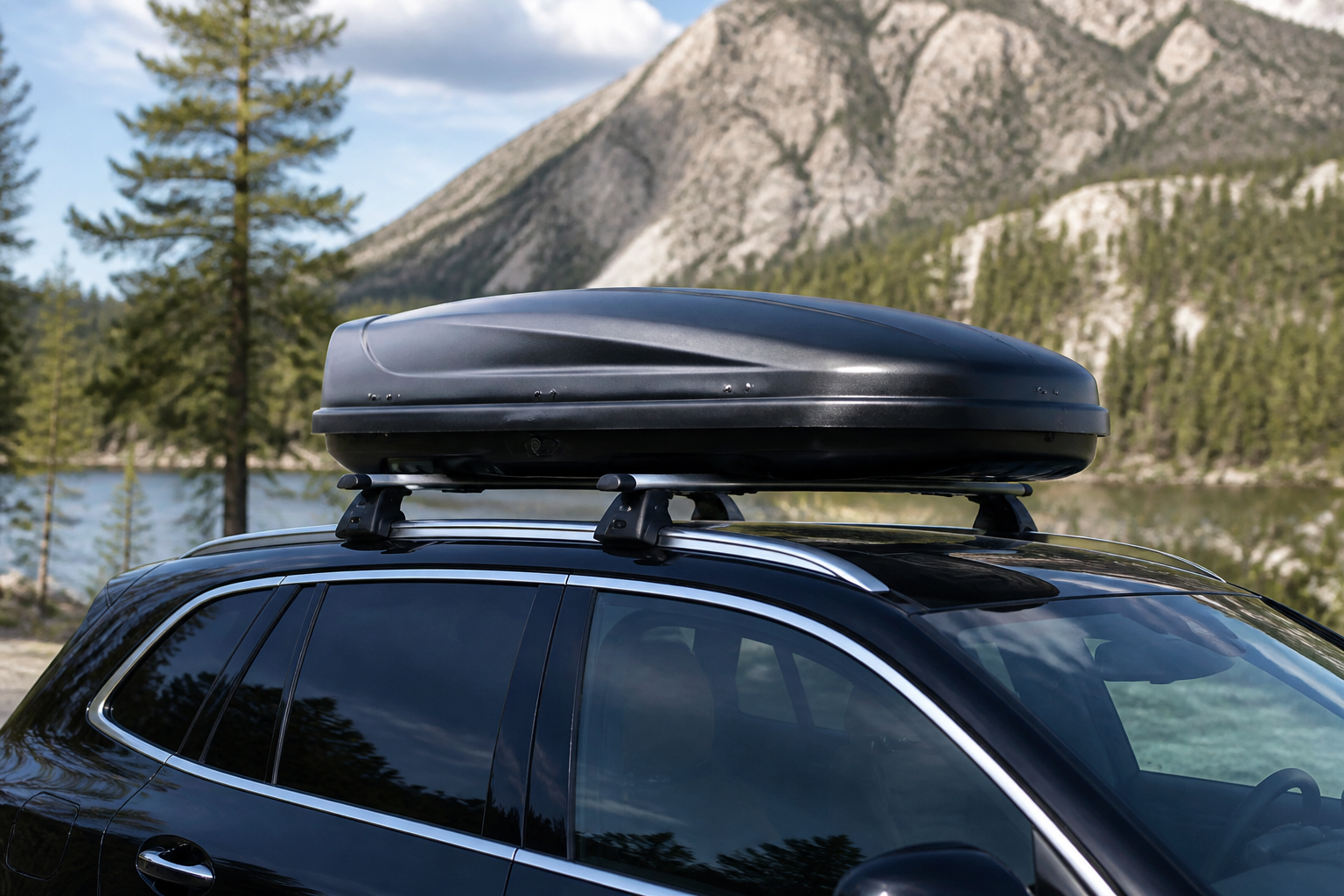
To choose and install Mercedes-Benz roof rack crossbars safely, use OEM crossbars and mounting kits, verify the vehicle’s maximum roof load from the owner’s manual, and ensure the crossbars’ maximum load capacity is not exceeded. Follow the specific installation instructions and use only approved Mercedes-Benz accessories for your model.
Three practical takeaways
- Always use Mercedes-Benz OEM crossbars and mounting systems designed for your exact model.
- Verify both the vehicle’s maximum permissible roof load and the crossbars’ own load rating before loading.
- Follow the official installation instructions and mount sets; avoid non-approved accessories to maintain safety and warranty.
Choosing the right Mercedes-Benz roof rack system starts with OEM crossbars designed to work with your specific vehicle and its roof geometry. Mercedes-Benz presents crossbars as the foundational base for compatible transport solutions—such as roof boxes and carriers—and emphasizes that any carrier choice must be aligned with the vehicle’s own roof-load rating. The practical implication is simple: you can only average the roof’s available payload by combining the base weight of the crossbars with the weight of any added load, and you must not exceed the manufacturer’s published limits for the roof as a whole.
Key compatibility and fitment considerations
Crossbars (the foundational rails section) are advertised by Mercedes-Benz as a mounting base for recommended transport solutions. When selecting crossbars, owners should verify two linked limits: the vehicle’s maximum permissible roof load (as stated in the owner’s manual) and the crossbars’ own carrying capacity. Importantly, Mercedes-Benz guidelines caution against using non-approved accessories; compatibility guidance is vehicle and model-year specific, often including VIN-based validation in some markets. In practice, a legitimate fit means confirming that the crossbars you choose are listed as compatible with your exact model and production week, not just the generic “fits all C-class/S-class” claim.
Documentation from Mercedes-Benz’s official parts portals reinforces the importance of using only approved Mercedes-Benz accessory programs. The roof rail carrier installation instructions explicitly direct owners to observe the vehicle’s permitted roof load and to use the correct mounting sets that ensure secure connection to the roof rails. In particular, the Relingträger (roof-rail carrier) mounting instructions emphasize safety impacts from added weight and potential wind-profile changes when carriers are installed and in motion.
Practical fitment and load calculations
To reason about load capacity in a real-world scenario, perform a two-step check before you order or mount anything:
- Determine the vehicle’s roof-load budget: locate the vehicle owner’s manual section on roof load or luggage carrier capacity. Note the maximum load that the roof structure can safely carry, including the weight of the roof racks themselves and any installed gear. Some Mercedes-Benz models publish a roof-load figure in kilograms or pounds; if your manual provides both, use the metric number for equipment compatibility calculations.
- Verify the crossbars’ rating and the box/carrier weight: crossbars will have a published carrying capacity, typically expressed as a per-bar or per-system total. When you add a roof box or other carrier, you must ensure the combined weight (crossbars + carrier + loaded items) does not exceed the vehicle’s roof-load budget. Exceeding this limit can affect handling, aerodynamics, and safety, especially at higher speeds or in windy conditions.
As a rule of thumb, if the vehicle’s manual states 80 kg (about 176 lb) as the roof-load limit and the crossbars weigh 5–10 kg with a roof box rated for 40 kg, the maximum practical payload is constrained by either the vehicle’s limit or the box’s rating, whichever is lower. This is a critical intersection: even if the crossbars and box together are within the explicit product limit, the vehicle’s roof-load budget governs whether you can carry a given combination at all times of use.
Installation safety and mounting procedure
Mercedes-Benz installation instructions offer several concrete safety steps that apply to most OEM roof rail systems:
- Use only approved installation sets: select the mounting hardware that is specified for your roof rails and crossbars, and verify compatibility with your roof type (flush-mounted rails, raised rails, or fixed mounts). Reusing hardware outside the approved kits can compromise retention, load distribution, and aerodynamic performance.
- Torque correctly and re-check: use the recommended torque values for all fasteners, and re-torque after the first few miles of driving, particularly after the first dynamic loads settle in (or after a vehicle wash when components can loosen slightly).
- Distribute load evenly: place items so their center of gravity aligns with the roof’s centerline, and avoid heavy items toward the ends of crossbars unless the crossbars and mounts are designed for such offsets. Secure all items with appropriate straps or clamps rated for outdoor use and wind exposure.
- Monitor for wind noise and vibration: even OEM systems can alter wind profile; if you notice excessive whistling, tighten mounts to spec, check for gaps, and ensure no accessory interferes with door seals or sunroof operation (if applicable).
- Adhere to speed and driving considerations: with a roof-mounted load, your vehicle’s dynamics change. Plan for longer braking distances, increased fuel consumption, and possible handling changes; avoid exceeding manufacturer-specified performance envelopes, especially in crosswinds or at high speeds.
Compatibility checks you can perform before purchase
- VIN-based compatibility tools: some Mercedes-Benz markets offer online VIN lookups to confirm which crossbars, rails, and mounting kits are approved for your exact vehicle configuration. If this option exists for you, use it to minimize guesswork and future-fit issues.
- Model-year relevance: verify that the crossbars you’re considering match your model-year. Minor body changes between years can affect rail shape, mounting point spacing, and clamping geometry, which in turn affects compatibility and performance.
- Accessory class and load rating: align the intended use (roof box, bike racks, ski racks, etc.) with the crossbars’ load rating and mounting hardware. Some combinations require a specific mounting set; using an unsupported pairing can void warranty or compromise safety.
Limitations and caveats
Even with OEM components, there are noteworthy limitations to keep in mind:
- Model-specific ratings: roof-load numbers vary by model, trim, sunroof presence, and roof design. Do not extrapolate from one Mercedes-Benz model to another—even within the same generation.
- Dynamic effects: crosswinds, vehicle speed, and drag change the effective load distribution on the roof. Some roof racks with aerodynamic fairings minimize adverse effects, but they do not eliminate them. Always drive within the recommended speeds for vehicles carrying roof-mounted loads.
- Accessory wear and maintenance: hardware may corrode or degrade due to exposure. Inspect mounts, rails, and fasteners regularly, particularly after off-road use or winter seasons with salt exposure.
- Warranty and insurance considerations: using OEM-rated components within the stated limits maintains warranty integrity. Deviating from approved configurations can affect warranty coverage and insurance claims following an incident.
Summary guidance for Mercedes-Benz roof rack fitment
For owners seeking to add a roof-mounted transport solution, the most reliable path is to start with the vehicle’s owner manual roof-load rating and select OEM crossbars and mounting hardware that Mercedes-Benz explicitly lists as compatible with your exact model, year, and VIN. Treat the roof system as a payload budget: crossbars plus any gear must not push the total beyond the approved roof-load limit. Follow installation instructions precisely, use the approved mounting sets, and conduct a safe-load check after installation. By adhering to these device-specific checks and procedures, you’ll achieve secure, compliant transport capability without compromising handling, safety, or warranty protections.
Sources
- Reilingträger (Relingträger) Montageanleitung / Instructions (roof rail carrier mounting instructions) — for Mercedes-Benz S-Class? (PDF)
- Dachträger und Dachboxen (Roof carriers and roof boxes) — Mercedes-Benz OEM accessories hub
Sources