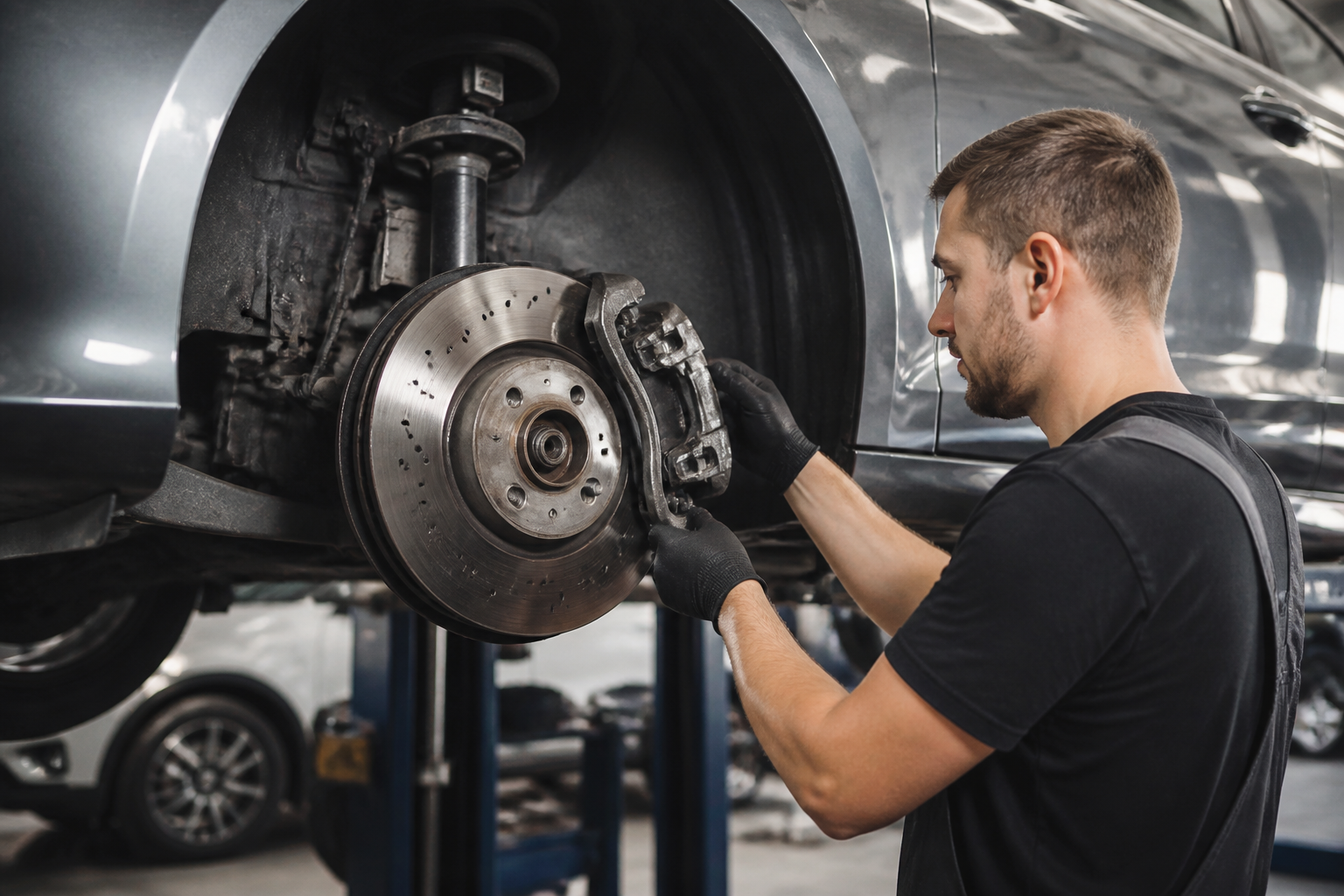
ASSYST PLUS uses Service A for minor maintenance and Service B for major maintenance, with brake fluid exchange scheduled as part of Service B. The standard cadence is roughly 1 year/10,000 miles for the first Service A, then about every 2 years or 20,000 miles for subsequent visits, with Service B including the brake fluid exchange. Use the ASSYST PLUS messages on the dash to anticipate when a Service B (including brake fluid replacement) is due.
Key takeaways
- Service A: first minor service at ~10,000 miles or 1 year; subsequent A services occur about every ~20,000 miles or 2 years.
- Service B: major service, first occurring ~20,000 miles or 1 year after the prior service, then about every ~20,000 miles or 2 years.
- Brake fluid exchange is included with Service B, not Service A, per MBUSA documentation.
Overview: How ASSYST PLUS translates into Service A and Service B, and what that means for brake fluid timing
Mercedes-Benz vehicles running the ASSYST PLUS maintenance system present the driver with notifications that a service is upcoming, labeled as Service A or Service B. These labels correspond to two tiers of routine maintenance rather than a single fixed mileage milestone. The system blends elapsed time, vehicle usage, and wear data to determine when the next service is due and then communicates that as either a minor (A) or major (B) service. Understanding this distinction—and how brake fluid exchange fits into the cadence—helps owners budget and schedule work more accurately. Manufacturer materials published by MBUSA and Canada’s service booklets anchor these definitions in real, testable intervals rather than abstract timing.
Key references include MBUSA’s official Service & Maintenance overview and the operator manuals and Canadian service booklets, which tie the ASSYST PLUS messages directly to the scheduled maintenance items. These sources consistently note that Service B includes a brake fluid exchange, alongside other routine tasks.
Factory-defined intervals for Service A and Service B (and where brake fluid exchange fits)
According to official MBUSA guidance, Service A is typically the first visit at about 10,000 miles or 1 year, followed by subsequent visits at roughly 20,000 miles or 2-year intervals. Service B is defined as the first visit at about 20,000 miles or 1 year after the previous service, then approximately every 20,000 miles or 2 years thereafter. The cadence is expressed as a two-year or 20,000-mile rhythm, but with a starting point that depends on when the car is first sold/registered. A crucial detail in these documents is that brake fluid exchange is listed as a component of Service B, not Service A. This means that, after the initial A, the period when the driver should anticipate paying for a brake fluid refresh aligns with the B cycle. The official statements also emphasize that the cadence is a guideline based on typical usage, and actual due dates may shift with driving style, climate, and accumulated operating conditions.
Practical takeaway: if your car’s first service is Service A at ~1 year/10k miles, you should expect the next major service to be Service B at roughly another year or ~20k miles after that initial visit, with brake fluid exchange included during Service B. This pattern forms the backbone of budgeting for brake fluid maintenance as part of the larger B-service envelope.
Brake fluid exchange: when it is scheduled within the A/B cadence
Brake fluid exchange is explicitly associated with Service B in MBUSA’s published maintenance framework. In the Service B package, you’ll typically see tasks such as oil and filter replacement, brake component inspection, cabin dust/combination filter replacement, and the brake fluid refresh. The practical implication for owners is that brake fluid replacement is not performed under Service A; it is expected to happen during the B interval. The two-year cadence means most owners will encounter a brake fluid exchange around the time of their second service, or when the vehicle has reached roughly 20,000 miles after the preceding service, depending on how the vehicle has been driven. It’s important to note that extreme driving conditions—e.g., frequent heavy braking, high humidity environments, or persistent cold starts—can influence the recommended interval within the manufacturer’s framework, though the primary messaging remains tied to the Service B window.
ASSYST PLUS messaging: how the dashboard communicates A vs B
ASSYST PLUS displays the remaining time or distance until the next service due and designates the service type as A or B. The letters reflect the nature of the planned work: A for a minor service, B for a major service. The system can show variations such as “Service A in X days,” “Service A Due,” or overdue statuses, and the display logic is driven by the vehicle’s maintenance data rather than a fixed engine oil level. Drivers should interpret the messages as a schedule that has already been calculated by the vehicle’s sensors and service history.
In practice, when you see Service B due, you should expect that brake fluid exchange is included in the service items and plan accordingly. If the display shows Service A, you’re looking at a lighter maintenance event that does not include a brake fluid refresh under standard factory guidance.
Practical planning tips for owners and clubs of owners (budgeting, scheduling, and record-keeping)
- Track the first two services on the car’s maintenance history to establish your personal cadence. If your first service was Service A at around the 1-year mark, your next visit is likely Service B about a year later, with brake fluid exchange included if you follow the standard MBUSA plan.
- Use the ASSYST PLUS countdown as a planning tool, not a calendar anchor. If you’re approaching the Service B window, allocate time for brake fluid exchange in the service appointment and verify the exact fluid type and quantity with the dealership or service center.
- Climate and usage matter. In hot climates with frequent city braking, or in regions with high humidity, service centers may recommend staying closer to the 2-year/20,000-mile cadence to maintain optimal braking performance, even if the car’s theoretical due date is a bit later.
- Documentation consistency. Keep records of the Service A and Service B events, including brake fluid changes, to avoid duplication or missed maintenance in future years.
Language cues to monitor on the dashboard and in service booklets
Watch for ASSYST PLUS messages that explicitly call out Service A or Service B, along with a countdown or “Due” status. The terminology is not simply about mileage; it reflects an integrated assessment of time, distance, and component wear. The official MBUSA materials and the Canadian service booklet explicitly connect these messages to the maintenance schedule and list braking fluid exchange as part of Service B. If you’re unsure, ask your service advisor to map the ASSYST PLUS message to the published A/B cadence and confirm whether a brake fluid change is part of the upcoming work.
Conclusion: applying the A/B framework to brake fluid maintenance
In MBUSA’s published maintenance framework, Service A corresponds to the first minor service at approximately 1 year/10,000 miles, followed by Service B as the major service around 1 year after the prior visit or every ~20,000 miles thereafter. Brake fluid exchange is included with Service B, making the B interval the practical target for planning a brake fluid refresh. This alignment between the ASSYST PLUS display, the factory maintenance cadence, and the service-booklet definitions provides a reliable basis for budgeting and scheduling maintenance, while recognizing that individual driving conditions can cause small deviations from the nominal cadence. For reference, consult the MBUSA Service & Maintenance overview and the Canada service booklet cited in the source dossier for the exact wording and graphic displays used in your market.
Sources