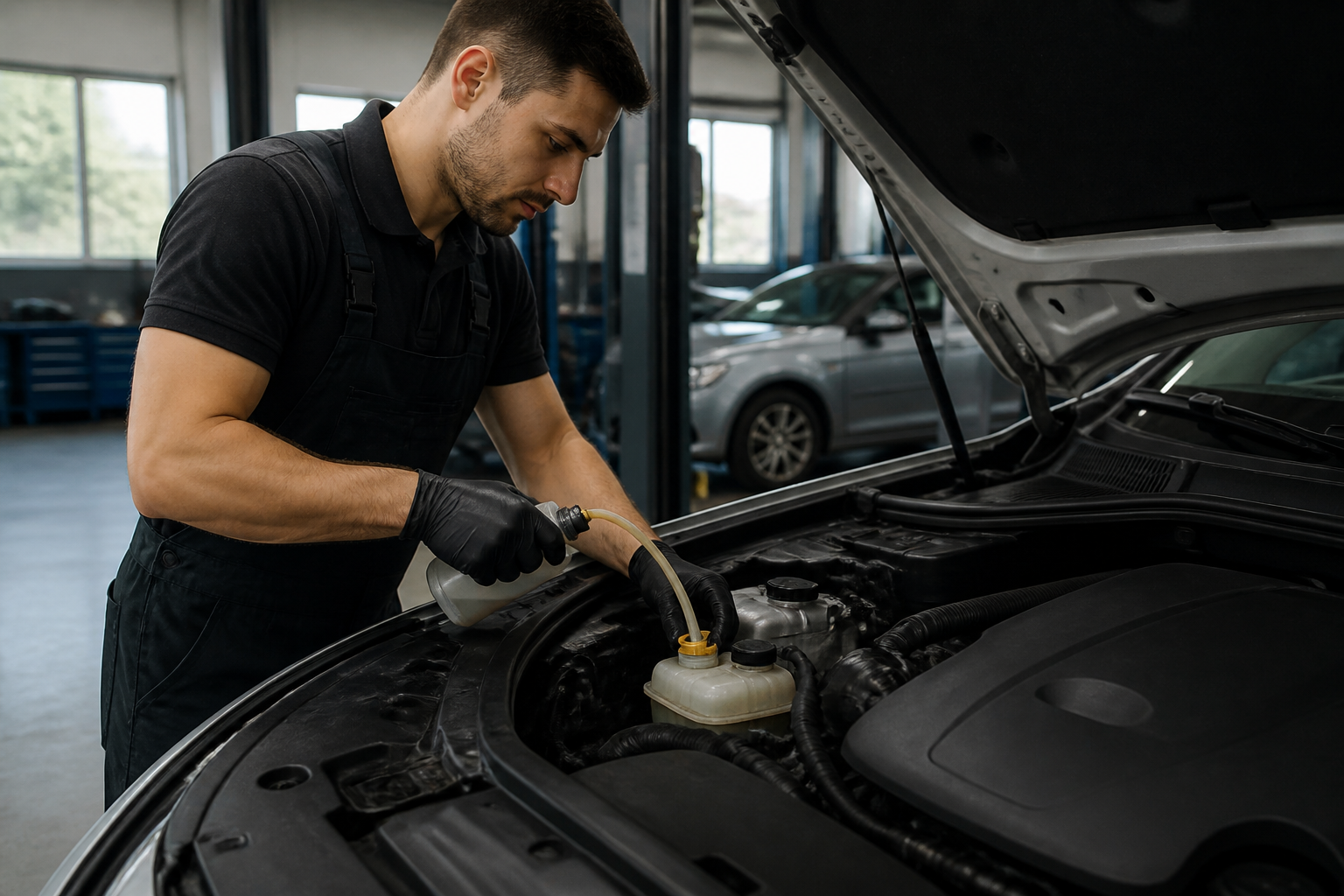
Mercedes-Benz’s Service A/B cadence includes brake-fluid changes as part of the routine maintenance at roughly 20,000 miles or 2 years after the initial visit. This makes brake-fluid service a recurring budgeting line item, bundled with other A/B interval tasks according to MBUSA documentation and dealer guides.
Key takeaways
- Brake-fluid changes are part of Mercedes-Benz Service A/B cadence, not a separate repair.
- Service A occurs first after initial service; thereafter, Service A/B is required roughly every 20,000 miles or 2 years.
- Brake-fluid service is bundled with other recurring maintenance tasks, aiding predictable budgeting.
- Refer to MBUSA service page and dealer guide for the exact included items at each interval.
Understanding Mercedes brake-fluid replacement intervals within Service A/B
Mercedes-Benz structures its routine maintenance around a Service A/B cadence that begins with the initial visit (Service A) and then repeats roughly every 20,000 miles or 2 years. Within that cadence, brake-fluid exchange is explicitly listed as part of the maintenance tasks, rather than treated as a standalone, optional repair. For owners budgeting over a 2-year, approximately 20,000-mile horizon, this framing turns brake-fluid service into a predictable, recurring cost rather than a potential, surprise item at a future visit.
There is consistency across official MBUSA materials and dealer resources in confirming this arrangement: brake-fluid replacement is bundled with ongoing service items at the A/B intervals, reinforcing its role as a planned expense in the ownership-cost equation. This is reflected in the MBUSA service-and-maintenance overview, the prepaid maintenance dealer guide, and dealer summaries of A/B timing and content.
In practical terms, you should expect the brake-fluid change to be part of the scheduled maintenance when Service A or Service B is performed, not as a separate billable repair. This has budgeting implications: you can forecast a recurring line item for brake-fluid service every ~ every 20,000 miles or 2 years after the initial visit, aligned with your vehicle’s service interval schedule.
Key source references include the MBUSA Service & Maintenance page and the Service Contract Dealer Guide (2021), both of which explicitly describe brake-fluid changes as included items within the service cadence. See the MBUSA resource cluster for the official cadence and items: MBUSA Service & Maintenance and Service Contract Dealer Guide (2021).
What exactly is included at Service A and Service B?
Service A is typically the first scheduled maintenance after the initial vehicle delivery, with a cadence that, after the initial visit, reiterates about every 20,000 miles or 2 years. Service B follows at the next interval in the sequence, and both intervals include a defined set of maintenance tasks. In the MB documentation and dealer summaries, brake-fluid exchange appears among the items associated with the A/B service cadence, especially noting that brake-fluid service is a recurrent maintenance operation rather than a singular, one-off repair.
MB Seattle’s dealer-guide summary echoes this structure: after the initial Service A, the cadence continues every 20,000 miles or 2 years, and brake-fluid exchange is listed among the items in the B interval. This corroborates the practice of budgeting brake-fluid services as part of ongoing maintenance rather than a separate contingency.
Because the brake-fluid service is bundled, owners can plan their maintenance reserve more predictably. However, actual items included at each interval can vary by model, market, or optional maintenance packages, so it’s wise to verify the exact item list with your servicing dealer for your specific vehicle configuration.
Calculating a practical maintenance budget
To convert the interval-based guidance into a usable budget, you can model a simple recurring cost: brake-fluid replacement every 20,000 miles (approximately every 2 years). Consider the following approach:
- Base cadence: assume brake-fluid service coincides with Service A (or Service B) every 20,000 miles/2 years after the initial service.
- Bundle effect: because brake-fluid service is bundled with other routine maintenance tasks, assign a single annual or per-interval amount that covers all included items. If your dealer quotes a combined price for the interval, use that figure for budgeting.
- Reserve planning: for a typical ownership horizon (e.g., 5 years or the length of a loan), accumulate the per-interval amount at the same cadence, adjusting for expected mileage over time. For example, at 40k miles (~2 servicing intervals), you would budget for two intervals of brake-fluid service plus the other included tasks.
- Model variability: regional labor rates, vehicle model, optional maintenance plans, and any price changes over time can affect the actual cost. Plan with a small contingency (e.g., 5–15%) above the quoted interval price to cover minor price fluctuations or added items that might be included in the service bundle for your model.
Using this approach lets owners maintain a predictable maintenance reserve, reducing the risk of surprise charges during a service visit while still acknowledging that real-world costs can drift with parts pricing and labor rates.
Practical tips for owners and buyers
- Ask your dealer for the exact brake-fluid replacement scope included at Service A and Service B for your specific model year and trim. The item list can differ by model and market.
- Review your vehicle’s maintenance booklet or MBUSA owner portal to confirm the cadence that applies to your car, especially if you’re in a different market or on a prepaid maintenance plan.
- If you’re considering a prepaid maintenance contract, check whether brake-fluid changes are included, and confirm how the contract handles intervals that fall near mileage or date thresholds.
- Keep a simple log of your service visits and the per-interval cost to refine your ownership budget over time, rechecking the estimates as prices and included items evolve with new model years.
Additional considerations for budgeting and planning:
- Regional differences: pricing and included items can vary by country or region even within MB baseline guidance. Always align the budget with the local dealer’s published scope and the vehicle’s market-specific maintenance schedule.
- Model-year and feature effects: newer brake-system variants or optional maintenance packages may adjust the exact brake-fluid service frequency or the number of items bundled with the interval. Confirm whether a model with performance brakes, AMG variants, or extended warranties changes the cadence or scope.
- What if mileage deviates? If you drive significantly more or less than average, you can re-anchor the budget to date or mileage thresholds. Some owners track service due dates rather than miles if their annual mileage is variable.
In short, Mercedes-Benz’s Service A/B framework positions brake-fluid replacement as a recurring maintenance element, not a one-off repair. For budgeting, treat it as a standard, interval-based cost aligned with the 20,000-mile/2-year cadence after the initial visit, and plan your reserves accordingly by confirming the exact items included at your dealer for your specific vehicle and region.
Sources