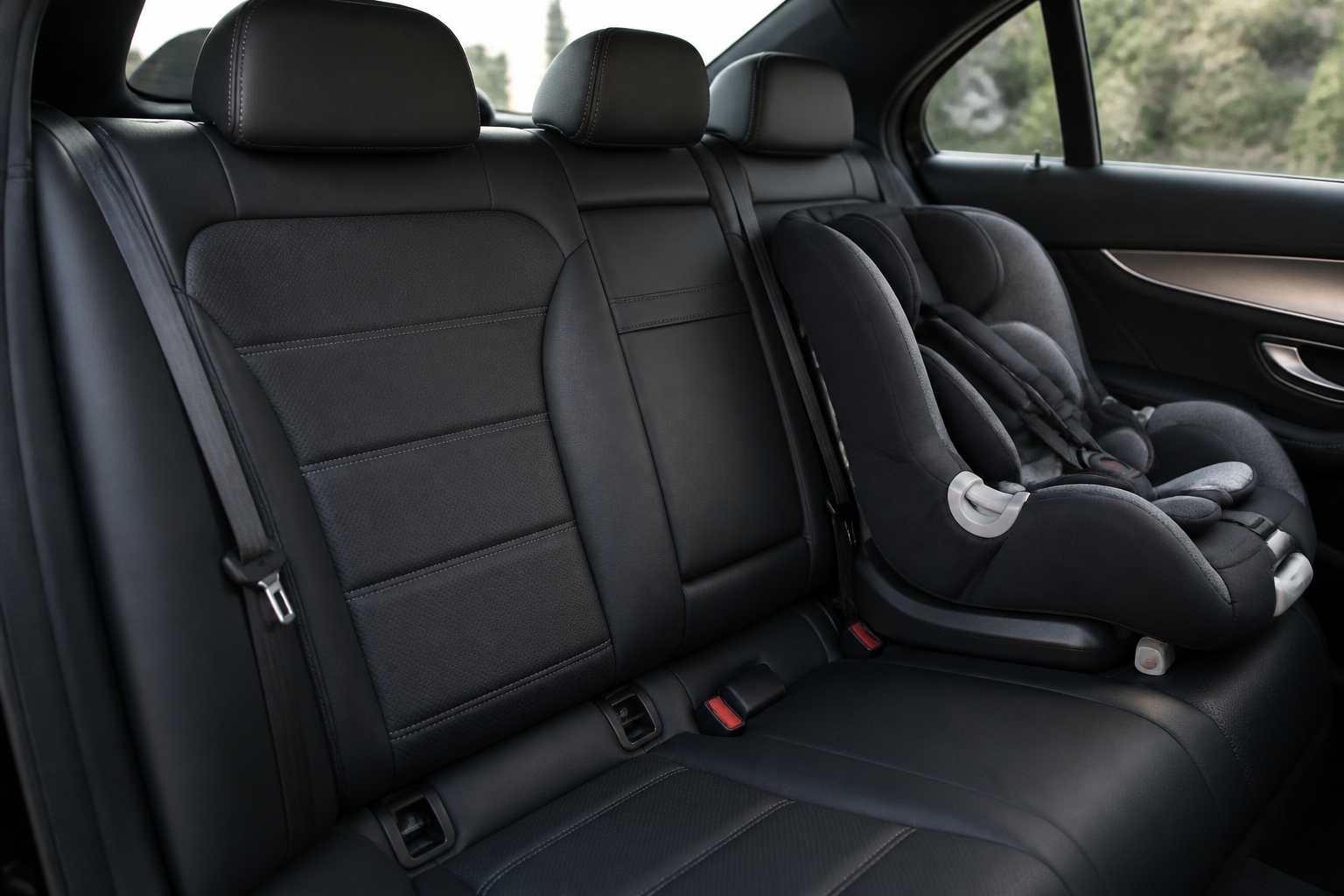
Locate the ISOFIX (lower) anchors in the seat bight (between the seat cushion and backrest) and the Top Tether anchors behind or above the rear seat; verify exact locations in your Mercedes-Benz owner’s manual and the installation guide for the seat you’re using. Use the vehicle’s ISOFIX and Top Tether points rather than other hardware, and follow both vehicle- and seat-manufacturer instructions to ensure a correct, secure installation.
Key takeaways
- ISOFIX lower anchors are typically in the seat bight; confirm their presence in your model via the owner’s manual.
- Top Tether anchors are in a different location from the lower anchors (often behind/above the rear seat); check model-specific guidance.
- Always use Mercedes-Benz’s documented anchor locations (ISOFIX and Top Tether) and follow the seat’s installation instructions for a safe fit.
Overview: ISOFIX and Top Tether in Mercedes-Benz
Mercedes-Benz vehicles use ISOFIX (often called LATCH in some markets) lower anchors and Top Tether anchors to secure compatible child seats. These vehicle-side connections provide a consistent mounting method across models, and they are embedded into the seat frame or interior architecture to deliver a rigid attachment. Before you buy or install a child seat, identify what each anchor is called, where it’s located, and how the two systems interact with your specific interior layout. Rely on your model’s owner’s manual for exact locations, and consult Mercedes-Benz installation guidance or accessory documentation when applicable. This article emphasizes the practical, vehicle-side checks you should perform before installation to avoid common mistakes.
What the anchors are called and how they differ
Clarifying terminology helps prevent misinterpretation and misinstallation:
- ISOFIX lower anchors (often labelled LATCH in certain markets) are fixed attachments built into the seat frame. They reside in the seat bight — the gap between the seat cushion and the backrest. A compatible ISOFIX-enabled child seat harness or connectors attach to these anchors, providing a lower, rigid connection point for the seat.
- Top Tether anchors are additional anchors located behind the rear seat (or in the rear cargo area or shelf in some layouts). A tether strap from the top of the child seat is routed to this anchor to limit forward rotation and vertical movement in a crash, improving stability when the seat is in use.
Where to look inside the car by model family
While the fundamental concept is consistent, exact anchor locations vary by model and generation. In most Mercedes sedans, SUVs, and wagons, the lower ISOFIX anchors are located in the rear seat bight of the seating positions, accessible through the gap between the seat cushion and backrest. Top Tether anchors may be behind the rear seat, on the rear shelf, or in the cargo area depending on body style and interior architecture. Some variants offer ISOFIX in all rear seating positions; others provide it only in outer positions. Always verify with your model’s owner’s manual and any Mercedes-Benz installation instructions specific to your seat type and model year.
Practical checks before you buy or install
Before purchasing a child seat or attempting installation, perform vehicle-side checks to confirm compatibility and minimize installation errors:
- Confirm anchor availability: Verify that both lower anchors and a Top Tether are present, noting which rear seating positions offer ISOFIX. Some models may have anchors in only two rear positions or require certain trims to access them.
- Assess accessibility and alignment: The lower anchors should be accessible from the seat bight without forcing fabric or hardware. If you encounter resistance or misalignment when connecting, recheck the manual and ensure the seat is properly positioned.
- Identify anchor indicators: Look for symbols, labels, or icon stickers on the seat frame indicating ISOFIX and Top Tether locations. In some interiors, anchors are concealed behind removable plates or covers; do not pry or force plates without the correct guidance.
- Consider model-specific constraints: Some configurations may restrict the use of certain seating positions (for example, certain airbags or front-seat restrictions in particular variants). Follow both the car’s cautions and the child-seat manufacturer’s instructions.
- Check seat-anchor compatibility: Not all child seats use ISOFIX and Top Tether in the same way. Ensure your seat is ISOFIX-compatible and Top Tether-ready for your vehicle’s anchor strength and the seat’s weight/size class.
- Account for accessories and Mercedes-branded seats: If you’re using Mercedes-Benz-branded seating or accessories, confirm that they align with your vehicle anchors and do not interfere with seat movement, airbags, or trim. Use only approved accessories as directed by Mercedes-Benz.
What to do during installation
When anchors are located, follow a methodical process to ensure a secure fit:
- Attach lower anchors first: Route the child seat’s ISOFIX lower connectors to the anchors in the seat bight. They should click into place with minimal effort. Do not force connectors into an anchor that is not intended for ISOFIX.
- Engage the Top Tether: Attach the top tether strap to its designated anchor and tighten per the child-seat manufacturer’s instructions. The tether helps control forward rotation during a crash and provides an additional layer of stability.
- Secure and verify: After installation, check for minimal movement at the belt path and ensure the seat faces the correct direction for the child’s size and the seating position. Many seats feature an installation indicator or a built-in test to confirm proper securing.
- Adjust with care: If the seat offers recline or height adjustments, ensure these do not interfere with anchor points or with vehicle safety systems such as airbags.
Model-dependent caveats and sources to consult
Mercedes-Benz provides model-specific guidance and installation notes. Examples include notes accompanying specific seats like the DUO plus, which illustrate the intended use of ISOFIX and Top Tether anchors. Always reference the exact vehicle’s owner’s manual and any Mercedes-Benz installation documents for your model year. General reference materials from NHTSA explain lower anchors and tether anchors and can help distinguish anchor types across brands; use them as a supplementary guide.
Practical tips for owners and buyers
- Make a quick pre-purchase anchor check: Before selecting a seat, confirm that the vehicle has at least two rear ISOFIX positions and a Top Tether anchor in usable locations for your child’s size class.
- Label and instruction literacy: Read both the vehicle’s manual and the child-seat manual. A mismatch between seat model and vehicle anchor type is a common cause of improper installation.
- Reliable testing after installation: After securing the seat, perform a firm rock test at the belt path per the seat manufacturer’s instructions to ensure it is firmly anchored without excessive movement.
Special considerations for different Mercedes body styles
Not every model shares the same anchor layout. Some SUVs with third-row seating, coupes with tighter rear cabins, or wagons with extended cargo configurations may present unique anchor placements or require different tether routing. In such cases, you may need to adjust seat positions, remove headrests temporarily, or use specific tether anchors that Mercedes designates for particular trims. Always consult the model-year specific documentation and the child-seat installation guide for compatibility nuances.
Summary: install with confidence by using the vehicle anchors
Using the vehicle’s ISOFIX lower anchors and Top Tether anchors provides a standardized, secure mounting method for compatible child seats in Mercedes-Benz vehicles. These anchors are designed to integrate with Mercedes interior geometry and approved accessories. Following the documented steps helps minimize installation errors and enhances restraint performance. When in doubt, consult the owner’s manual, review Mercedes-Benz installation documents for your exact model year, and verify compatibility with your specific child-seat model.
References for further verification: NHTSA – Vehicle and Car Seat Parts Explained; Mercedes-Benz USA – DUO plus with ISOFIX/TopTether; Mercedes-Benz customer solutions installation documentation for ISOFIX/i-Size mounting bases.
Sources