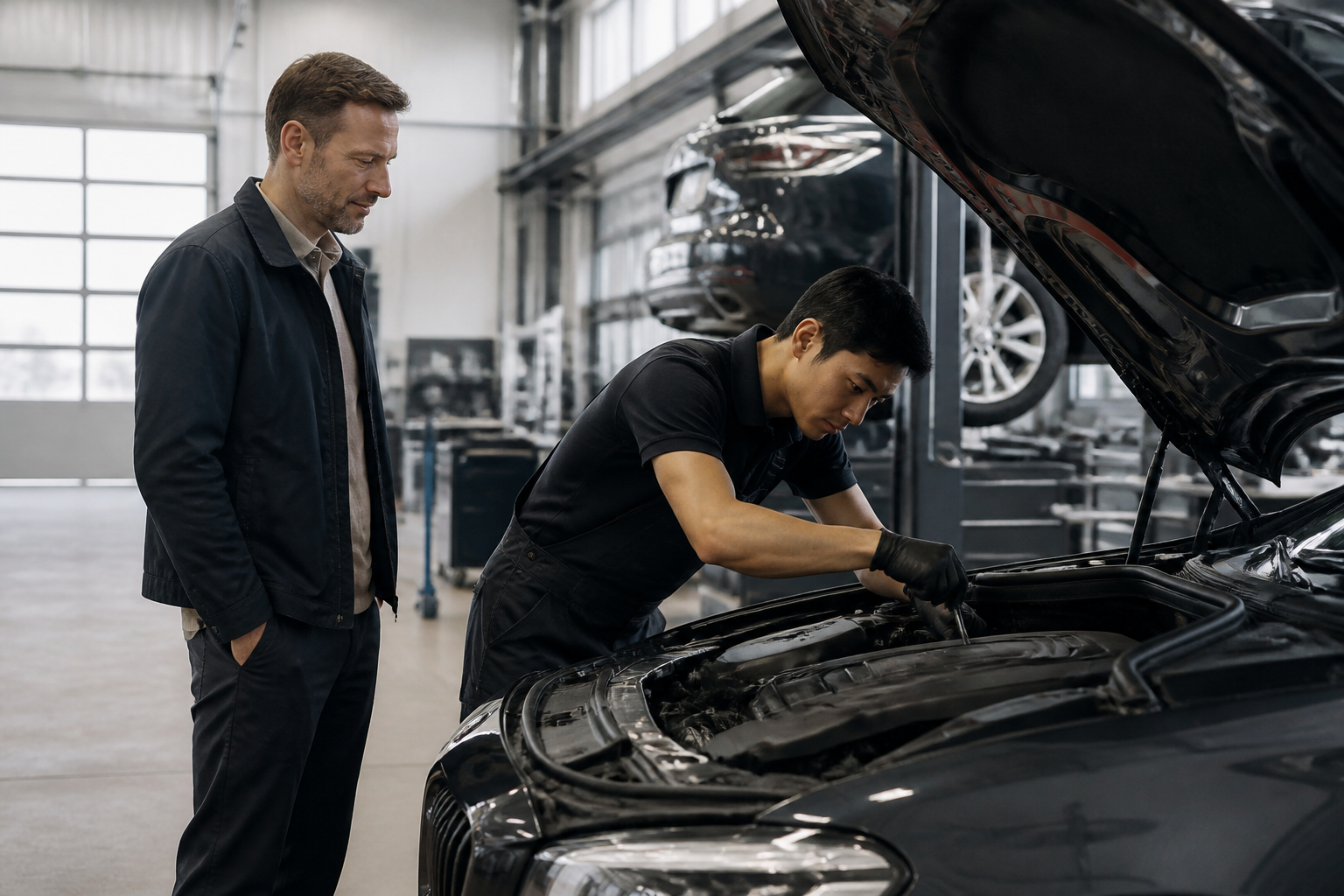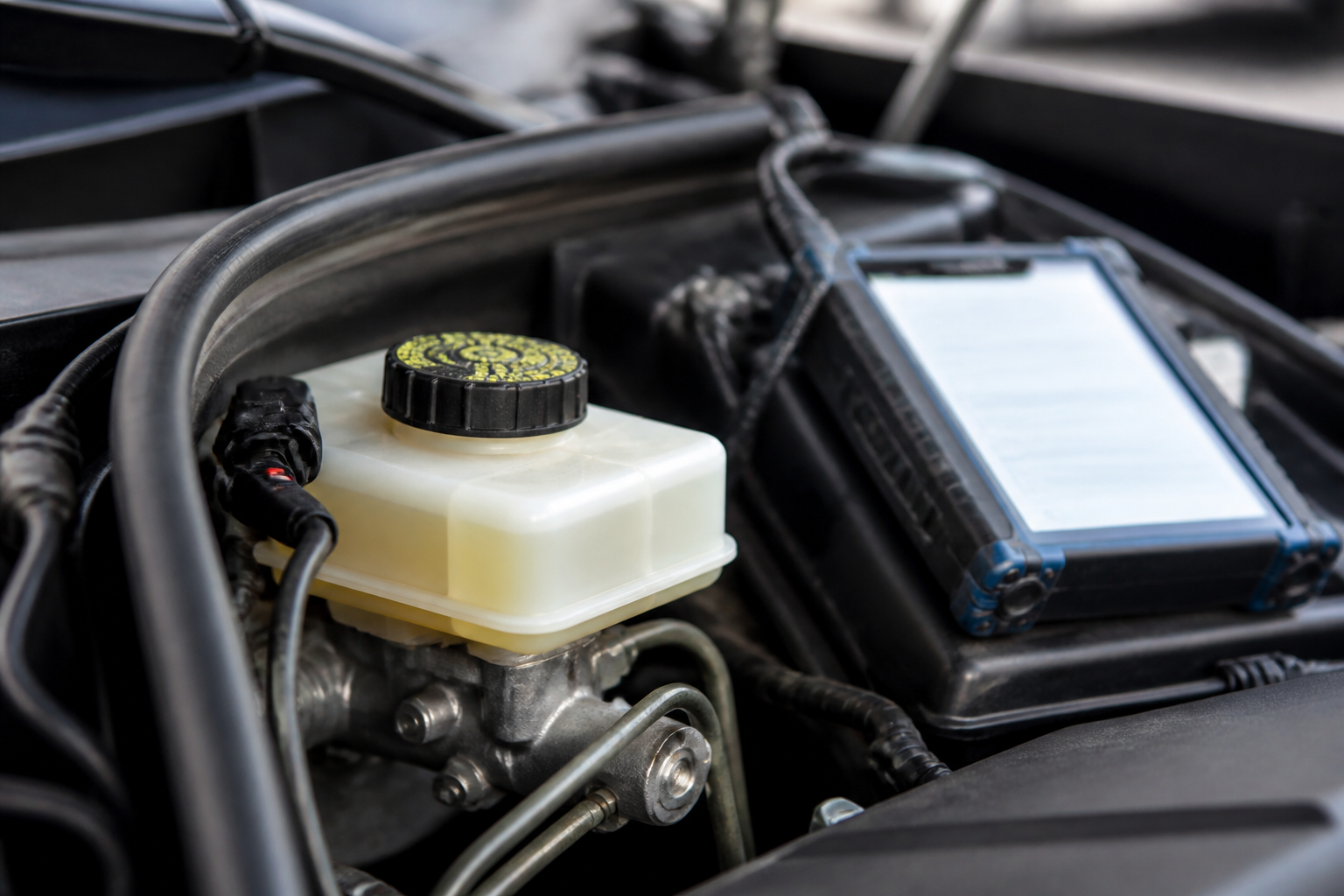
Mercedes-Benz specifies brake-fluid replacement every two years or 20,000 miles, whichever comes first, to limit moisture-induced corrosion and maintain brake performance. Plan the service as a calendar-based milestone within your overall maintenance schedule, and consider more frequent servicing if you operate in harsh or high-use conditions. Budget for the service as part of preventive maintenance rather than waiting solely on mileage.
Key takeaways
- Brake fluid is hygroscopic and absorbs moisture over time, reducing boiling point and braking performance.
- Mercedes-Benz sets a two-year/20,000-mile interval for brake-fluid replacement to protect the system from corrosion and degraded braking.
- Plan brake-fluid service as a calendar-based maintenance item, not purely mileage-driven.
- Costs vary by model and region; follow the manufacturer’s interval and fluid specification for best results.
- Regularly check the maintenance schedule and document service history to protect resale value.
Brake-fluid maintenance is a core, recurring task in Mercedes-Benz ownership, and understanding the manufacturer’s two-year (or 20,000-mile) interval helps owners plan costs, timing, and expectations. The essence of the rule is that brake fluid is a hydraulic Fluid that gradually absorbs moisture from the surrounding environment. Even when the system is sealed, microscopic water molecules can diffuse into the fluid over time, lowering its boiling point and promoting corrosion in the metal components of the brake system. Mercedes-Benz specifies a two-year or 20,000-mile replacement, whichever comes first, to minimize these moisture-related risks and preserve braking performance under the stresses of regular and demanding driving.
The two-year cadence is therefore not merely a calendar ritual; it is a preventive maintenance milestone tied to the chemistry of brake fluid and the physics of brake heat. When you brake repeatedly, especially under high-load or high-temperature conditions, moisture-laden fluid can boil earlier, producing gas in the hydraulic line. This can generate a soft or spongy brake pedal and, in extreme cases, reduce braking effectiveness. Replacing the fluid at the prescribed interval helps maintain consistent pedal feel and protects internal seals and the master cylinder from moisture-induced corrosion.
Translating the OEM schedule into practical planning involves balancing time and mileage. In theory, the interval is a fixed calendar milestone, but usage patterns matter. If a Mercedes is driven primarily in hot climate city traffic with frequent stops, the brake-fluid can reach its critical moisture content sooner than two years, tightening the window for safe operation. Conversely, in moderate climates with light driving, the two-year limit still acts as a protective ceiling, since the fluid’s moisture content increases with age even if miles are low. This makes the two-year rule a robust default regardless of actual mileage accumulated.
Cost implications vary by model year and service package. Dealers and independent shops often price brake-fluid replacement as a discrete task or as part of a comprehensive brake-service bundle that might include brake-pedal check, reservoir inspection, and a fluid flush. The price you pay depends on factors such as labor time, the required DOT specification of the brake fluid, whether a full flush is performed, and regional labor rates. Some owners find it cost-effective to combine brake-fluid service with pad/rotor assessment or with a brake-system inspection when a service interval approaches, which can reduce overall labor charges and minimize downtime.
Practical planning steps for owners who want to translate the two-year rule into a reliable budget and schedule:
- Consult the vehicle’s maintenance booklet and verify the exact interval wording for your model year, since Mercedes-Benz documentation can vary slightly by region or model line. Some regions may reference a two-year or 20,000-mile cadence, and wording can differ about “replacement” versus “flush and replacement.”
- Check the service history to verify when the two-year window started. If you inherited a used vehicle, locate the last brake-fluid service date or mileage to determine the next window.
- Assess driving conditions: harsh climates, frequent heavy braking, towing, or stop-and-go urban use can accelerate moisture-related risks and justify scheduling a service closer to the anniversary date.
- Plan for bundled services: if you are due for other brake-related checks (pads, rotors, lines, or ABS diagnostics), consider coordinating them with a brake-fluid replacement to reduce total shop time.
- Budget for variances: while the two-year rule is consistent, regional price dispersion means you should obtain quotes for a single-issue fluid replacement and for a full brake-service package to compare value.
- Documentation: keep a record of the service in your vehicle history, since documented maintenance can influence resale value and warranty considerations over time.
For owners whose driving habits push the vehicle into high-heat environments or heavy-use scenarios, the moisture management aspect of brake fluid becomes even more critical. In such cases, a proactive approach—planning the brake-fluid service within the two-year window and avoiding long stretches with degraded fluid—helps preserve pedal feel and minimizes the risk of corrosion that could lead to more expensive repairs later in the vehicle’s life.
Two well-regarded external references emphasize the same core idea: brake fluid is a time-based maintenance item due to moisture absorption, and following the manufacturer’s interval is a prudent preventive measure. Cars.com summarizes Mercedes-Benz’s time-based guidance and the broader role of moisture in reducing brake-fluid performance. Car and Driver explains that water contamination in brake fluid can compromise braking performance and that replacement at the manufacturer’s prescribed interval is preventive maintenance rather than optional. While these sources are not Mercedes service manuals, they reflect common industry interpretation of OEM guidance and align with the principle of planning around a two-year/20,000-mile cycle.
Key considerations for planning and budgeting
- Moisture content and performance: even small amounts of water in brake fluid raise the risk of vapor formation under heavy braking, which can compromise stopping power.
- Material compatibility: using the manufacturer-recommended DOT specification is essential to maintain seal compatibility and proper boiling points.
- Resale and warranty considerations: keeping a documented maintenance history for brake-fluid changes can support resale confidence and protect against questions about service regularity.
- Applicability across model years: while the two-year/20,000-mile cadence is widely cited for Mercedes-Benz, always confirm the current interval in the owner’s manual or with a dealership for your exact model and region.
In summary, the Mercedes two-year brake-fluid interval translates to a concrete maintenance planning tool. Owners should treat brake-fluid service as a time-bound task, not a purely mileage-driven one, and factor in driving conditions and bundled service opportunities to optimize cost, reliability, and vehicle safety over the ownership horizon.
Sources
Frequently asked questions
What signs indicate brake-fluid degradation between intervals?
Indicators include reduced brake pedal firmness, longer stopping distances, or a spongy feel in the pedal. Moisture in the fluid lowers its boiling point, which can lead to brake fade during repeated stopping.
Can I extend the interval if I drive conservatively?
No. Mercedes-Benz specifies the two-year/20,000-mile interval to limit moisture-related corrosion and maintain braking integrity regardless of light or heavy usage.
Is it safe to replace brake fluid myself, or should I go to a shop?
Brake-fluid replacement requires following the manufacturer’s procedures and using the correct DOT specification. A trained technician with proper equipment ensures the system is bled correctly and avoids introducing air into the hydraulic lines.