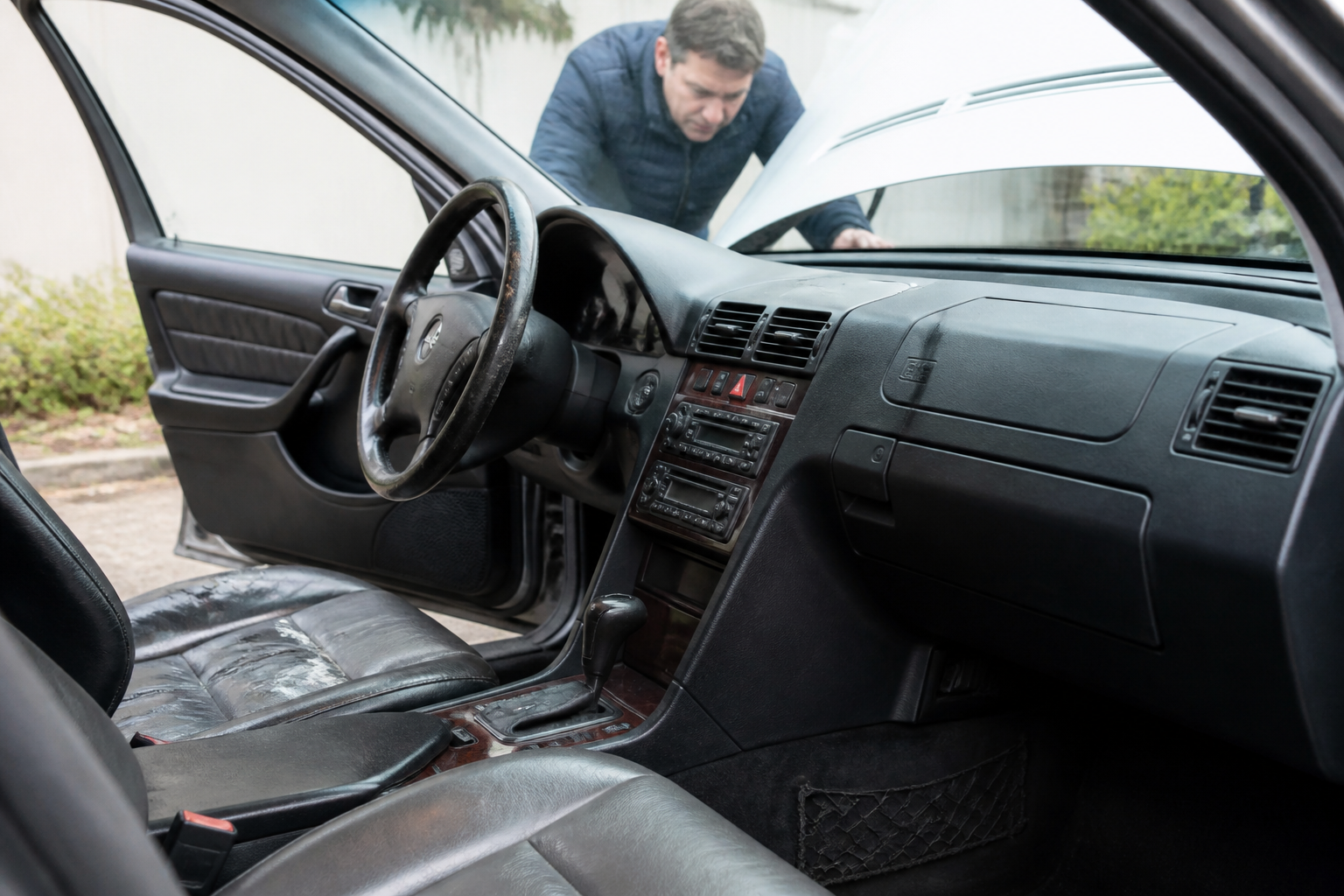
For a used Mercedes-Benz C-Class W205, prioritize verifying thermostat reliability, fuel-system integrity, and any recall completions; perform a thorough test-drive evaluating engine, transmission, electronics, and suspension; ensure documented service history and VIN-based recall checks before negotiating price.
Key takeaways
- Prioritize known fault patterns (thermostat, fuel system) and confirm proper cooling system operation.
- Verify recall completion with VIN-based checks and service documentation.
- Test all electrical features and evaluate engine, transmission, and suspension during a focused drive.
- Assess upholstery, sunroof seals, and door hardware for wear that affects long-term ownership experience.
- Use documented history to negotiate; a well-documented car with complete recalls is lower risk.
The Mercedes-Benz C-Class W205 remains a popular used choice for buyers seeking a refined compact sedan with a modern feature set. For a prospective purchaser, a structured pre-purchase inspection focused on known faults, recall status, and reliability cues helps distinguish routine wear from items that could impact long-term ownership. This guide synthesizes established buyer guidance to support evidence-based decisions without relying on marketing impressions.
How to approach a used W205 inspection: a practical framework
Adopt a systematic, inspection-first mindset. Break the process into three layers: exterior and body condition, mechanical and electrical systems, and service history with recalls. For each system, document operability, signs of wear, and consistency with mileage. If you’re short on time, prioritize issues that commonly escalate into expensive repairs or safety concerns and verify any items with professional diagnostics when in doubt.
- Exterior and body inspection: Look for uneven gaps, misaligned panels, or paint mismatches that may indicate previous repairs after an accident. Inspect underbody splash shields and reinforcement points for corrosion-prone areas in markets with salted roads. Check glass for chips or star cracks and verify seals around doors and the sunroof if equipped.
- Interior and infotaiment: Test climate control, heater fan speeds at all levels, and seat adjustments. Verify that the infotainment system responds promptly, and check for common pre-owned issues such as touchscreen lag or Bluetooth pairing problems. Inspect upholstery for excessive wear, which can hint at heavy use or neglect.
- Mechanical and electrical systems: Start the engine from cold and observe for smooth idle and consistent temperature gauge movement. Listen for unusual noises on startup and during idle. Test transmission shifts (in autos) for firmness and reaction time. Check the electronics related to lighting, wipers, windows, and door locks for reliability.
- Brakes, steering, and suspension: Assess pedal bite point, feel for any pulling on braking, and listen for grinding sounds. A worn suspension bushing or control arm can manifest as slight wandering or a rough ride, especially on uneven surfaces.
Key faults to verify in a W205 C-Class
Industry and owner-reported guides converge on several fault categories that are important to verify through inspection and diagnostic checks. Prioritize items by potential impact on safety, reliability, and total ownership cost. Note that the same symptom can have multiple causes, so corroborate with service records and, where feasible, diagnostic codes.
- Cooling system and thermostat: Premature thermostat failures can disturb warm-up behavior and cause engine temperature fluctuations. Look for cooling leaks at hoses and the radiator, and confirm stable temperature readings during a cold start and steady highway driving.
- Thermal management components: Inspect the water pump, radiator fan, and expansion tank for signs of leakage or seepage. A failing pump or fan can lead to overheating under heavy load or in hot climates.
- Electrical gremlins and infotainment: The W205 can exhibit intermittent issues with sensors, lighting, or the COMAND/MBUX system depending on unit age and software. Confirm that warning messages are rare and, if present, that they are documented and resolved or scheduled for repair.
- Sunroof operation (if fitted): Check opening/closing function, wind noise, and leaks around the glass panel. A stuck sunroof can indicate motor wear or track binding; leaks may show as damp areas in the headliner or rear cabin.
- Suspension and steering components: Inspect for wear in control arm bushings, sway bars, and ball joints. At higher mileages, creaks or clunks during entering/exiting driveways can signal wear that affects handling and ride comfort.
- Brakes and rotors: Listen for at-rest scraping or grinding; check for pulsation under braking, which can indicate rotor wear or caliper seizing. Examine brake pad thickness through service records or, where possible, behind the wheel wear indicators.
- Engine and oil condition: Look for signs of leaks around the valve cover, oil pan, and turbo lines (if applicable). A uniform oil color and absence of metal shavings in the dipstick or oil residue are positive signals, while unusual oil consumption or smoke requires closer inspection.
Recalls and verification checks: how they affect value and decision
Recalls are a critical factor in pre-purchase review. They indicate official safety or reliability concerns addressed by the manufacturer. When evaluating a candidate car, you should:
- VIN-based recall checks: Obtain a complete recall history using the vehicle’s VIN from official sources or reputable databases. Ensure that all open or completed recalls have been addressed. Unresolved recalls can be a red flag and may require dealership-approved fixes or extended warranty coverage depending on the jurisdiction.
- Documentation status: Request proof that campaign items were completed, including service records or dealer invoices. If a recall has been performed, verify that the service was performed by an authorized Mercedes-Benz center and that the corresponding parts and software updates are properly logged.
- Impact on ownership: Some recalls are purely software-related, while others involve hardware replacements that affect reliability. In practice, cars with an outstanding recall should not be dismissed outright if the issuing dealer can provide a timeline and plan for completion with no safety implications outstanding; otherwise, insist on completion before purchase or negotiate a price concession to cover upcoming work.
Reliability signals and model-year considerations for the W205
The W205 generation spans model years that saw incremental updates rather than a single overhaul. Reliability experiences often depend on the powertrain, transmission, and optional equipment. When comparing examples, consider:
- Powertrain alignment with service history: A well-documented service history, including regular oil changes with the correct spec oils and timely replacement of items like the serpentine belt, is a strong indicator of future reliability.
- Transmission behavior: Automatic transmissions in the W205 series should exhibit smooth shifts and consistent behavior. Harsh downshifts, hesitation, or clunking can indicate fluid issues or internal wear requiring service.
- High-mileage wear items: Components with known wear patterns, such as suspension bushings, engine mounts, or PCV/valve train wear, may reflect typical aging. Budget accordingly for preventive maintenance if the car has higher mileage.
Practical test plan for a successful pre-purchase
Putting theory into practice helps avoid misinterpretation of symptoms and supports a confident buying decision. A buyer’s test plan might include the following steps:
- Inspect the vehicle thoroughly in daylight, both outside and in the cabin. Take notes or photos of any irregularities for later discussion with a technician.
- Conduct a cold start to observe immediate engine behavior, then drive on varied roads to test acceleration, braking, steering feel, and suspension response.
- Engage climate control and infotainment systems across all modes to identify any lag or failures that could indicate electrical gremlins.
- Review maintenance and recall documents with the seller to confirm proper adherence to recommended service intervals and campaign resolutions.
- Check service quotes for any imminent preventative maintenance that could reasonably be expected in the near term after purchase.
What this means for your decision
A methodical pre-purchase inspection of a W205 C-Class helps separate routine age-related wear from critical faults that influence ownership costs and safety. By focusing on known failure points, verification of recall completion, and a clear view of the service history, you can form a realistic total-cost-of-ownership picture and negotiate from a position of knowledge. Use this guide alongside verified VIN-based recall checks and a trusted independent inspection to maximize your confidence in the chosen car.
For further guidance, consider consulting established buyer resources that emphasize practical inspection steps for the W205, and align your checks with the specifics of the model year and market conditions. The goal is to avoid overpaying for a vehicle with looming repair needs while ensuring you’re not missing any red flags that could affect long-term satisfaction.
Sources
- Used Mercedes-Benz C-Class (W205) Buying Guide: Which Faults Should You Check Before You Buy?
- Used Mercedes C-Class (2014-2021): A Pre-Purchase Inspection Checklist for Reliability and Recalls
FAQ
What specific faults should I prioritize in a W205 C-Class?
Prioritize thermostat reliability, fuel-line integrity, and ignition/electrical system stability. Check for sunroof operation, door seal wear, interior rattles, and transmission smoothness during test-driving.
How do recalls affect the buying decision?
Completed recalls reduce long-term risk; verify VIN-based recall history and ensure corrective work is documented by a dealer or qualified workshop.
Should I worry about a higher-mileage W205 with full service history?
A well-documented higher-mileage car can be a sensible choice if inspection findings are clean, the cooling, fuel, and electrical systems are sound, and recall work is complete. Price should reflect remaining risk and anticipated maintenance.