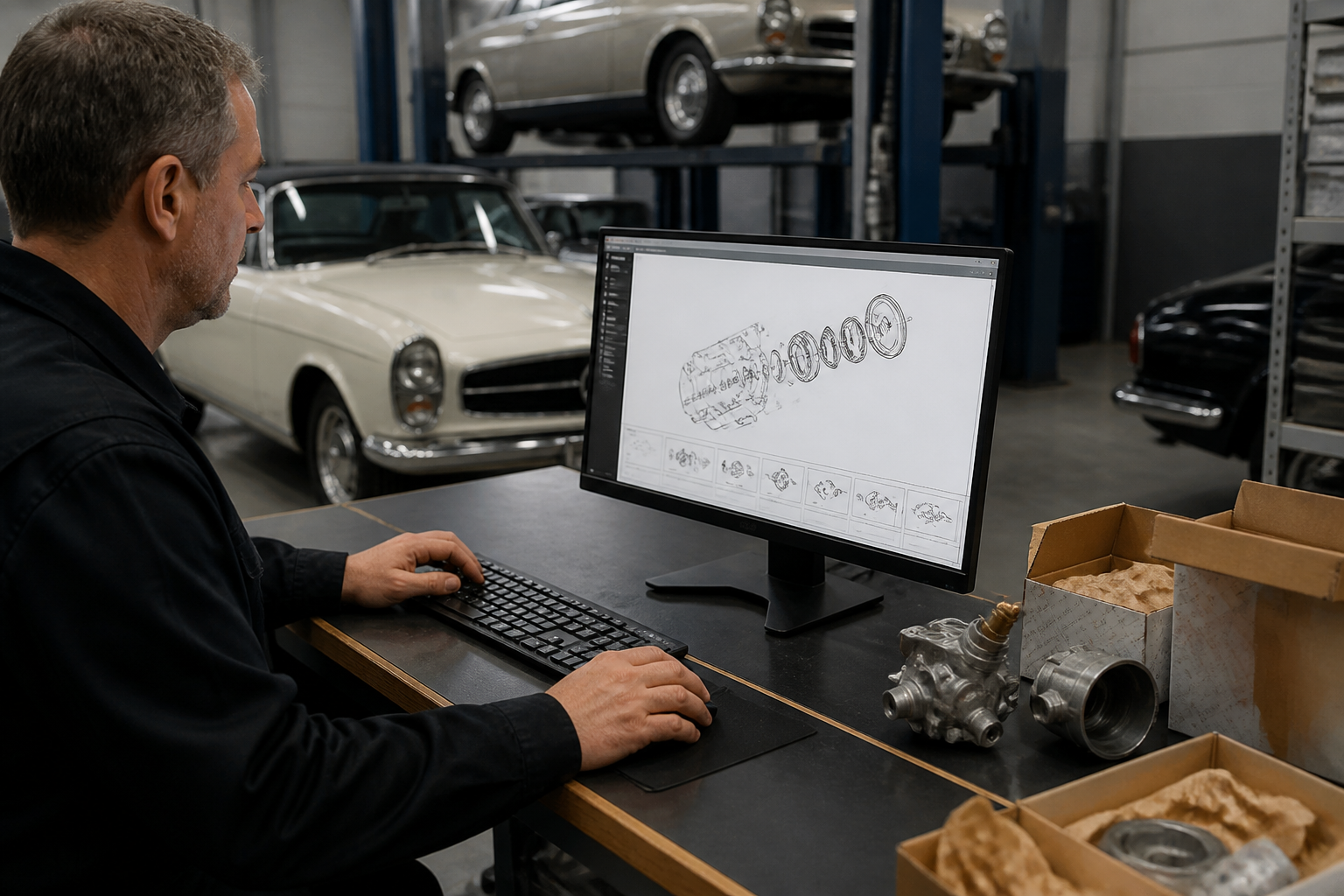
For an NLA Mercedes-Benz part, start with the Mercedes-Benz Classic parts search to verify status and see if remanufacture is being considered. If the part is unavailable, file a Demand request to register interest, and if needed, contact the Classic Center through official channels for next steps.
Key takeaways
- Use the Mercedes-Benz Classic parts search to confirm NLA status and possible remanufacture considerations.
- Submit a Demand request to signal interest in an unavailable part and influence potential reissue decisions.
- If online tools don’t resolve the issue, contact the Classic Center via official channels for guided next steps.
Overview: What to do when a Mercedes-Benz part is NLA
When a part is marked as no longer available (NLA) in the Mercedes-Benz Classic parts search, owners have a documented, step-by-step workflow to pursue sourcing or potential remanufacture. The official Classic search covers both currently catalogued items and components that are not reissued, and it includes a Demand request feature to register interest in unavailable parts. Mercedes-Benz stresses that the product team regularly reviews whether remanufacturing is technically and economically reasonable, and that the online database is updated periodically. This creates a living process rather than a one-off lookup, so persistence and timing matter.
Official guidance is complemented by owner-facing discussions that emphasize checking the Classic Center when the online search doesn’t yield a result. In practice, the workflow balances catalog data, engineering feasibility, and market demand, which means results can range from straightforward sourcing of existing stock to the unlikely scenario of a remanufactured or reissued part years later.
This article translates the official guidance into a practical, owner-friendly playbook: what to check first, how to submit interest, and who to contact next. It also highlights common frustrations and realistic expectations so restorers can plan accordingly.
Step-by-step playbook for scarce/discontinued parts
Step 1 — Check the Mercedes-Benz Classic parts search
Begin with the Classic online database. It lists more than parts that are currently available and, crucially, can also indicate items that Mercedes-Benz Classic will not reissue. Confirm the exact part number, description, and compatibility notes. If the listing shows NLA, take note of any alternate part numbers, cross-refs, or uses for the part in related models, as these can offer sanctioned alternatives. The search results may also include notes about replacement assemblies or updated part numbers that could be compatible as a stopgap.
Practical tip: capture the part context (model, year, engine type, regional variations) before you search again later, as availability details can change with new supply decisions or remanufacturing considerations. The database is updated regularly, so it’s worth rechecking after a defined interval (for example, weekly or monthly during a restoration phase) to catch any status shifts.
Step 2 — Submit a Demand request for unavailable parts
The Demand request is the formal channel to signal ongoing demand for an item that is currently unavailable. Submitting a request creates a traceable record that the product team can weigh against production feasibility, engineering constraints, and spare-parts strategy. Include precise information: model compatibility, exact part number, vehicle edition, and any physical notes (dimensions, fastener types, connector shapes) that could affect remanufacturing decisions. The more context you provide, the more useful the signal is for decision makers.
Because Demand requests are not guarantees of future production, treat this as a formal interest flag rather than a live order. It helps the manufacturer assess long-term viability, especially for rare or out-of-production components where demand clusters among enthusiasts, restorers, and professional shops.
Step 3 — Track changes and plan for alternatives
After submitting a Demand request, monitor the status through the Classic portal or your notification preferences. In parallel, explore sanctioned alternatives: updated part numbers that serve the same function, remanufactured units, or modern equivalents that retain the original installation footprint. The product team may determine that a part is not viable for remanufacture but identify a compatible substitute kit or a serviceable used-part pathway through approved sources.
Step 4 — Contact the Classic Center if you need direct guidance
If online tools do not resolve the issue within a reasonable window, escalate through the Mercedes-Benz Classic Center. The Center provides official channels for classic parts inquiries and can offer guidance on whether a remanufacture program is under consideration, suggest approved alternatives, or connect you with authorized service partners who manage scarce parts.
In the United States, MBUSA's Classic Center maintains dedicated contact points, including email addresses for classic inquiries and parts-specific questions, and publishes phone hours for direct follow-up. Regional centers in other markets may have similar pathways, so follow the local guidance to reach the right team.
Real-world context: what owners and forums say
Owners frequently describe the NLA situation in terms of a multi-step search that begins with the Classic parts database and ends with a conversation at the Classic Center. Forum threads often highlight the practical reality that even if a part is marked NLA, demand signals can sometimes nudge a remanufacture decision or prompt an alternative sourcing approach. The cadence and outcomes vary by model, rarity, and the technical feasibility of reproducing components that may have bespoke tolerances or aging materials.
For example, discussions on owner forums show members using the Classic Center’s status text as a gauge for whether a part might still be sourced through sanctioned channels, or whether a remanufacture path is under consideration. The threads underscore the need for patience and periodic re-checks as availability data evolves over time.
Practical considerations for restoration projects
Using the official workflow to pursue scarce parts provides a defensible, documented path for restorations. It helps avoid ad hoc sourcing from unverified channels and anchors decisions to manufacturer-supported processes. However, there are limitations to this approach: remanufacture decisions depend on technical viability, batch economics, and the long-tail demand for very old or rare components. In some cases, a workable substitute or a careful DIY repair using modern equivalents may be the most practical route, while in others, a genuine remanufacture may surface after substantial lead times.
Owners should also be aware of regional differences in availability, as Classic Center operations and accessory supply vary by country. Always confirm the correct part number and model applicability before purchasing any third-party item that claims compatibility with a classic Mercedes-Benz.
Direct sources and channels
Key official resources remain the backbone of the process: the Mercedes-Benz Classic Parts Search – Help page, which explains how to perform searches and use the Demand request, and the MBUSA Classic Center About page, which provides official contact points for classic parts inquiries. These sources establish the documented workflow and are the authoritative starting points for owners navigating NLA parts.
What to expect next and how to manage your timeline
Expect a spectrum of outcomes: from straightforward temporary substitutions to a confirmed remanufacture program that remakes a part for broader production. In most cases, owners should plan for multiple months of monitoring, potential follow-ups, and the possibility that a part may remain listed as unavailable if technical or market factors do not align. Creating a clear trail of communications — dates, names, reference numbers — helps during discussions with the Classic Center and any approved partners.
Conclusion
When a Mercedes-Benz part is listed as NLA, the official Mercedes-Benz Classic parts search, combined with a Demand request and, if needed, direct contact with the Classic Center, provides the documented route to explore sourcing or reissue possibilities. While outcomes vary, this structured workflow increases the likelihood of discovering sanctioned solutions or learning about remanufacture options, while maintaining a defensible record of your restoration plan.
Sources