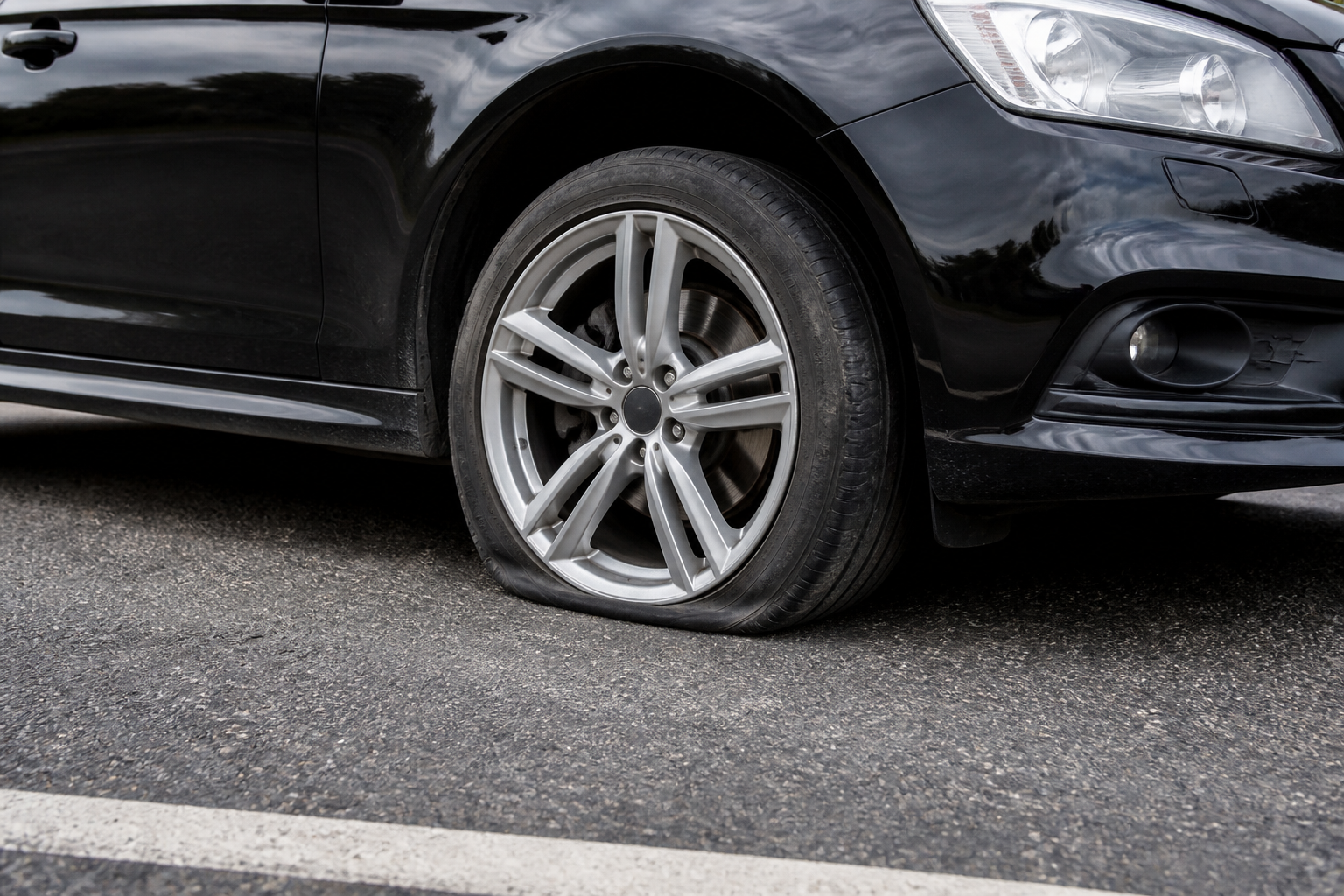
After a TPMS warning on MOExtended run-flat tires, you may drive with a load-dependent emergency distance (commonly around 50 miles/80 km for partially laden; less when fully laden) and must not exceed 50 mph (80 km/h). Immediately check the tire for damage and arrange service; replace or repair as required.
Key takeaways
- MOExtended run-flat tires allow continued operation after pressure loss if no visible damage and the warning is active.
- Emergency-distance is load-dependent and begins when the warning appears.
- Maximum safe speed in emergency mode is 50 mph (80 km/h).
- Inspect the tire and arrange service promptly; replace as needed.
Summary: After a tire pressure loss warning on MOExtended run-flat tires, Mercedes-Benz provides load-dependent guidance on how far you can drive and the maximum safe speed, with a clear emphasis on inspecting or replacing the tire as soon as practical.
What to do right after a TPMS warning
When the TPMS warning appears, verify there is no clearly visible tire damage. If damage is present, stop and seek service. If the tire appears intact, you may continue driving under emergency-mode rules, but you must observe the vehicle’s load-dependent distance and speed limits as outlined by MOExtended guidance. This guidance is designed to preserve the ability to reach a safe location or service point while minimizing further damage to the tire and wheel. Do not assume the run-flat capability will compensate for an obviously compromised tire condition, such as a bulge, cord exposure, or tread separation.
Distance you can drive in MOExtended emergency mode
The official MOExtended guidance in Mercedes-Benz manuals indicates the emergency-mode distance is dependent on how the vehicle is loaded. In practical terms, the distance is not a single fixed number but a range that scales with partial versus full load, interior occupants, and cargo. Common references from owner manuals describe roughly 50 miles (about 80 km) for partially laden scenarios. In fully loaded configurations, the available distance is shorter and may approach roughly 19–30 miles (about 30–48 km), depending on model-year specifics and tire wear condition. The distance calculation starts the moment the pressure loss warning appears and factors in the current tire condition, the vehicle’s speed history, and the overall load. For precise figures applicable to your exact vehicle, consult the MOExtended section of the tire information or the relevant model-year Owner’s Manual. It’s important to note that temperature, road surface, and sustained driving behaviors can materially affect this distance.
Practical example: a two-row sedan with two occupants and light luggage typically falls into the partially laden bracket, which is closer to the 50-mile mark under moderate speeds. If you’ve filled the car with a full passenger cabin and heavy cargo, plan for the shorter, fully laden distance. Aggressive driving, high speeds, or repeated sharp maneuvers will further reduce the available emergency distance. Always treat the displayed TPMS message as a directive to limit travel and to seek a safe stop as soon as feasible.
Maximum permissible speed in MOExtended mode
Mercedes-Benz manuals specify a maximum permissible speed of 50 mph (80 km/h) when operating in MOExtended (run-flat) emergency mode. This limit is designed to balance the need to reach a safe stopping point with the constraints of the run-flat system, tire integrity, and potential additional tire damage if the warning indicates a loss of pressure. In some regions or model variants, the vehicle may also deliver an advisory when the limit should be reduced further due to detected tire damage or extreme load; always follow the in-dash display and the owner’s manual for any model-specific deviations. If the TPMS warning is accompanied by other indicators—such as a cornering stability fault or an ABS warning—treat the situation as higher risk and prioritize a controlled, slower stop unless the system strongly recommends otherwise.
Important caveat: if the TPMS warning persists after inflation is corrected or if you notice a bulge, bead seat damage, or cord exposure, you should not rely on emergency-mode distance and speed. In those cases, stop and seek immediate professional service to avoid risk of sudden tire failure. The run-flat system does not guarantee safety when the tire chest shows structural compromise, and continuing to drive can escalate a tire rupture risk.
Next steps after the warning
After observing the MOExtended emergency distance and speed limits, promptly inspect the tire for damage and arrange service to replace or repair as needed. Do not exceed the stated speed or distance, and follow the manufacturer’s guidance for tire replacement once the vehicle is stationary and safe to do so. If the warning reappears after servicing, or if the tire shows lingering damage, treat it as a fault requiring tire replacement and reassessment of that axle’s tire-pressure monitoring hardware. If you were at or near the limit when stopping, ensure your service visit prioritizes the affected MOExtended tire and confirms the TPMS sensor calibration and wheel integrity.
In line with general safety guidance, you should also perform a full inspection of the other tires for even wear, corresponding pressures, and any signs of heat damage after a pressure loss event. This helps prevent a secondary loss or uneven loading that could affect handling characteristics.
Model-year and region variances to watch for
MOExtended run-flat behavior is documented across several Mercedes-Benz operator manuals and can vary slightly by model year, market, and tire construction specifics. The 2016 E-Class operator’s manual and the 2024 GLASUV operator’s manual in Canada both reference the same core principles: run-flat capability exists after a loss of tire pressure, the distance is load-dependent, and a maximum speed of 50 mph (80 km/h) applies during emergency-mode operation. When you are uncertain about the exact figures for your vehicle, locate the MOExtended or emergency-drive section in your owner’s manual or contact a Mercedes-Benz service professional for model-year precise guidance. Actual numbers can differ by tire size and if MOExtended is offered in a specific trim, so verify with your manual or dealer for your exact configuration.
What to do next after reaching a safe location
Once you have safely reached a location off the roadway, arrange for tire inspection or replacement. Do not drive beyond the recommended distance or beyond the maximum speed, even if the vehicle seems to drive normally. MOExtended run-flat tires are designed to preserve mobility in the short term, but the structural integrity of the tire may be compromised after a pressure loss event, particularly if there was driving on damaged surfaces or at higher speeds prior to stopping. If you notice any vibration, abnormal steering response, or changes in ride quality after the event, have the wheel and tire assembly checked immediately.
Safety-context notes and best-practice reminders
Beyond model-specific guidance, this guidance aligns with broader safety recommendations for run-flat and low-tire-pressure operation. The National Highway Traffic Safety Administration emphasizes that actual capability varies with speed, load, road conditions, and temperature, and urges following any sidewall-stipulated distance or speed limits. As a practical routine, use the TPMS warning as your trigger to: reduce speed, plan a safe stop within the indicated range, inspect the tire for obvious damage, and seek professional service promptly. If the warning occurs in a high-speed or heavy-load scenario, err on the side of caution and limit speed even further while approaching a safe stopping location.
Concluding guidance
MOExtended run-flat systems are intended to preserve mobility to reach a service point after a loss of tire pressure, but they do not eliminate the need for prompt tire inspection and replacement. The balance between distance, load, and speed is model-specific and will be stated in your vehicle’s MOExtended or emergency-drive section of the Owner’s Manual. Always prioritize safety, adhere to the posted speed and distance limits, and obtain professional tire service as soon as you can after a warning.
Sources and model-context notes
Key references include Mercedes-Benz USA’s 2016 E-Class operator’s manual and Mercedes-Benz Canada’s 2024 GLASUV operator’s manual, both of which reiterate the load-dependent distance and the 50 mph (80 km/h) speed limit in MOExtended mode. The NHTSA Tire Safety Bulletin provides broader safety context for run-flat and low-tire-pressure operation, noting that actual capability varies with conditions and urging drivers to adhere to any sidewall-stipulated distance/speed limits. For model-year-specific numbers beyond the examples cited here, consult the applicable manual for your vehicle’s year and market.
Sources