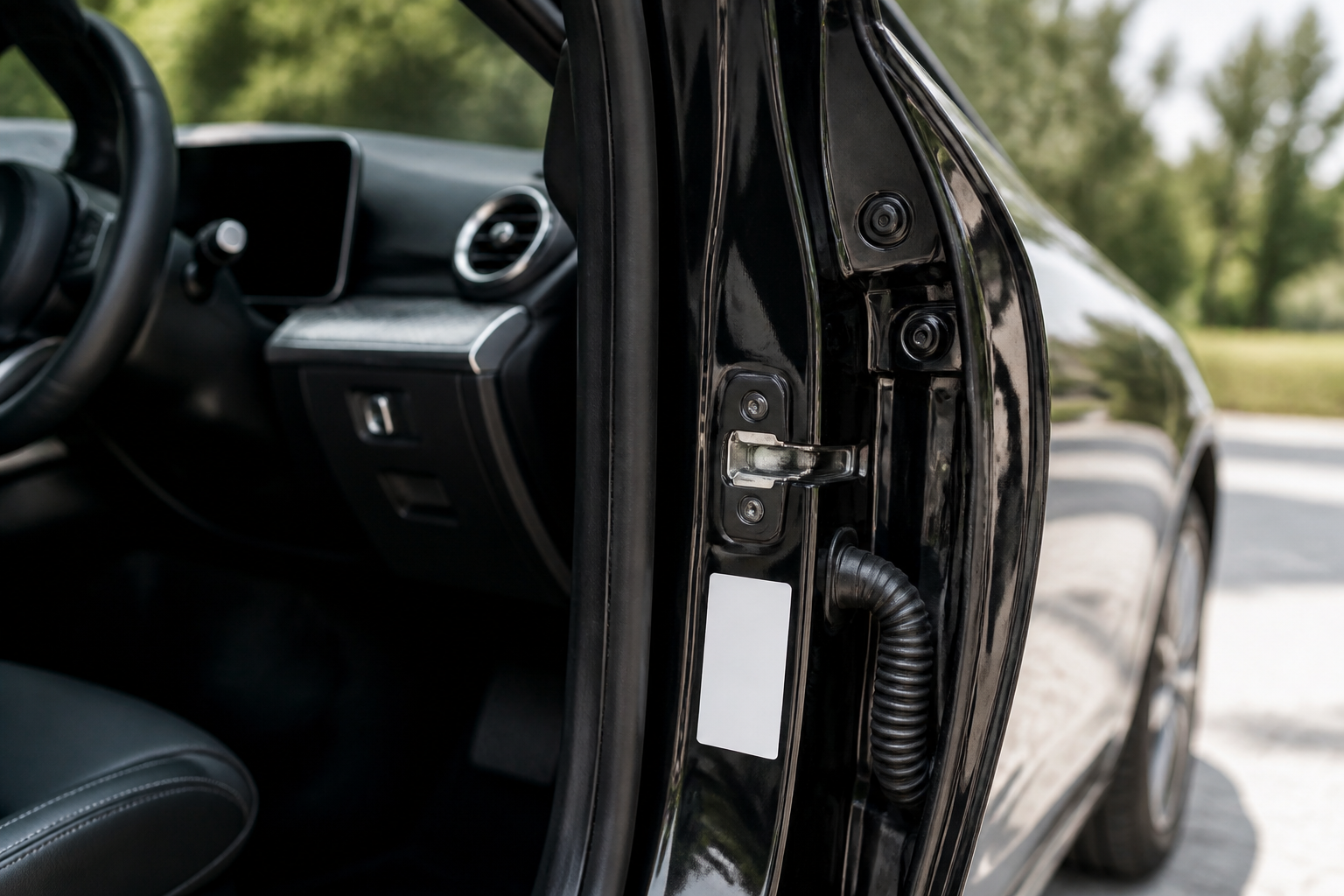
Interpret the Mercedes TPMS warning as a signal of significantly underinflated tires, then verify cold tire pressures using the Tire and Loading Information placard on the driver’s door edge/B‑pillar. Check all tires when cold (no driving for about three hours), compare to placard values, inflate as needed, and recheck after cooling. This procedure follows NHTSA guidance and Mercedes-Benz manuals.
Key takeaways
- Treat TPMS as a warning for significant underinflation, not a generic alert.
- Always measure pressures when tires are cold (3+ hours since driving).
- Use the Tire and Loading Information placard on the driver’s door edge/B‑pillar to match exact cold pressures for each tire.
When a Mercedes-Benz TPMS warning illuminates, treat it as a signal that one or more tires are significantly underinflated, not merely a gentle reminder. The correct response is a systematic check of tire pressures using the Tire and Loading Information placard, with strict emphasis on readings taken when the tires are cold. This workflow aligns with both NHTSA guidance and Mercedes-Benz owner documentation, and it helps avoid common inflation errors that can undermine handling, tire wear, steering response, and overall safety.
What the TPMS warning is designed to indicate
TPMS is a tire-pressure monitoring system that continuously analyzes the air pressure in each road tire and alerts the driver when one or more tires fall materially below the vehicle manufacturer’s recommended levels. The warning does not specify exact pressures; instead, it signals that a tire is significantly underinflated and requires inspection and correction. Correct interpretation relies on the vehicle’s Tire and Loading Information placard to identify the precise cold-pressure targets for each tire position and load scenario.
Why the cold-pressure reference matters
Air pressure inside tires changes with temperature. A tire that has been driven will show a higher pressure than its cold value. Consequently, inflating, diagnosing, or adjusting pressures while tires are warm can lead to over- or under-inflation once the tires cool back to ambient temperature. The authoritative method is to measure and compare cold readings—tires that have not been driven for about three hours or more—to the placard values. This ensures you are targeting the correct baseline for safe inflation, restoring the tires to the design parameters intended for your vehicle.
Where to find the correct cold-pressure targets
The primary reference is the Tire and Loading Information placard, typically located on the driver’s door edge or B‑pillar. The placard lists recommended cold inflation pressures by tire position (front left, front right, rear left, rear right) and may include different numbers for varying load conditions or speeds. Some Mercedes-Benz models also provide separate targets for the spare tire or for situations with a heavy payload. Always use these position-specific numbers rather than generic or maximum inflation figures printed on the tire sidewall, which are not tailored to your vehicle’s chassis and load profile.
Step-by-step diagnostic workflow
- Interpret the warning correctly: Treat the TPMS alert as indicative of significant underinflation rather than a routine reminder. A very wide range of driving scenarios can trigger TPMS, but the underlying issue is insufficient tire pressure relative to the vehicle’s design targets.
- Ensure tires are cold: Do not drive or spin the wheels for at least three hours before taking readings. If you cannot meet the three-hour standard, allow the tires to cool as much as feasible and then proceed with measurements. Always recheck after a full cool-down when you notice a discrepancy.
- Inspect all tires (including the spare, if applicable): A puncture, slow leak, or damaged valve stem can trigger TPMS, so check each tire’s condition and tread for signs of puncture, cracking, or bead leaks. Do not overlook the spare—some systems monitor it as well or require it’s pressurized to spec if it’s in use.
- Read the placard and compare: Use the cold-vehicle targets from the Tire and Loading Information placard for each corresponding tire position. Compare each tire’s current cold pressure to its position’s specified value, taking note of any manufacturer-recommended tolerances.
- Inflate as needed and recheck: If a tire reads below the placard value, add air in small increments (about 1–2 psi) and recheck after the tire cools. If a tire remains well below spec after re-inflation and cooling, there may be a leak or damage, and you should seek service promptly.
Practical considerations and common pitfalls
- Do not exceed placard values: The placard numbers are the target; over-inflation can increase ride harshness, reduce traction, and accelerate wear in the tread center, potentially harming safety margins in cornering and braking.
- Mind load and speed factors: Some Mercedes models specify different pressures for varying loads or driving styles. Confirm which targets apply to your current configuration—passengers, cargo, trailer towing, and driving behavior can all influence ideal pressures.
- Spare tire considerations: Some MB models specify a different inflation pressure for the spare. If you carry the factory- or road-ready spare in a non-standard configuration, verify whether the placard includes it or if the spare has its own target pressure. If your vehicle uses run-flat or self-supporting tires, the guidance may differ slightly and could be reflected in the manual.
- TPMS reset and relearn rules: After adjusting pressures to the specified cold values, some vehicles require a TPMS reset or relearn procedure to reestablish baseline sensor readings. Refer to the owner’s manual or onboard cautions for the exact steps and sequence for your model and year. Some cars perform this automatically when acceptable pressures are detected; others require a dedicated sequence via menus or a button.
- Seasonal and ambient-temperature considerations: In colder weather, tire pressures will drop; in hot weather, they can rise. Recheck pressures whenever there are significant ambient-temperature shifts to maintain correct inflation levels and consistent TPMS readings.
Safety context and authoritative references
Maintaining correct tire pressures is a foundational safety practice. The NHTSA explains that proper inflation must be verified when tires are cold (typically not driven for at least three hours) and that TPMS exists to alert drivers when tire pressure is significantly underinflated. Always rely on the Tire and Loading Information placard for the precise cold-pressure targets and follow the vehicle’s owner’s manual guidance for TPMS behavior, including any reset or relearn procedures after adjustments.
Key authoritative sources on tire pressure and TPMS include NHTSA guidance on tires and placards and Mercedes-Benz owner documentation that emphasizes checking cold pressures using the placard. See the NHTSA tire safety overview and the MBUSA owner manual excerpts for details:
Illustrative scenarios and model-dependent notes
The basic four-tire workflow applies across most Mercedes-Benz models with TPMS, but there are model-dependent nuances worth noting. For example, some modern MB models may use sensor-relearn processes tied to specific tire service procedures or to aftermarket tire replacements. Always verify against your model-year owner’s manual for any variations in placard locations, the number of digits used for psi targets (metric units may appear as kPa in some markets), or whether a dedicated TPMS warning threshold has been adjusted by software updates.
Conclusion
When a Mercedes TPMS warning lights, treat it as an indicator that at least one tire is significantly underinflated. Verify cold tire pressures against the Tire and Loading Information placard on the driver’s door edge or B-pillar, inflate to the recommended cold pressures as needed, and recheck after the tires have cooled to ensure the pressures remain within spec. This approach aligns with NHTSA guidance and MBUSA documentation and provides a practical, safety-oriented diagnostic workflow you can apply to any Mercedes model equipped with TPMS.