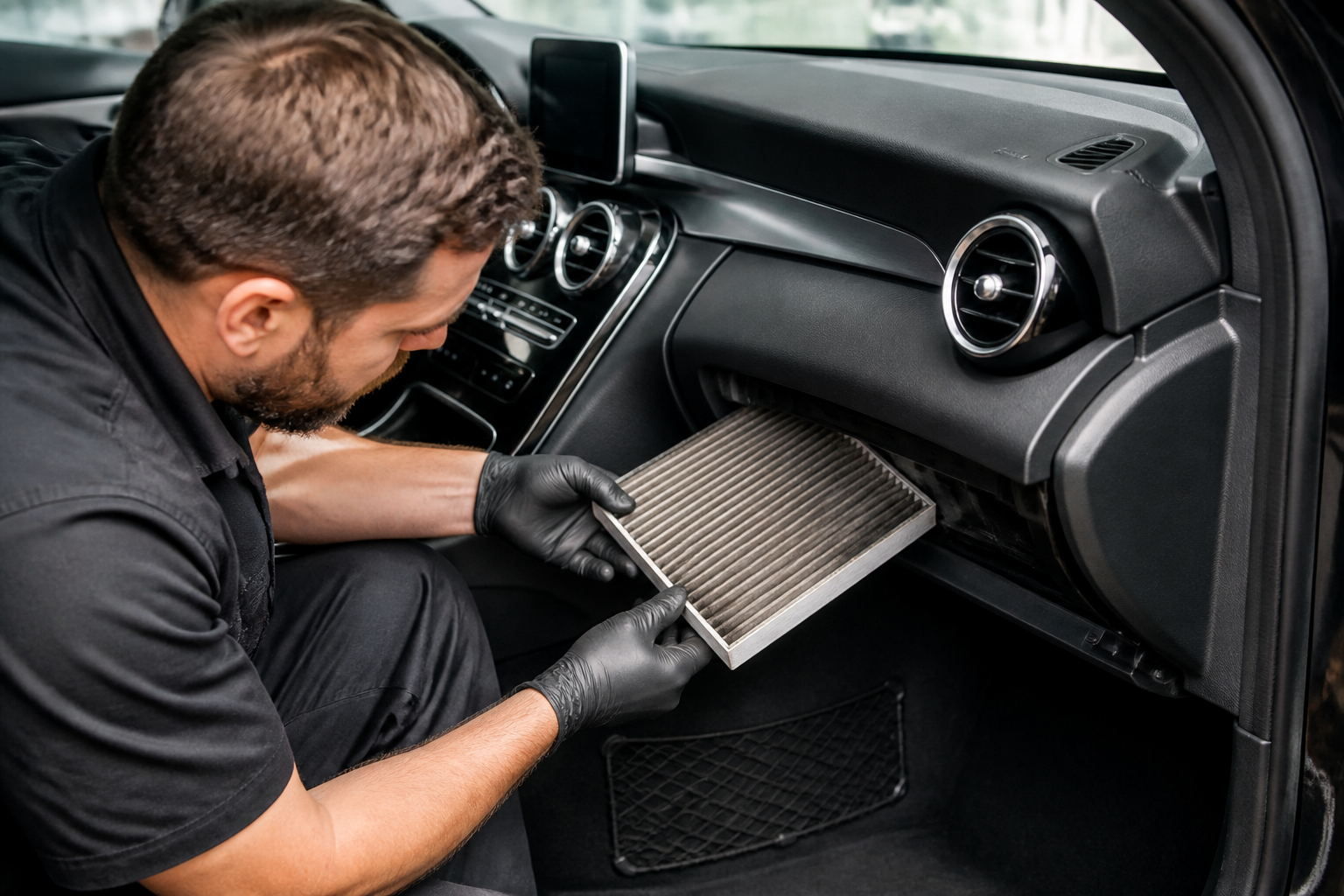
Service A and Service B cadences differ in how they treat the cabin dust/combination (cabin air) filter. Cabin filter replacement is explicitly included with Service B. The first Service A visit occurs around 10,000 miles or 1 year, while Service B occurs around 20,000 miles or 1 year after the prior service, with a recurring cadence of about 20,000 miles or 2 years. Star Prepaid Maintenance also notes cabin filter replacement as part of covered Service visits.
Key takeaways
- Cabin air filter replacement is explicitly included with Service B.
- Service A’s first visit is roughly 10,000 miles or 1 year; recurring cadence around 20,000 miles or 2 years.
- Service cadence overall centers on a 20,000-mile/2-year cycle after the initial visits, with variations by model and usage.
- Prepaid maintenance materials indicate cabin filter replacement is covered in the Service visits under the prepaid plan.
Mercedes-Benz Service A and Service B operate on a defined maintenance cadence, but the way cabin filtration is addressed can be confusing if you’re budgeting and planning around a specific vehicle. This owner‑oriented guide translates the official service framework into a practical checklist focused on the cabin dust/combination filter (often called the cabin air filter) so you know when replacement is expected and how it ties to miles and time. It’s important to remember that exact intervals can vary by model year, market, and the presence of optional filtration systems or the vehicle’s condition, but the general pattern below reflects Mercedes’ published guidance and common dealership practice.
What cabin filtration looks like within Service A vs Service B
Service A is the first scheduled maintenance visit in Mercedes’ standard program. It is typically triggered around the 10,000‑mile mark or about 1 year after purchase, whichever comes first. The recurring cadence for Service A—if it is performed as the initial visit and then repeated—is commonly described as roughly every 20,000 miles or 2 years, though some markets may route the next maintenance at 20,000 miles or 1 year after the prior service for the first few cycles. In short: Service A focuses on a broad set of routine checks and replacements, such as motor oil and oil filter, fluid level assessments, tire pressures, and brake inspection. The standard Service A listing does not universally guarantee cabin filter replacement at every A visit; the cabin filtration element is not universally tagged as a recurring cabin filter replacement on every A cadence in all regions.
Service B is the follow‑up service in the conventional two‑tier cadence. It is typically scheduled around 20,000 miles or about 1 year after the prior service, with a general recurring cadence of approximately every 20,000 miles or 2 years. Crucially, Mercedes’ published materials explicitly include cabin dust/combination filter replacement as part of the Service B package. In other words, when you reach a Service B visit, the cabin air filter replacement is listed as included among the standard maintenance items performed at that visit. Beyond the cabin filter, Service B also commonly covers brake component inspection, brake fluid exchange, and the maintenance counter reset in the dealership workflow.
To emphasize what this means in practice: if your vehicle follows the typical A/B cadence, you would not necessarily expect a cabin air filter replacement at every Service A visit, but you would expect it at Service B visits when that service is triggered. In some regions, documentation and service booklets explicitly track the cabin air filter as part of the scheduled A/B maintenance, reinforcing that filtration work is an intended element of the service cadence where applicable to the vehicle’s maintenance plan.
Regional and model-dependent caveats
Because Mercedes maintains a global network with regional service literature, you may encounter variations by market. Canadian service booklets, for example, show cabin air filter items within the Service A and Service B confirmation fields, confirming that cabin filtration is a documented part of the scheduled service work in those manuals. Dealers may also reference the exact filter part (for example, the activated charcoal variant) based on the model, trim, and climate system installed. If your vehicle has a more advanced filtration system or a diesel exhaust aftertreatment package, the exact replacement interval or the need for a filter change at a given visit could differ from the generic cadence described here.
Practical planning notes for budgeting and scheduling
- Expect Service B to include cabin filter replacement when that visit falls due. If you’re tracking by the scheduled cadence, plan for a cabin air filter swap at the B visit as part of the standard maintenance work envelope. For A visits, verify with the dealer whether cabin filtration is included for your specific vehicle and market, as some A visits may not include it by default.
- Timing anchors that owners commonly rely on:
- First visit: around 10,000 miles or 1 year (Service A, depending on market) – not guaranteed to include cabin filter replacement on every model.
- Next visit: around 20,000 miles or 1 year after the prior service (Service B) – cabin filter replacement is typically included per published materials.
- Recurring cadence: roughly every 20,000 miles or 2 years after the initial pattern, though the exact schedule can shift by model and usage, so confirm with your dealer for your vehicle.
- Prepaid maintenance considerations. Mercedes-Benz USA’s Star Prepaid Maintenance materials illustrate that cabin dust/combination filter replacement is included within the covered Service visits in the prepaid plans. If you’re budgeting for a bundled maintenance plan, this can offer predictability for the cabin filtration cost across several service visits.
- Record‑keeping and documentation matters. Cabin filtration often appears in service records and confirmations in dealer literature and official booklets. If you’re reviewing a vehicle’s maintenance history for resale or budgeting, look for entries listing “Cabin air filter” or “Activated charcoal cabin air filter” as part of Service A or Service B documentation in the vehicle’s service history.
What to ask your Mercedes service adviser
- Is cabin dust/combination filter replacement included at the upcoming Service A or Service B visit for my exact model/year?
- What is the OEM cabin filter part number recommended for my vehicle, and is an activated charcoal variant required or recommended for my climate?
- Are there any regional or model-specific caveats that could alter the replacement interval for the cabin air filter?
- Do I have a prepaid maintenance plan, and does it cover cabin filtration at all scheduled visits in my plan?
In summary, for most Mercedes‑Benz owners following the standard A/B maintenance cadence, you will see cabin dust/combination filter replacement featured as part of the Service B package, with the A visit serving as the first major maintenance touchpoint that may or may not include filtration depending on model and region. The practical takeaway is to plan for a cabin air filter replacement at the B visit and to verify exact inclusions for your vehicle with your local dealer or service advisor, especially if you are budgeting for a particular year of ownership or a prepaid maintenance plan.
For reference, the guidance and supporting materials from Mercedes‑Benz include: Mercedes-Benz USA – Service & Maintenance (A/B intervals and inclusions); Mercedes-Benz USA – Star Prepaid Maintenance; and the Canadian service booklet showing cabin air filter items within Service A/B confirmations.
Sources