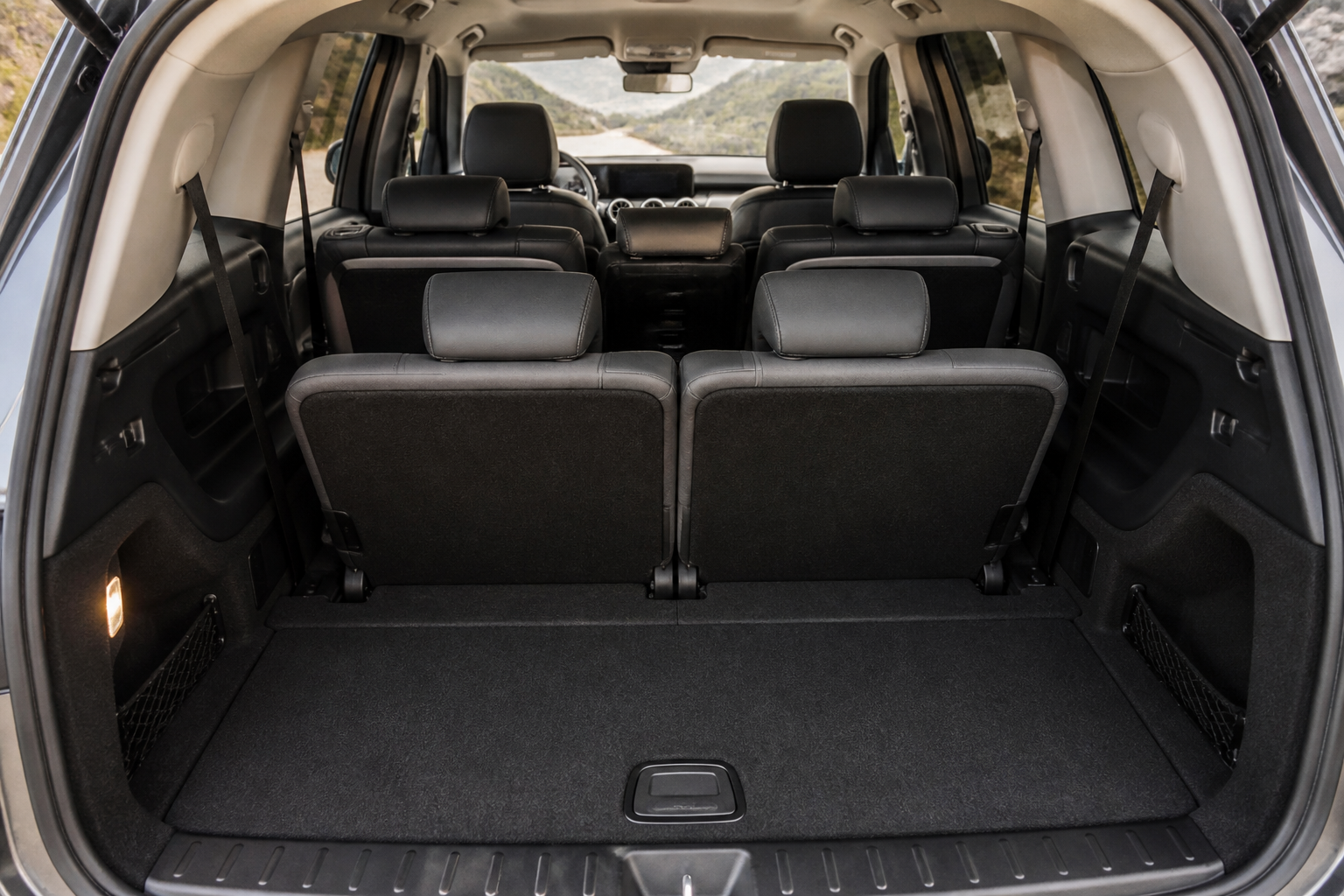
The Mercedes GLB offers flexible seating and cargo options centered on a sliding second row and an adjustable load floor. In five-seat configuration, it provides a usable cargo area with a relatively low loading lip, while the third row, when deployed, significantly reduces cargo space. This makes the GLB practical for mixed-use days—strollers and groceries plus a few bags—yet less capable for full seven-seat cargo when all seven seats are in use. Compare how the second-row slide and floor setting affect your typical cargo length and height to decide if the GLB meets your family’s daily packing needs, or if a larger SUV is warranted for frequent seven-seat usage with bigger loads. See independent reviews for measurements and seat-fit specifics: <a href="https://www.whatcar.com/mercedes-benz/glb/estate/review/n20538">What Car? GLB review</a>, <a href="https://www.edmunds.com/mercedes-benz/glb/">Edmunds GLB review</a>.
Key takeaways
- Independent reviews confirm the GLB’s 40/20/40 sliding second-row enhances cargo flexibility.
- A configurable load floor helps tailor cargo height for bulky items.
- Deploying the third row reduces cargo space substantially, affecting packing plans.
- The GLB balances seven-seat versatility with five-seat cargo practicality, better than some smaller rivals for mixed-use days.
The Mercedes GLB occupies a compact-SUV footprint while offering a surprisingly adaptable interior that specifically targets small-family practicality. This article builds a practical, evidence-based guide to packing, seating configurations, and cargo planning, with a focus on the GLB’s distinctive sliding second row, adjustable load floor, and how the third row changes usable space in real-world scenarios. By synthesizing assessments from credible sources and translating them into concrete decision criteria, buyers can estimate how the GLB will perform for strollers, sports gear, groceries, and longer items without relying on vague promises.
Core configuration options that matter for cargo and seating
The GLB’s hallmark is its flexible seating arrangement: a 40/20/40 split second row that slides independently, a configurable load floor, and an optional third row. Each feature has a identifiable impact on how you pack and what you can carry, and understanding the trade-offs helps in choosing trim levels and accessories that suit your family’s needs.
- 40/20/40 sliding second row: This bench can be moved to prioritize passenger space or cargo length. In five-seat mode, you can slide the middle section to free up room for a longer item such as a stroller, a pair of suitcases side-by-side with a passenger, or awkwardly shaped gear. When fully back-to-back with the rear seats, the second row can still accommodate adult occupants with reasonable legroom, but its position directly affects load length and the angle of the cargo floor.
- Adjustable load floor: The load floor adjusts to create either a flat cargo floor or a higher, more vertical storage area. Lowering the floor generally increases usable vertical space for soft bags, crates, or bulkier items, while raising the floor can improve balance for shorter items or when you want to place a heavy object lower for easier loading stability.
- Third-row impact on cargo: Deploying the third row typically reduces the available cargo floor area dramatically. In seven-seat configuration, the GLB becomes more of a two-row SUV with a shallow storage well rather than a full-length load floor for bulky items. Accessing items behind the third row may require folding or removing seats, depending on model year and trim.
- Loading lip and access: A relatively low loading lip aids the insertion of bulky items like strollers and boxes. The square opening helps with wider objects, but ensure there is sufficient width between the wheel arches to accommodate your widest pieces.
- Parcel shelf and interior storage: The GLB includes usable storage pockets and a central bin, which is helpful for small items like sports gear, groceries, or toys. A flat floor with the third row folded can accommodate a wider range of items, but you’ll gain more space by removing or folding third-row seats if you regularly carry large loads.
Real-world packing: how many seats, how much cargo, and when the third row helps
For typical daily life—school runs, groceries, and weekend sports gear—the GLB’s five-seat setup is the most versatile. The independent slide function of the second row lets you tailor cargo length by sacrificing rear legroom when necessary. In practice, this means you can share the back seat with one tall passenger and still slide a long stroller or a pair of suitcases in alongside them. If seven seats are essential, you’ll want to carefully plan for the inevitable impact on cargo volume when the third row is raised.
Across independent reviews, a consistent theme is that the GLB’s cargo area remains competitive within its class at five seats, thanks to the low loading lip and flexible second row. When the third row is deployed, expect a notable reduction in usable cargo floor. The practical takeaway is that the GLB supports daily family tasks robustly in load-friendly five-seat mode, but you should anticipate a tighter load footprint in seven-seat mode, particularly for longer items or multiple large suitcases.
Practical packing tips and scenarios
- Strollers and baby gear: With the second row partially folded or slid forward, you can often slide a stroller lengthwise or side-by-side with a passenger. If you intend to carry a full-size stroller and groceries at the same time, five-seat mode is the most capable configuration.
- Long items and odd shapes: The 40/20/40 bench allows selective clearance for long items like bikes, skis, or a folded wheelchair. Lowering the load floor can help accommodate taller cargo, but plan around the rear seat belt anchors and the space behind the second row.
- Seven-seat packing: If seven seats are needed regularly, plan for a reduced cargo footprint. The third row folds relatively simply in some trims, but the resulting space is best used for small bags and soft items rather than hard-shell cargo.
- Remote releases and load access: Some reviews note that certain GLB trims require folding seats from the side doors rather than via an integrated cargo-area release. For quick loading, confirm the seat-release mechanism during a test drive or when inspecting a used example.
Comparisons and practical conclusions for family buyers
Compared with rivals in the compact family-SUV class, the GLB offers a compelling blend of interior space, flexible seating, and a relatively low loading lip. Its primary strength is the ability to reconfigure seating and floor height to accommodate a mix of passengers and cargo without stepping up to a larger, thirstier SUV. The trade-off is that, when pushed into seven-seat mode with frequent heavy cargo, some rivals may deliver more cargo volume behind the third row without requiring a leap to a larger platform.
To guide a purchase decision, consider three practical questions: Do you regularly carry seven passengers with any significant cargo? If so, is the cargo space in seven-seat mode sufficient for your typical loads, or would a larger SUV be more comfortable? Are you mostly packing five seats with occasional seven-seat use but consistent cargo needs? The GLB tends to shine for families who want flexible seating and easy daily packing, with the potential caveat that full seven-seat weekend trips can be tighter for bulky gear.
Evidence-backed notes from credible sources
What Car? highlights the GLB’s 40/20/40 second-row flexibility, low loading lip, and the ability to fold the third row for a larger rear opening, while also pointing out cargo penalties when the third row is in use. Edmunds emphasizes the GLB’s sliding second row and adjustable load floor, noting the ease of access and the practical layout, but also warns that certain trims require manual folding from the side doors rather than a remote cargo release. Cars.com provides hands-on seating tests illustrating how seat installation can affect front-seat space with child seats and the importance of considering front occupant comfort when using rear-facing seats. Taken together, these sources reinforce a consistent conclusion: the GLB is most effective as a flexible five-seat family vehicle, with seven-seat practicality available but less forgiving for cargo-heavy trips.
Bottom line for this guide
The GLB’s combination of a low loading lip, a configurable 40/20/40 second row, and an adjustable load floor offers a practical toolkit for families who place a premium on adaptable interior space. In everyday use, you’ll typically find five-seat mode with the option to slide and reconfigure for long items or bulky gear. When seven seats are needed, you should plan for a notably smaller cargo area behind the third row, and you may want to shortlist alternatives if frequent large cargo loads are a priority. For concrete sizing and seating tests, refer to the linked experiences from What Car?, Edmunds, and Cars.com for your specific market and model year.
Linked benchmarks and reference reviews: What Car? GLB review, Edmunds GLB review.
GLB cargo practicality vs compact family SUVs
| Metric | GLB (5-seat) | Competitor A (example) |
|---|---|---|
| Second-row slide offers flexibility | Yes | Partial |
| Load-floor adjustability | Yes | Limited |
| Cargo space with 5 seats (approx.) | Moderate | Higher in some rivals |
Frequently asked questions
How does the third row affect cargo space in real-world use?
Deploying the third row materially reduces cargo volume, making the area shallower and less suitable for long items when seven seats are in use.
Can the GLB accommodate bulky cargo with five seats even when the second row is fully loaded?
Yes, with the second row slid forward and the load floor lowered, you can fit taller items, but overall volume will still be less than in a five-seat configuration without the third row deployed.
Is there a significant difference in cargo space between five and seven seating in everyday tasks?
Yes—five-seat mode offers a larger cargo floor for daily needs, while seven-seat mode trades space for passenger capacity, impacting bulky cargo planning.
Related Mercedes-Benz guides