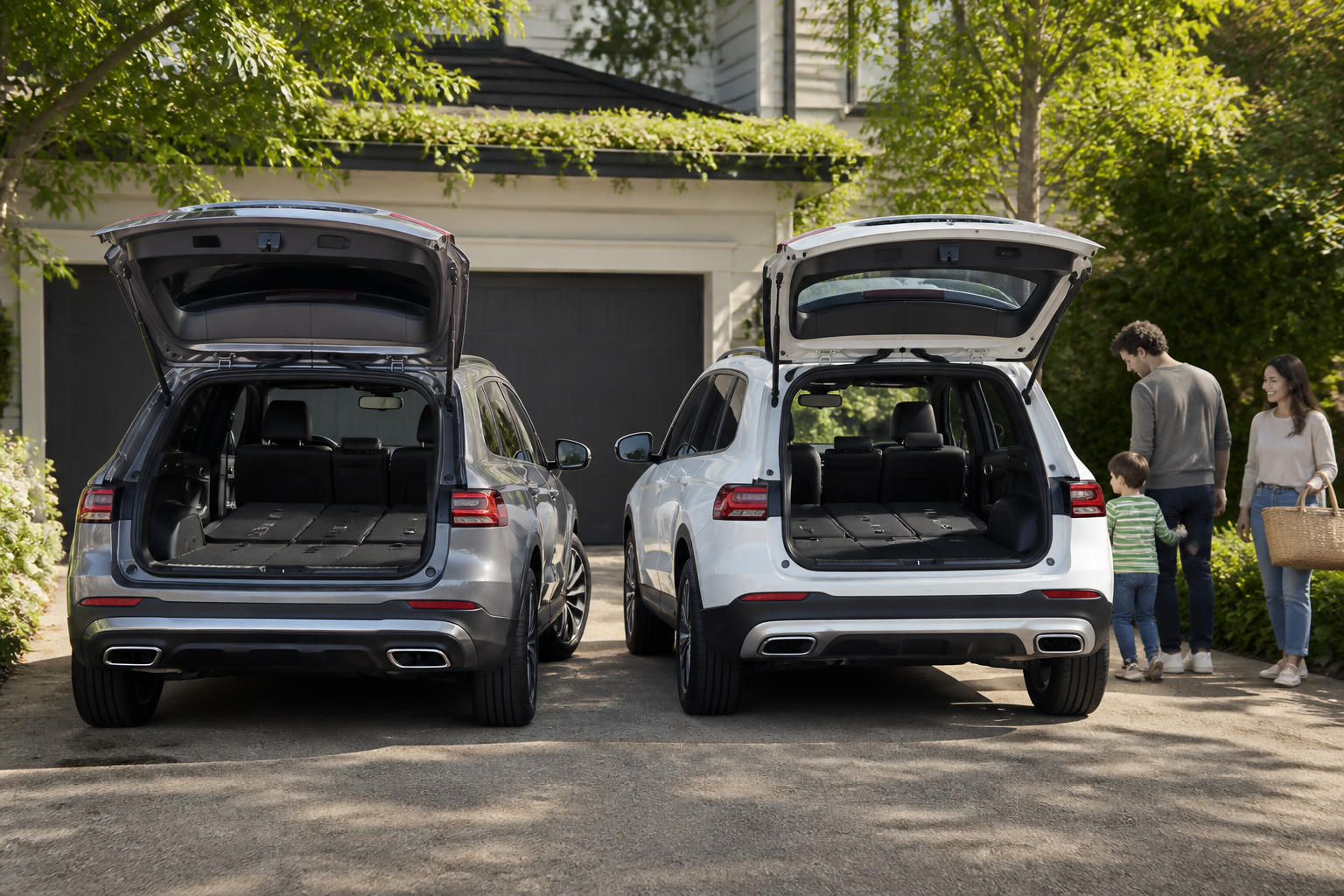
The GLB is the smarter cargo solution for families who regularly haul bulky items, thanks to more usable cargo space and better rear-seat practicality, while the GLA offers a lower entry price and easier city maneuverability for lighter cargo needs.
Key takeaways
- GLB offers about 6.6 more cubic feet of usable cargo space behind the second row than the GLA (22.0 vs 15.4 cu ft).
- Maximum cargo space favors the GLB by roughly 9.5 cu ft (62.0 vs 50.5 cu ft) when seats are folded.
- The GLA presents a lower upfront price and tighter footprint, which benefits urban buyers with modest cargo needs.
- EPA fuel economy is similar, with the GLB sometimes trailing the GLA by a small margin depending on powertrain.
- For families prioritizing cargo versatility, the GLB delivers clearer practical gains in daily usability.
The Mercedes-Benz GLA and GLB occupy the same compact-SUV tier but pursue practicality through different packaging philosophies. For families weighing cargo flexibility against running costs and daily usability, the deciding factors often hinge on real-world usable space, how easily bulky items slide in and out, and the total ownership picture over several years. This article expands the practical buyer guide by detailing usable cargo space, seating versatility, and ownership considerations, focusing on how these two models translate into everyday family life rather than styling cues alone.
How much cargo space do you truly get?
Cargo capacity is foundational to choosing between the GLA and GLB, especially for families that regularly carry strollers, groceries in bulk, sports gear, or luggage for weekend trips. It’s essential to look beyond the number that appears in a spec sheet and consider how quickly you can load and unload items in typical scenarios.
In practical terms, the GLA offers about 15.4 cubic feet of cargo space with the second row in use. The GLB, by contrast, provides noticeably more space behind the second row, around 22.0 cubic feet. When you fold the second-row seats flat, the numbers widen to roughly 50.5 cubic feet for the GLA and 62.0 cubic feet for the GLB. Those figures translate into real-world effects: the GLB can swallow a larger stroller, several grocery runs without a bag change, or multiple suitcases for a weekend away, with ease. The GLA, while easier to park and maneuver, compresses stowage into a more compact footprint that remains comfortable for daily city use but may demand more trips for bigger loads.
From a packaging perspective, the GLB’s longer wheelbase and taller profile create a more rectangular cargo space, which makes loading square or bulky items simpler. The GLA’s cargo bay tends to be shallower, which can complicate sliding large items over a higher sill or fitting oversized boxes without tilting or removing parts of the cargo floor. If your family’s typical loading involves strollers, sports gear, or multiple bags for a week away, the GLB’s extra space usually materializes as usable, not just theoretical, capacity.
Seating layout and daily usability
Seating flexibility matters just as much as cargo volume. The GLB is inherently roomier in the second row, with greater shoulder and headroom for adults and older children. Taller passengers will appreciate the difference in legroom and seating height, which can reduce fatigue on longer drives. The second row on the GLA is comfortable for two adults on shorter commutes, but the space in the rear is more constrained, and the option for a full third row is not part of its standard packaging. The GLB, while not offering a guaranteed third-row in every configuration, uses its larger footprint to provide more usable rear space and easier ingress/egress for passengers in the back seat.
In city driving, the GLA’s compact length can be a practical advantage: tighter turning radius, easier parking, and less overall vehicle length can translate to less daily friction. For families that frequently shuttle three or four people with gear, the GLB’s interior practicality often wins out even if you don’t always fill every seat. It’s worth noting that seat comfort and materials can vary by trim and option packages, so test rides with your typical passenger mix are recommended.
Ownership cost and packaging usability
Ownership value goes beyond a headline price. The GLB’s higher base price is counterbalanced by its greater cargo versatility and rear-seat comfort, potentially reducing the number of trips you need to make for bulky items. Fuel economy differences between the two are generally modest within the same powertrain family; both models use efficient turbocharged engines and modern transmissions that emphasize practical, real-world efficiency rather than extreme highway returns. When calculating total cost of ownership, include:
- Fuel costs based on your typical driving mix (urban versus highway) and the EPA estimates for your chosen powertrain.
- Insurance premiums, which can scale with vehicle size and seating capacity depending on your insurer and region.
- Depreciation, which can be influenced by market preferences for cargo versatility and interior space in family buyers’ minds.
- Maintenance and potential repair costs tied to interior components and cargo-area hardware, such as floor mats, cargo rails, or seating mechanisms.
In practical terms, if your routine involves frequent weekend trips with gear, or you regularly transport multiple passengers plus cargo, the GLB’s larger cargo area and more accommodating rear seating tend to improve day-to-day usability relative to the GLA. If you prioritize city-friendly dimensions, easier maneuverability, and lower upfront cost, the GLA remains a compelling choice, provided your cargo needs stay within its smaller footprint.
Practical scenarios and decision criteria
To translate cargo and seating thoughts into a concrete buying decision, consider these scenarios:
- Weekly grocery runs with a two-stroller family setup: GLB typically handles a full grocery haul and bulky strollers with the second row folded, reducing trips.
- Weekend sports or activity equipment: The GLB’s flat-loading space and wider cargo aperture make loading easier, particularly for larger items like bikes or folded gear.
- Daily urban commuting with occasional longer trips: The GLA’s smaller footprint can improve maneuverability and fuel economy, with the trade-off of reduced cargo flexibility.
- Multiple daily passengers with occasional luggage: The GLB offers more comfortable second-row seating for adults and kids alike, which can matter on longer drives.
When evaluating, perform a practical load-in test: bring items that mirror your common loads and confirm how easily you can slide them in, close the hatch, and access items from the folded rear seats. If possible, simulate a two-kid weekend with suitcases for a few days to see how each model behaves under real-life demands.
Bottom line for families choosing between GLA and GLB
Both models pull strong performance in safety, technology, and overall Mercedes-Benz engineering. The GLB offers a clear advantage in usable cargo space and rear-seat comfort, translating into better practicality for families with regular bulky-load needs. The GLA, while more compact and typically more affordable, sacrifices some cargo capacity and rear-seat space for city-friendly dimensions and potentially lower ownership costs. The smarter choice hinges on your actual cargo frequency, how often you transport multiple passengers, and your tolerance for making more frequent loading-and-unloading trips when the cargo footprint is smaller.
For buyers who want a straightforward rule of thumb: if your daily life includes frequent bulky cargo or three or more passengers with gear, lean toward the GLB. If your priority is parking ease, tight urban maneuverability, and lower upfront expenditure, the GLA remains a sensible option, provided your cargo expectations align with its smaller footprint.
References and further reading
- Mercedes-Benz GLA vs. GLB: Is the GLB’s extra cost worth it for a family that needs real cargo space and occasional child seating?
- 2026 Mercedes-Benz GLA-Class Review, Pricing, and Specs
Compact Mercedes SUV cargo and practicality comparison
| Metric | GLA | GLB |
|---|---|---|
| Cargo behind second row (cu ft) | 15.4 | 22.0 |
| Maximum cargo with seats folded (cu ft) | 50.5 | 62.0 |
| Rear legroom (approx, two adults) | Good in the GLA, adequate in GLB | More generous in GLB |
| Starting price (MSRP, approximate) | Lower than GLB | Higher than GLA |
| EPA combined mpg (typical) | Around 29 mpg | Around 28 mpg |
Frequently asked questions
Which model offers more usable cargo space?
The GLB offers more usable cargo space behind the second row and with seats folded.
Does the GLA have enough room for a family’s daily needs?
For smaller cargo needs or urban lives, the GLA is easier to live with while still carrying essential items.
How do I decide based on total ownership cost?
Balance the GLB’s higher upfront price and potential fuel economy difference against its greater cargo versatility and seating practicality for your family’s routine.
Related Mercedes-Benz guides
- Mercedes star with carrier for radiator grill - various models A-Class, CLA, GLB
- Mercedes star for radiator grill - various models A-Class, CLA, GLB
- Facelifted W213 E-Class buyer cues
- Repair reserve budgeting for Mercedes maintenance
- Verify Apple CarPlay and Android Auto connectivity in the Mercedes you’re considering