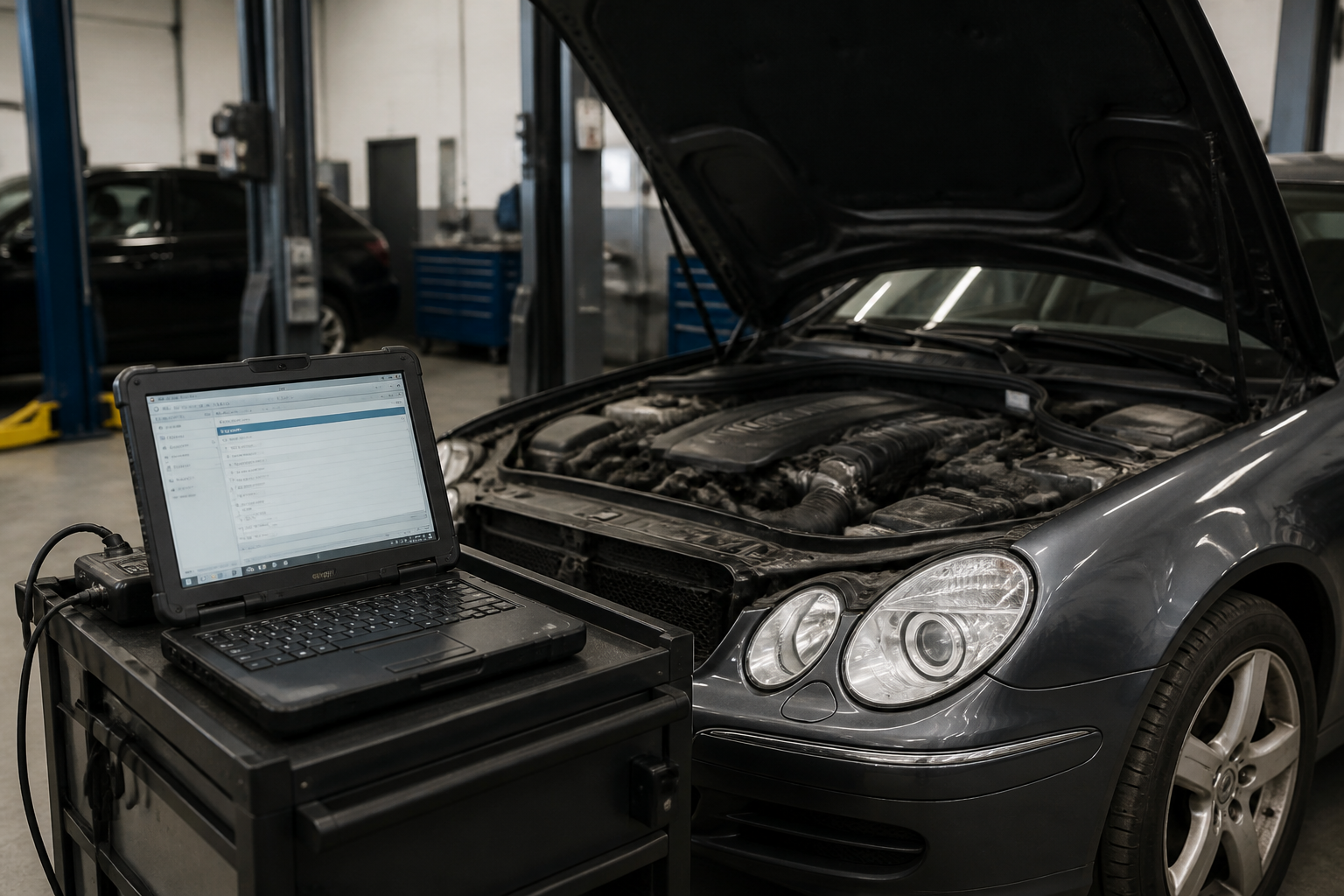
When the ABS/ESP warning lamps or the ESP – Visit Workshop message appears, start with a diagnostic-first checklist: confirm lamp behavior at ignition, assess whether the vehicle can be safely driven, check for related indicators, inspect brake light switch wiring, and proceed to targeted sensor and electrical checks. MB guidance emphasizes prompt inspection rather than continuing driving. Use the lamp behavior as a guide to distinguish a normal startup from an active fault, and treat the message as a diagnostic entry point rather than a call to operate the car further without inspection.
Key takeaways
- ESP warning indicators require diagnostic steps before driving to a workshop
- Lamp behavior at ignition (bulb check) helps distinguish normal startup from faults
- Electrical inputs (brake light switch) and wheel speed sensors are common early fault points
- MB guidance advises immediate ESP inspection when the message appears
- Do not rely on normal driving to resolve ESP/ABS warnings; seek professional diagnostics
The ABS/ESP warning landscape on a Mercedes-Benz is not a single fault code with a single cause. The appearance of an ABS/ESP warning, including the distinctive “ESP – Visit Workshop” message, signals that something in the electronic stability program, anti‑lock braking system, or their associated sensors and wiring has been detected as out of specification or unsafe to operate. The goal of this article is to provide a practical, diagnostic‑first flow you can perform before committing to deeper diagnostics or a workshop visit. The steps focus on interpreting the cluster signals in Mercedes’ logic, identifying common fault families, and laying out how to decide whether it is safe to continue driving briefly or you should stop and arrange service.
How Mercedes interprets ESP/ABS warnings in the instrument cluster
Mercedes implements a layered warning approach in which the instrument cluster displays lamps and messages that correspond to the health of the braking and stability control networks. A typical ESP/ABS amber warning lamp that lights up during ignition indicates bulb check, then usually goes out if the systems are ready. If the lamp stays on, or an explicit message such as “ESP – Visit Workshop” appears, this is a diagnostic entry point rather than a normal startup cue. The difference between a lamp that momentarily extinguishes and one that remains illuminated is the critical distinction that guides the next steps.
Understanding this helps you avoid misinterpreting a marginal issue as a non‑urgent fault or, conversely, ignoring a real problem that could affect braking stability. In many newer Mercedes models, the ESP system can also trigger secondary cues in the driver information display, and some models present a dedicated fault message with recommended action. In all cases, the message is intended to prompt a diagnostic assessment, not to guarantee imminent failure, but it should be treated with due caution.
First checks you can perform on the road or in a safe location
- Confirm the exact display text and lamp behavior: Note whether the ESP/ABS warning lamp is lit continuously, whether it goes out after ignition, and whether any other warning lamps appear simultaneously (e.g., brake warning, battery, transmission). A bulb‑check where the lamp comes on briefly and then goes off is normal; a lamp that remains on or reappears after starting often indicates a fault or degraded condition.
- Observe driving feel but avoid testing adhesion limits: If the ESP lamp stays on, avoid aggressive acceleration or cornering. If you can safely move the vehicle, do so at very moderate speeds and on a dry, straight road to reduce risk while you plan service.
- Check for a brake light switch/ignition context: Some ESP warning conditions are linked to brake switch inputs or other electrical switches. If you recently serviced the brakes or touched the brake light switch, re‑check those connections and ensure the switch is within spec and properly wired. This step aligns with common TSB observations linking the ESP message to switch status.
- Verify that the brake system appears physically normal: Look for obvious issues such as leaking brake fluid, excessively worn pads, or a seized caliper. A visually verifiable fault in the hydraulic system can sometimes accompany or trigger electronic alerts.
- Check the low battery/charging status: A weak or fluctuating supply can cause intermittent sensor readings and control module behavior. If the vehicle has a history of abnormal battery voltage, address charging system health as part of the diagnostic flow.
Common fault families behind the ESP/ABS warnings
Several broad categories tend to appear in the Mercedes diagnostic landscape when the ESP system reports a fault. Being aware of these helps you prioritize checks and plan a repair path with a technician:
- Wheel speed sensor or tone ring issues: A faulty sensor can lead to incorrect wheel speed data, causing the ESP to intervene or light the warning. Look for damaged wiring, corrosion at the sensor, or a dirty/pitted tone ring.
- Brake light switch or wiring faults: The brake light switch can influence ESP logic, especially in older models or vehicles with specific diagnostic wiring. A flaky switch can produce spurious signals that trigger a fault diagnosis.
- Traction control and ABS hydraulic/caliper concerns: Air in the brake lines, leaking calipers, or uneven pad wear can cause inconsistent brake pressure distribution, which the ESP system may detect as instability.
- Control module and electrical harness issues: Faults in the ESP/ABS control units or related harnesses, including connectors under the hood, can produce warning messages without obvious mechanical symptoms.
- Sensor calibration or data integrity problems: Faulty or out‑of‑range readings from accelerometers, steering angle sensors, or yaw rate sensors may lead the system to log a fault as part of self‑monitoring routines.
Structured diagnostic flow to address the warning
Use the following sequence as a practical, Mercedes‑oriented diagnostic flow. It is designed to narrow the likely causes before engaging deeper, more expensive testing.
- Document the exact message and lamp state: Photograph or write down the exact cluster text. Note which lamps light, how long they stay, and any accompanying messages in the driver information display.
- Scan for diagnostic trouble codes (DTCs): If you have access to an appropriate scan tool, retrieve ABS/ESP‑related codes. Record the codes and short descriptions to guide next steps. If no codes are stored, you may still have a passive fault that requires electrical checks regardless of stored codes.
- Inspect wheel speed sensors and wiring visually: Look for damaged wires, loose connectors, or signs of contamination near wheel hubs. Clean or reseat connectors if corroded and ensure harnesses are secured away from moving components.
- Test the brake light switch operation: With ignition on, verify that the brake lights activate when the pedal is pressed and de‑activate when released. A misbehaving switch can feed incorrect signals into the ESP logic.
- Assess the hydraulic brake system: Check for uneven pad wear, calibrated caliper activity, and absence of air in the lines (which might require bleeding). A consistent, stable braking feel with no obvious leaks reduces the likelihood of a hydraulic fault causing the ESP warning.
- Check battery health and charging voltage: Test that the battery is healthy and charging within spec. Low voltage can create flaky sensor readings that trigger warnings intermittently.
- Evaluate sensor calibration needs: If wheel speed sensors and yaw/steer sensors appear intact, some vehicles may require dealer‑level diagnostics to re‑calibrate certain sensors after a fault clears or is cleared.
- Review relevant service bulletins and owner guidance: The ESP warning and related messages are sometimes addressed in TSBs or owner guidance. Cross‑check your model year against published bulletins to ensure you are applying the recommended checks.
When to proceed to workshop vs. safe temporary drive
In general, if the ESP warning persists after all basic checks, and especially if any driving feels unstable or brake performance seems compromised, arrange a workshop visit promptly. The official owner guidance often instructs to “have ESP checked immediately” when such messages appear, reflecting safety concerns. If you are able to park safely and perform the above checks without any loss of braking control, a diagnostic appointment at a qualified Mercedes workshop is advisable for a thorough inspection and re‑calibration if needed.
Practical interpretation aids and caveats
Helpful cues in practice include monitoring whether the ESP lamp extinguishes after starting, whether the message appears only after a specific event (e.g., heavy acceleration, slippery surface, or abrupt steering), and whether codes indicate a specific wheel or sensor. Remember that the exact wording, lamp behavior, and procedure can vary by model and year, so consult the owner manual and model‑specific workshop resources when available. The cited references provide a framework for understanding lamp behavior, the diagnostic entry nature of the message, and how to stage the diagnostic flow in a Mercedes context.
References and further reading
- GF42.45-P-0001RT Electronic Stability Program (ESP), Function — warning lamp behavior & what to expect — describes ESP warning lamp behavior from ignition to operation and under fault conditions, helping interpret cluster signals before deeper diagnosis.
- Electrical — “ESP Visit Workshop” Message Displayed (Brake Light Switch TSB context) — connects the ESP message to brake light switch inputs and related electrical diagnostics, framing the message as an actionable diagnostic entry point.
- Display messages and warning/indicator lamps — “Have ESP® checked immediately” guidance (owner manual) — provides owner‑facing guidance on urgency and recommended next steps, useful for setting expectations about when to stop and seek service.
Sources