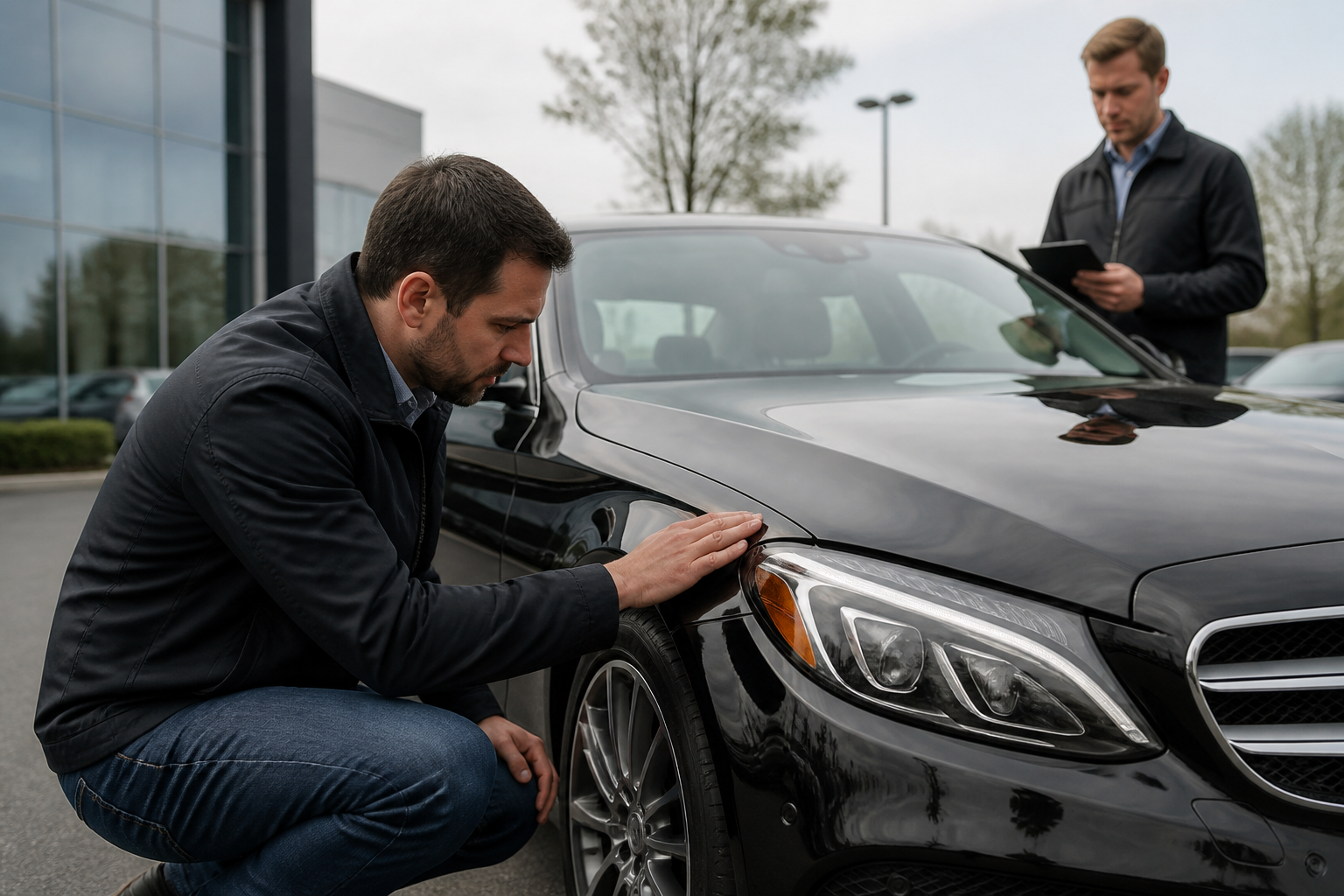
Verify two critical risk items before buying a Mercedes‑Benz Certified Pre‑Owned: (1) whether the CPO warranty coverage is active and how long it lasts, and (2) whether the exact VIN has unrepaired safety recalls using the VIN lookup process with NHTSA and MBUSA documentation.
3 Key takeaways for CPO buyers
- CPO warranty timing starts with the remaining New Vehicle Limited Warranty (4 years/50,000 miles) and then adds 12 months of CPO Limited Warranty with unlimited mileage.
- CPO eligibility requires a thorough 165+ point inspection and dealer‑performed recall campaigns before sale.
- Use the VIN recall lookup (NHTSA) in conjunction with MBUSA recall campaigns to confirm no unrepaired safety recalls on the exact vehicle you intend to buy.
Overview: Verifying two key risk items when purchasing a Mercedes‑Benz Certified Pre‑Owned vehicle
When shopping for a used or Certified Pre‑Owned (CPO) Mercedes‑Benz, two critical verifications can shape your negotiating leverage and confidence in the long‑term ownership experience: (1) the current status and duration of the CPO warranty coverage, and (2) whether the exact vehicle identified by its VIN has any unrepaired safety recalls. This guide links Mercedes‑Benz’s published CPO warranty framework with the official VIN recall lookup process so you can determine whether to negotiate, request repairs, or walk away with clarity.
1) Understanding how the Mercedes‑Benz CPO warranty timing is structured
Mercedes‑Benz’s Certified Pre‑Owned program targets vehicles that are six years old or newer and have fewer than 75,000 miles, with eligibility contingent on a comprehensive 165+ point inspection and road testing. A core principle is that recall campaigns must be completed before a vehicle is deemed CPO ready for sale. The warranty timeline operates as follows:
- Initial coverage: The remaining portion of the original New Vehicle Limited Warranty (NVLW), which is typically four years or 50,000 miles from the vehicle’s first in‑use date. The exact remaining duration is determined at the time of sale, based on how much NVLW time (or mileage) remains when the car enters CPO status.
- CPO Limited Warranty: After the NVLW portion ends, the vehicle receives a Certified Pre‑Owned Limited Warranty that lasts 12 months with unlimited mileage. This creates a two‑part total potential coverage window: the balance of the new‑vehicle warranty plus one additional year under CPO, potentially extending overall coverage well beyond the initial purchase date depending on when the NVLW expires.
Important nuances to verify with the dealer include the exact start dates for each warranty tier and any vehicle‑specific exclusions. The CPO policy also clarifies which systems are generally covered (engine and powertrain versus wear items or maintenance‑related exclusions); however, the precise terms appear in the individual contract for the vehicle you’re considering. Always review the contract language and confirm with the selling dealer before finalizing the purchase.
What to expect from inspection and prep before sale
Mercedes‑Benz states that CPO vehicles undergo a meticulous 165+ point inspection and that recall campaigns are completed prior to sale. The inspection aims to verify the vehicle’s mechanical integrity, safety critical systems, and overall condition, often including road testing and documentation of any repairs or replacements. This thorough process is designed to ensure that a CPO vehicle is “as close to new” in function as reasonably possible, but it does not guarantee freedom from all future repairs; it is a warranty framework for future issues that arise within the covered periods.
2) How to verify the exact VIN for unrepaired recalls
To assess a vehicle’s safety recall status, you should check the specific VIN through official recall lookup resources. The National Highway Traffic Safety Administration (NHTSA) maintains a VIN‑based recall search that shows whether there are any unrepaired recalls for that exact vehicle. Steps to verify are:
- Obtain the vehicle’s VIN. The VIN is the unique identifier you should use for all recall checks.
- Run an official VIN recall check. Use NHTSA’s VIN lookup to see if there are any unrepaired recalls associated with that VIN. If a recall exists, follow the recommended remedy, which is typically provided at no cost by the dealership or manufacturer.
- Cross‑reference with Mercedes‑Benz recall campaigns. In addition to NHTSA results, review MBUSA’s recall notices and service history to ensure the dealer has performed any manufacturer‑required campaigns prior to sale and that any pending recalls are addressed promptly.
- Be aware of timing caveats. Recall statuses can change as campaigns are announced or completed. A VIN search may not immediately reflect the very latest recalls, so consider repeating checks or asking the dealer for a current recall clearance certificate at the time of sale.
In practice, the dual‑source approach—NHTSA VIN recall results plus MBUSA’s recall status and service history—offers a robust view of safety risk before purchase. If unrepaired recalls exist, you can negotiate repairs under warranty, request a price adjustment, or reassess the deal entirely.
Practical verification steps you can take
- Ask the dealer to disclose the exact NVLW status remaining at the time of sale and how the CPO Limited Warranty activates after the NVLW period ends.
- Request the CPO inspection report, and confirm that all required recall campaigns were completed prior to sale.
- Provide the VIN to the NHTSA VIN recall lookup and review any unrepaired recalls. If recalls exist, arrange for dealer‑level repair under the applicable warranty terms and timelines.
- Cross‑check all warranty terms against MBUSA’s published CPO details; ensure you understand exclusions or limitations (e.g., wear items, maintenance requirements). Review the actual warranty contract for definitive terms.
Sources and program details help buyers interpret what they are being offered. MBUSA’s official pages describe CPO eligibility, the 165+ point inspection, and the warranty timing (remaining NVLW then 12 months CPO Limited Warranty). The extended coverage option, should you choose it, is described separately and provides additional qualification criteria and exclusions. For recall verification, NHTSA’s VIN recall lookup is the authoritative starting point, complemented by MBUSA’s recall communications and service history, to form a complete view of safety risk before you commit to a purchase.
Putting it together: a concise checklist for decision making
- Confirm the exact remaining New Vehicle Limited Warranty period for the specific car and how the CPO Limited Warranty applies thereafter.
- Obtain and review the CPO inspection report and confirm that all recall campaigns were completed prior to sale.
- Collect the VIN and perform a current NHTSA VIN recall lookup; document any unrepaired recalls and arrange free dealer repairs if needed.
- Cross‑check all warranty terms against the contract and MBUSA’s published CPO details; ensure you understand exclusions or limitations (e.g., wear items, maintenance requirements).
By aligning Mercedes‑Benz’s stated CPO warranty framework with the official recall lookup process, you can negotiate more effectively and make a purchase decision with a clearer view of potential risks and protections.
Sources