Mercedes-Benz is moving through one of the most important product renewals in its modern history. The 2026 programme is not built around a single drivetrain or one design language. It combines a substantially updated S-Class, a new electric-first GLA, the electric GLC with EQ Technology and a radically different Mercedes-AMG GT 4-Door Coupé. Together, these cars show how the company intends to cover compact premium transport, family SUVs, traditional flagship luxury and extreme electric performance without forcing every buyer into the same formula.
This guide brings the most important launches into one place. It explains what is genuinely new, which specifications are confirmed, where provisional figures still require caution and which model best suits a particular type of driver. Detailed reviews are linked throughout the article so that this page can act as the central hub for our Mercedes-Benz coverage.
New Mercedes-Benz models covered in this guide
| Model | Position | Key confirmed figure | Best suited to |
|---|---|---|---|
| 2026 Mercedes-Benz GLA | Compact premium SUV | Up to 657 km WLTP and 320 kW DC charging | Urban buyers who still need credible long-distance range |
| 2026 Mercedes-Benz S-Class | Flagship luxury saloon | MB.OS, fourth-generation MBUX and a revised engine range | Owners prioritising comfort, rear-seat luxury and technology |
| Mercedes-Benz GLC with EQ Technology | Electric mid-size SUV | Up to 713 km WLTP, 330 kW charging and 2.4-tonne towing | Families, company-car users and long-distance EV drivers |
| Mercedes-AMG GT 4-Door Coupé | Electric high-performance fastback | Up to 860 kW/1,169 hp and charging up to 600 kW | Drivers seeking repeatable supercar performance with four doors |
1. The new Mercedes-Benz GLA: the compact model becomes serious about electric travel
The GLA is the most immediately accessible model in this group, but it is not a minor facelift. Mercedes-Benz revealed the new generation in Warsaw on 29 July 2026 and opened German orders the following day. The electric range begins with the GLA 200 electric, followed by the longer-range GLA 250+ electric and the dual-motor GLA 350 4MATIC electric.
The engineering story is stronger than the badge might suggest. An 800-volt electrical system supports DC charging at up to 320 kW, while the longest-range configuration is quoted at up to 657 km WLTP. Mercedes says up to 270 km of rated range can be added in ten minutes under suitable conditions. The 58 kWh LFP battery in the entry model is intended to reduce cost, while the 85 kWh NMC pack supports the higher-output and longer-range versions.
Packaging has also improved. The new car gains a 107-litre front luggage compartment, a 410-litre rear boot and up to 1,400 litres with the rear seats folded. The wheelbase is 61 mm longer, rear legroom grows and the electric 4MATIC versions can tow up to two tonnes. Read our full 2026 Mercedes-Benz GLA first look for the version-by-version breakdown, German launch prices and the practical differences between the battery options.
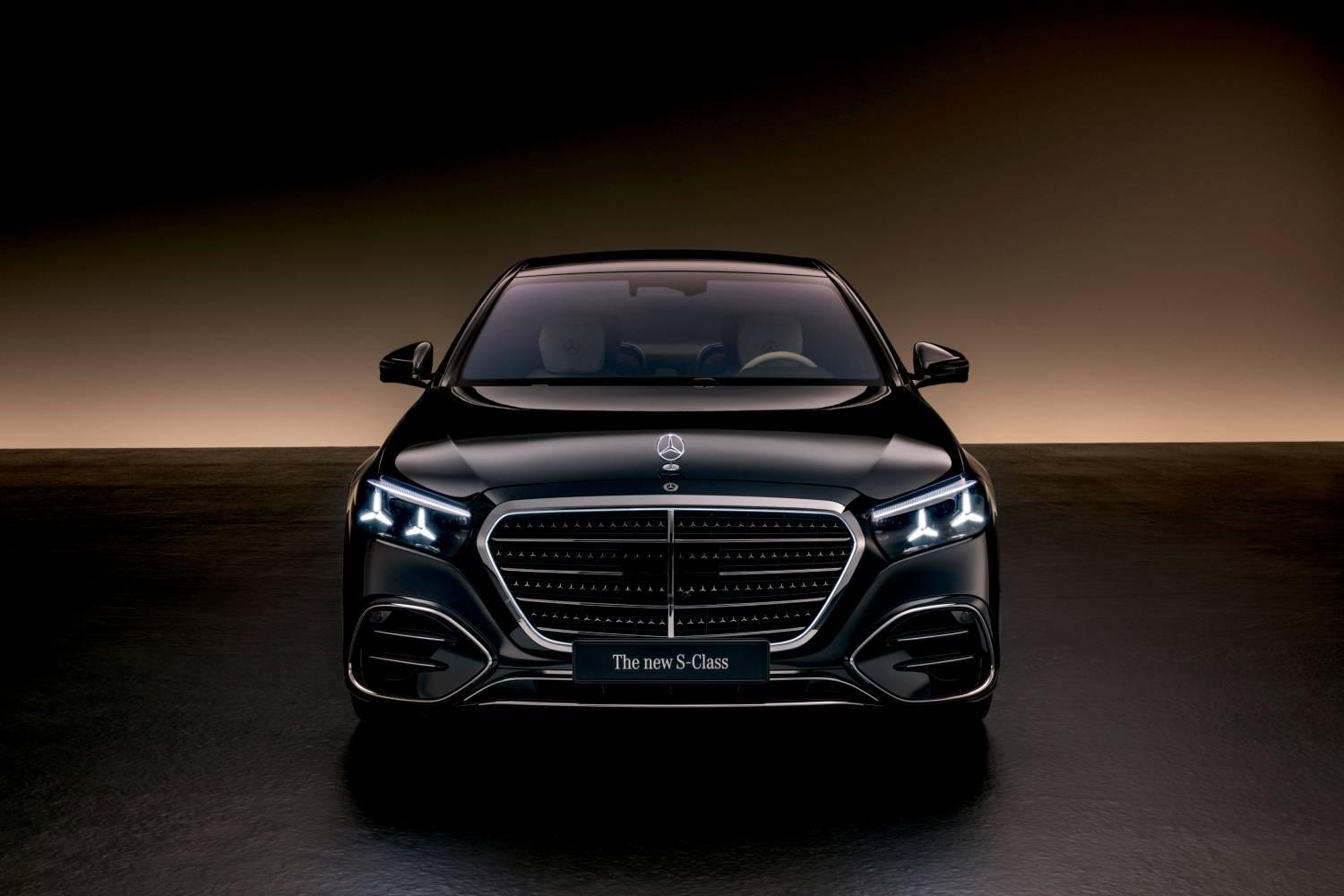
2. The 2026 S-Class: refinement instead of reinvention
The S-Class follows a different strategy. Mercedes-Benz has not replaced the W223 platform with an experimental concept; it has revised the existing flagship around the areas that determine daily luxury: powertrain smoothness, cabin intelligence, assistance systems, rear-seat comfort and long-distance composure.
The updated range includes six-cylinder petrol and diesel engines, plug-in hybrids and a revised V8. Availability differs by market, but official technical documentation lists S 350 d, S 450, S 450 d, S 450 e, S 500, S 580 and S 580 e derivatives, including standard- and long-wheelbase versions where offered. The important digital change is the integration of MB.OS-capable computing hardware with the fourth generation of MBUX.
Mercedes-Benz is also widening the role of assisted driving. MB.DRIVE ASSIST PRO is intended to support point-to-point assisted operation in defined markets, beginning in China and expanding to the United States during 2026. This does not make the S-Class universally autonomous, but it does move the flagship beyond the conventional combination of adaptive cruise control and lane centring. Our detailed 2026 Mercedes-Benz S-Class review explains the changes, engine strategy, interior technology and how the car compares with the BMW 7 Series and Audi A8.
3. The electric GLC: probably the most commercially important launch
The GLC with EQ Technology may be the most strategically important car here. The combustion-powered GLC has repeatedly been one of Mercedes-Benz's strongest sellers, so the electric version must work as a genuine family SUV rather than a technology showcase.
The initial GLC 400 4MATIC specification answers many of the practical questions. Its 94 kWh usable battery supports a provisional range of up to 713 km WLTP. DC charging reaches 330 kW, with a quoted 10-to-80-percent time of 22 minutes. The dual-motor system produces 360 kW, 0-100 km/h is quoted at 4.3 seconds and the maximum speed is 210 km/h.
More important for everyday ownership are the 570-litre rear boot, up to 1,740 litres with the seats folded, a front luggage compartment and a towing capacity of up to 2.4 tonnes. The optional 39.1-inch MBUX Hyperscreen is visually dominant, but the platform's space efficiency and charging system may matter more after the first week of ownership. See our complete Mercedes-Benz GLC EQ review for the battery, charging, space and competitor analysis.
4. Mercedes-AMG GT 4-Door Coupé: electric performance without a single headline trick
The AMG GT 4-Door Coupé is the technological outlier. It uses three axial-flux motors and a directly cooled high-performance battery on the AMG.EA architecture. The GT 55 develops up to 600 kW or 816 hp, while the GT 63 reaches a peak of 860 kW or 1,169 hp with launch control and the required battery state of charge.
The charging claim is equally dramatic: up to 600 kW and more than 460 km of WLTP range added in ten minutes at a compatible charger. That figure will depend on infrastructure that remains rare, but the engineering objective is clear. AMG is designing the battery and cooling system for repeated acceleration, sustained power and rapid energy recovery rather than a single short burst.
On 6 August 2026, Mercedes-AMG also announced the GT 53 as the more accessible entry to the new electric range. That creates a clearer hierarchy instead of forcing every buyer into the maximum-output model. Our Mercedes-AMG GT 4-Door Coupé first look explains the three-motor layout, active suspension, charging architecture and the differences between GT 53, GT 55 and GT 63 positioning.
Which new Mercedes-Benz should you choose?
| Your priority | Best match | Reason |
|---|---|---|
| Compact dimensions and lower entry price | GLA 200 electric or GLA 250+ electric | Smaller footprint, practical luggage layout and strong charging specification |
| Rear-seat comfort and executive use | S-Class long-wheelbase | The most mature luxury package and the widest powertrain choice |
| One electric car for family, work and holidays | GLC 400 4MATIC with EQ Technology | Long range, large luggage capacity, fast charging and serious towing ability |
| Maximum performance with four usable doors | AMG GT 63 4-Door Coupé | The highest output and most advanced AMG.EA hardware |
| Performance without choosing the flagship | AMG GT 53 or GT 55 | A lower step into the new electric AMG range |
What the 2026 product strategy tells us
Mercedes-Benz is no longer treating electric models as a separate visual sub-brand that must look completely different from the rest of the range. The GLA and GLC use familiar model names while adopting dedicated electric hardware. At the same time, the S-Class continues with combustion and plug-in-hybrid powertrains because flagship buyers across different regions do not yet have identical infrastructure or use cases.
There is also a stronger focus on software as a vehicle platform. MB.OS, cloud-based navigation, over-the-air functions and more capable driver-assistance computing appear across very different price points. The benefit is faster feature development and more integrated route, charging and assistance functions. The risk is that long-term ownership depends increasingly on software support, subscription policy and the availability of electronic modules.
Ownership, maintenance and parts planning
New-generation Mercedes vehicles combine mechanical components with high-voltage systems, cameras, radar units and software-coded modules. That makes exact identification more important than simply buying a part described as compatible with a model name. Owners and independent workshops should record the VIN, production date, option codes and the complete OEM number before ordering. For broader sourcing across new and used components, the AutoScandi auto parts marketplace provides an additional route for checking international availability by part reference.
For electric models, buyers should also ask how collision repairs, battery diagnostics, thermal-management components and charging hardware are handled locally. A long range figure is valuable, but access to qualified repair and parts support can have a larger effect on ownership cost after the warranty period.
Confirmed facts versus expectations
The figures in this guide are based on manufacturer information available on 6 August 2026. Some GLC values remain provisional pending final homologation, and market specifications can differ. Prices quoted for the GLA are German launch prices including VAT. AMG charging performance requires a charger capable of delivering the necessary voltage and current, while peak output figures depend on operating conditions and battery state.
Frequently asked questions
What is the newest Mercedes-Benz model in 2026?
There is no single answer because several major launches arrived during the year. The updated S-Class appeared in January, the electric AMG GT 4-Door Coupé in May and the new GLA in July. The GT 53 derivative was announced on 6 August 2026.
Which new Mercedes has the longest official range?
Among the models covered here, the GLC with EQ Technology is quoted at up to 713 km WLTP, ahead of the GLA's maximum of 657 km. Final real-world distance will depend on speed, temperature, wheels, load and charging conditions.
Is Mercedes-Benz abandoning petrol and diesel engines?
No. The S-Class continues with petrol, diesel and plug-in-hybrid derivatives, while Mercedes has also announced high-tech hybrid versions of the GLA. The range is becoming more electric, but powertrain availability remains market-specific.
Which model is the best all-rounder?
The GLC with EQ Technology has the strongest all-round specification because it combines long range, rapid charging, useful luggage capacity and up to 2.4 tonnes of towing. The GLA is easier to use in dense cities, while the S-Class and AMG GT serve much more specialised buyers.
Research sources: Mercedes-Benz GLA launch information; Mercedes-Benz S-Class press kit; Mercedes-AMG GT 4-Door Coupé launch information; Mercedes-Benz GLC with EQ Technology media information.