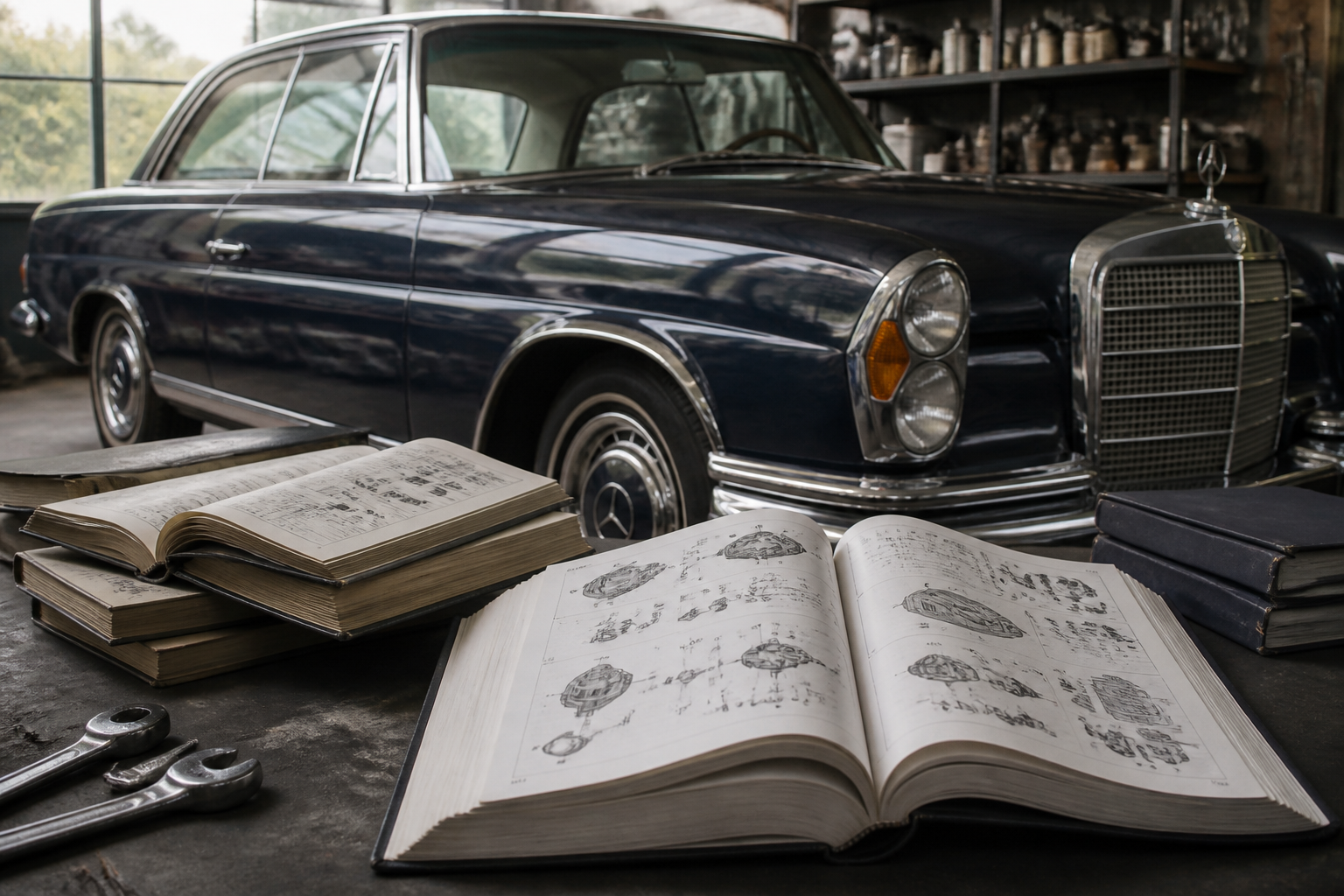
Owners should first contact Mercedes-Benz Classic Center specialists for Genuine Classic Parts and potential factory-made reissues, then consult MB Wholesale Parts or a dealer for classic-part sourcing and warranty coverage. This official supply path is designed to minimize downtime when a part is discontinued or scarce.
Key takeaways
- Mercedes-Benz Classic Center is the primary official channel for Genuine Classic Parts and reissues.
- Classic spare parts are framed as genuine factory-supported components, not aftermarket substitutes.
- Contact Classic Center or a dealer for structured sourcing and potential warranty coverage for scarce parts.
- Official MB sources emphasize a centralized path to reduce downtime when parts are NLA.
- Always verify part availability through the Classic Center specialists before pursuing aftermarket alternatives.
Finding and fitting the right part when a Mercedes-Benz component has been discontinued or becomes scarce is a common restoration and maintenance challenge. This guide expands on practical, owner-focused steps to navigate Mercedes-Benz’s classic-parts ecosystem and related programs, with clear decision criteria, limitations, and real-world scenarios to minimize downtime while preserving authenticity.
Where genuine, factory-backed options live
Mercedes-Benz maintains a structured approach to classic parts, designed to help owners of older cars stay on the road with components that meet the brand’s original standards. The core channels are the Mercedes-Benz Classic Center and the Official Classic Parts program. These paths exist specifically to deliver factory-made or factory-verified reissues, not third-party aftermarket substitutions, where possible. The channels operate with regional differences in availability and lead times, so expectations should be calibrated accordingly.
Mercedes-Benz Classic Center and Genuine Classic Parts
The Classic Center functions as a dedicated liaison for vintage vehicles, staffed by specialists who can source and, in many cases, manufacture or reissue parts that no longer appear in standard dealer inventories. The concept of “Genuine Classic Parts” means components that are factory-originated or factory-approved for classic models, preserving authenticity and intended performance. In practical terms, this can include factory-made reissues that reproduce a part’s original geometry, materials, and tolerances to the extent feasible. Availability depends on factors such as the vehicle’s age, rarity, and the existence of a corresponding reissued item in the current catalog.
Owners should view the Classic Center as the first port of call when a part is NLA (no longer available) through standard channels. Requests are typically routed through certified Mercedes-Benz dealers or directly via the Classic Center’s specialists. The process involves confirming part codes, compatibility with your VIN, and any potential updates that accompany reissued parts. Turnaround times can vary from weeks to months, and in some cases, a fresh reissue may not exist and an alternative approach may be required.
Mercedes-Benz Classic spare parts program (Genuine Classic Parts)
Mercedes-Benz Corporate communications frame Classic spare parts as genuine, factory-supported components intended to preserve the integrity of older vehicles. This program emphasizes that these parts are not generic aftermarket substitutions but components aligned with Mercedes-Benz’s engineering lineage. Availability can vary by model, production era, and regional supply, but the program is designed to keep classic-era vehicles closer to factory specifications whenever possible. For owners, the implication is a higher probability that the replacement behaves as originally intended, with documented quality and a known warranty framework tied to Classic Parts where applicable.
Official parts pathways behind the scenes
In addition to the centralized Classic Center, official channels such as MB Wholesale Parts provide a structured overview of how to pursue classic parts. They reiterate the recommended workflow: contact the Classic Center or a qualified dealer/parts specialist, verify item code and compatibility, confirm whether the part is a reissue or a new manufacture, and understand warranty implications tied to Classic Parts. This structure helps owners avoid ad hoc sourcing that can lead to misfits or questionable longevity. When a part is particularly scarce, the specialist may also advise on alternate part numbers that maintain function while meeting original specifications and may propose a staged restoration plan to spread downtime.
What “genuine classic parts” means for your car
Genuine Classic Parts are defined by three practical criteria:
- Factory-origin or factory-verified reissues that mirror the original part’s form and function.
- Explicit compatibility with the vehicle’s model year, configuration, and build specifications.
- Warranty coverage or support aligned with Mercedes-Benz’s classic-parts program, where available.
These parts are intended to maintain the vehicle’s preserved characteristics, including fit, function, and original performance benchmarks. It’s important to verify model-year applicability and to understand any revisions that come with reissued parts, such as updated materials, revised fasteners, or revised engineering notes, which might be intentional to improve reliability or availability.
Decision criteria: when to pursue Classic Center options vs. other routes
Use the following decision framework to determine the best sourcing path for a given part:
- Assess criticality and downtime tolerance: If the part is essential for daily operation (e.g., brake components, fuel system parts), prioritize sources with the strongest authenticity and traceability. If downtime is acceptable within a practical window, a staged approach or temporary substitute may be considered after consultation with a specialist.
- Confirm availability and lead times: Contact the Classic Center or a certified dealer to confirm current availability, estimated lead times, and any minimum order quantities. If the item is on backorder or no longer manufactured, ask about reissue viability and alternate part numbers.
- Evaluate authenticity vs. immediacy: If you require factory-proven authenticity and the precise original fit, favor Genuine Classic Parts via the Classic Center. If immediacy is critical and a field-verified aftermarket substitution is acceptable, you may consider an approved non-original equivalent only after dealership guidance.
- Consider vehicle value and restoration goals: For highly original or concours-level aims, genuine classic parts often justify longer lead times. For daily drivers, a pragmatic mix of authentic parts and compatible upgrades may be appropriate if endorsed by a qualified technician.
- Warranty and service implications: Verify what warranty coverage applies to each sourcing path, especially for reissues or special-order items. Document the terms in writing with the dealer or Classic Center.
In some cases, the specialist may propose a multi-step plan: source a close-fitting Genuine Classic Part as a priority, while preparing a temporary, serviceable alternative for minor downtime, followed by a future switch to a more exact reissue if/when it becomes available.
Practical sourcing workflow you can follow
Below is a realistic workflow to manage scarce parts without losing track of authenticity and fitment:
- Document the information you have: Part number, vehicle VIN, build date, and the symptom or failure mode. Take clear photos of the original component to help the specialist assess compatibility.
- Check the official channels first: Reach out to the Mercedes-Benz Classic Center (or your preferred dealer/parts specialist) to confirm whether a Genuine Classic Part is available or if a reissue is in development.
- Request alternative part numbers if needed: If the exact item is unavailable, ask for officially sanctioned alternatives that preserve function and fit within Mercedes-Benz tolerances.
- Confirm installation and warranty terms: Before purchase, obtain written confirmation of fitment, any required service notes, and the warranty scope covering the part.
- Plan a staged restoration if necessary: For non-critical components, schedule a temporary functional substitute to reduce downtime and preserve driving capability while a more authentic reissue is sourced.
Limitations and caveats you should know
While the Classic Center and Genuine Classic Parts program offer the most authentic paths, there are practical limits:
- Not every discontinued part has an available reissue. Some components may be permanently out of production, requiring creative engineering solutions or acceptable aftermarket substitutes as a last resort.
- Lead times can be lengthy, especially for rare models or parts with limited production runs. Seasonal demand and global logistics can further affect timing.
- Regional availability varies. A part that exists in one region’s catalog may not be readily accessible in another, which can influence cost and delivery timelines.
- Warranty for reissues or Classic Parts may differ from standard new-parts warranties. Always document terms in writing and confirm coverage with the selling dealer.
- Exact original specifications can shift with revisions. A reissued part may introduce minor changes in materials, fasteners, or fitment tolerances intended to improve reliability and service life.
Real-world scenarios and how to apply the playbook
Consider these representative situations to illustrate the practical path through the Classic Center network:
- Older sedan with a discontinued trim piece: A veneer switch or trim clip tied to a classic interior might be reissued as part of a cabin restoration; the Classic Center can source the appropriate reissue or advise a verified substitute that preserves interior integrity.
- Engine bay component no longer produced: For items like certain gaskets or mounting brackets, factory-made reissues may exist, but if not, specialists may propose a factory-aligned alternative that maintains performance tolerances while awaiting a future reissue.
- Suspension component for a niche model: Highly specific parts may rely on limited-run reissues or cross-compatibility checks. In such cases, a careful evaluation of compatibility and a staged repair plan with a qualified technician are essential.
Bottom-line guidance
When a Mercedes-Benz part is discontinued or hard to source, the most reliable route for preserving authenticity and minimizing downtime is to engage the Mercedes-Benz Classic Center and pursue Genuine Classic Parts through official channels. Use the decision framework to balance immediacy, authenticity, warranty, and restoration goals. Remember that every part’s availability is dynamic, so maintain ongoing dialogue with your dealer or Classic Center specialists and document all agreements in writing for future reference.
Sources
- Mercedes Classic Center | Mercedes-Benz USA
- Mercedes-Benz Classic spare parts (Genuine Classic Parts)
- Parts Overview | Mercedes-Benz Wholesale Parts / Mercedes-Benz Classic parts program
Related Mercedes-Benz guides
- Mercedes MBUX over-the-air updates
- Mercedes-Benz Ts Oil Filter Element Parts Kit A0001802109 Review
- Mercedes-Benz Ts Brake Pad (Parts Kit) Front And Rear Axles A0024201720 Review
- Mercedes-Benz Thrust Pin (Parts Kit) A6314230088 Review
- Mercedes-Benz Strip (Water Deflector),Left "Classic"+"Esprit"+"Sport".