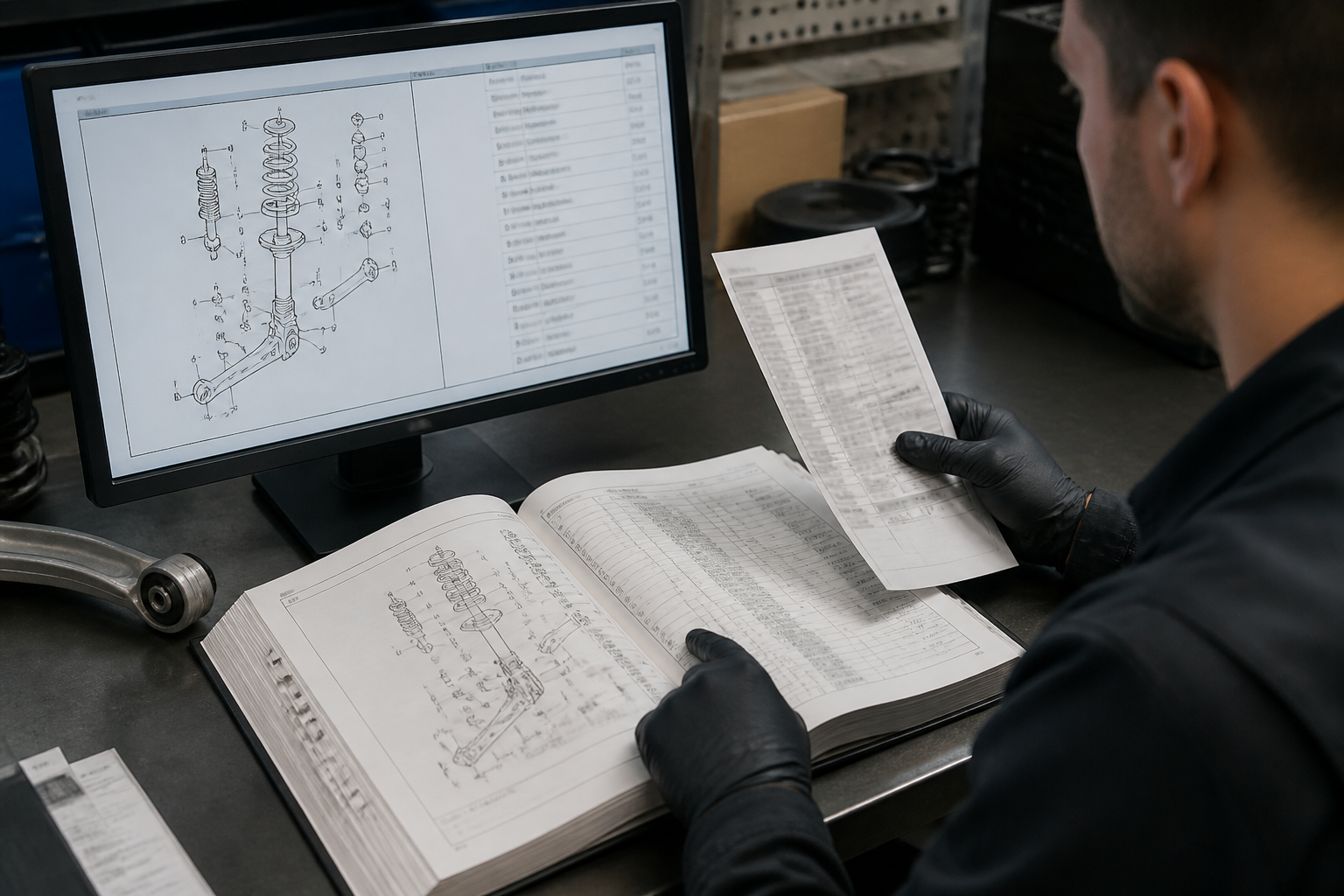
If a needed Mercedes-Benz part is unavailable, start by verifying live stock with your dealer rather than relying on catalog listings alone. If stock is truly backordered or discontinued, contact the Mercedes-Benz Classic Center for difficult-to-find parts and consider remanufactured options through official channels. Document VIN, model, and exact part details, then pursue substitutions only after confirming fitment and warranty terms. This structured approach minimizes downtime and aligns with official guidance from MB Dealer Parts and the Classic Center sources.
Key takeaways
- Check live inventory rather than catalog alone to avoid ordering unavailable parts.
- When parts are scarce, consult the Mercedes-Benz Classic Center for difficult-to-source items and potential remanufacture.
- Prepare a concise part brief (VIN, part number, model year) and pursue remanufactured or authorized substitutes with clear warranty terms.
- Understand the difference between catalog visibility and actual stock to prevent backorder surprises.
- Document all steps and communications to streamline escalation if needed.
When a Mercedes-Benz repair hinges on a single part that has fallen out of production or is backordered for an extended period, owners face a high-stakes decision: wait, pivot to a different solution, or source an alternative from a trusted channel. The practical guide below provides a repeatable sourcing workflow, with decision points, constraints, and caveats built around real-world sourcing channels. It stays grounded in live material and avoids speculation, offering concrete steps you can apply across model years while noting where model-specific differences will matter.
Clarify the problem and set guardrails
Before you begin catalog hunting, define the failure more broadly: is the part critical to safety, emissions, or drivetrain function? Does the repair require exact fitment with a specific revision level, or can a serviceable substitute be used? Establish a budget ceiling, an acceptable downtime window, and a fallback plan if no viable new part exists within that window. This upfront scoping prevents weekend-long wild-goose chases and helps you compare options quickly when you reach a decision point.
Baseline: verify catalog data against live inventory
The Mercedes online parts catalog is a powerful reference, but it is not a real-time inventory feed. Start with a catalog check to identify the exact part number and compatibility range, then contact your dealer or an authorized parts source to confirm current availability and lead times. The MB Dealer Parts FAQ explicitly cautions that listed items may be out of stock or discontinued, and that backordered or discontinued items may require additional sourcing work. Treat the catalog as a starting list, not a final guarantee.
Practical tip: request a formal stock status update and, if possible, a candidate ETA from the parts desk, even if it2023s a preliminary estimate. Record the actual stock status in writing (email or a ticket) to maintain an auditable trail for escalation or remanufacturing discussions.
Escalation path: when to engage the Classic Center
The Mercedes-Benz Classic Center is the official conduit for older models and parts that no longer appear in standard catalogs. It can help locate common or rare components and, in some cases, discuss remanufacture if there is sustained demand. This option is especially valuable when the part is discontinued or when a dealer search yields no viable match. The Classic Center is not a guarantee for every part, but it is a recognized escalation channel with the authority to explore re-creation or limited-run production hypotheses. Prepare a concise briefing for the Classic Center that includes your VIN, model year, the exact part number, the failure symptom, and the search history you have already conducted.
What to bring to the Classic Center
- Vehicle identification details: VIN, model, year, trim, and regional market
- Part specifics: the exact OEM part number, any revision letters, and the failure mode
- Search documentation: catalog screenshots, dealer status notes, and any quotes from live inventory
- Repair urgency and allowable downtime tolerance
Documenting your search: a concise briefing template
Having a structured brief makes escalation faster and reduces back-and-forth. Include:
- Part name and number, with any alternate part numbers you have considered
- Vehicle details: VIN, year, model, country of delivery
- Search steps taken: catalog check date, dealers contacted, outcomes
- Current status: in-stock, backordered, discontinued, or no stock signal
- Budget and downtime constraints
- Preferred path if new production or remanufacture becomes viable
Alternatives: remanufactured, rebuilt, and factory-approved substitutions
When a new part cannot be sourced promptly, consider remanufactured options through official channels or authorized partners. Remanufactured parts can restore function while offering potential cost savings and shorter lead times compared with obsolete-new parts. However, remanufactured components must meet the same fitment and safety standards as new parts, and they may carry differences in warranty coverage, documentation, or revision compatibility. Consult the dealer and the Classic Center about any remanufacture program, and verify the exact revision, fitment, and warranty terms before purchase.
Third-party and non-OEM paths: at what point to use them
Non-OEM sources exist, including remanufactured parts from trusted refurbishers and components acquired through specialty suppliers. These can be viable when the OEM supply chain is constrained, but they require careful due diligence. Key precautions include:
- Ensuring the part is a direct functional equivalent to the OEM specification
- Verifying compatibility with your vehicle’s VIN range and software/ECU considerations
- Reviewing warranties, return policies, and documented evidence of tested compatibility
- Confirming the part’s provenance and the supplier’s reliability through independent sources when possible
Decision framework: practical criteria to choose a sourcing path
- Criticality of the part: safety-related components generally warrant OEM or Classic Center-backed sourcing; non-critical parts may allow more flexibility.
- Lead time vs. downtime tolerance: if downtime severely impacts ownership obligations, a quicker remanufactured or used-path with verified compatibility may win.
- Cost vs. value: balance the upfront cost with long-term reliability and warranty coverage.
- Durability and warranty: ensure the chosen path offers an acceptable warranty period and clear terms for coverage on failure related to the replacement.
- Future availability: consider whether pursuing a temporary fix now impacts future maintenance or the ability to receive genuine parts later.
Operational workflow: a step-by-step part-search example
- Identify the exact part number, including any revision letter, from the service manual or parts catalog.
- Check live stock and backorder status with your preferred dealer or parts distributor; document the response and ETA.
- If stock is unavailable or the item is discontinued, contact the Mercedes-Benz Classic Center with a prepared briefing.
- Explore remanufactured or approved substitutes if offered, comparing warranty and fitment against a potential future production run.
- Record all communications and decisions, and decide on a path that aligns with risk tolerance and downtime needs.
Limitations and caveats you should know
Every sourcing path has constraints. Catalog data can lag real inventory; the Classic Center has capacity limits and may require demonstrable demand. Remanufactured options depend on supplier availability and the existence of a viable production run; not all parts are candidates for remanufacture. Non-OEM parts may void certain aspects of warranty or require independent vetting for performance and safety implications. In all cases, document the reason for selecting a given path and secure written confirmations of part numbers, costs, and timelines.
Key takeaways and practical do-not-miss steps
- Always verify current stock status with the dealer after identifying a part number in the catalog; treat catalog availability as indicative rather than guaranteed.
- Use the Classic Center as a formal escalation channel when the model is older or the part is hard to source; prepare a tight brief with the required information.
- Keep a detailed search log and be prepared with a prioritized set of options (new production, remanufactured, used, or substitute parts) before immobilizing the vehicle.
- Assess remanufactured and non-OEM paths against warranty, fit, and long-term reliability considerations; do not assume equivalence without verification.
Sources
Frequently asked questions
What steps should I take if a required part is unavailable?
Verify live stock with the dealer, contact the Mercedes-Benz Classic Center for scarce items, and consider remanufactured or authorized alternatives while confirming fitment and warranty terms.
When is it appropriate to pivot to remanufactured parts?
When the part is unavailable through standard channels and there is reasonable certainty that a remanufactured option will fit and be supported by warranty terms.
What information helps speed up sourcing?
VIN, exact part number, model year, production variant, and clear documentation of catalog vs. live inventory, plus any prior correspondence.
Related Mercedes-Benz guides