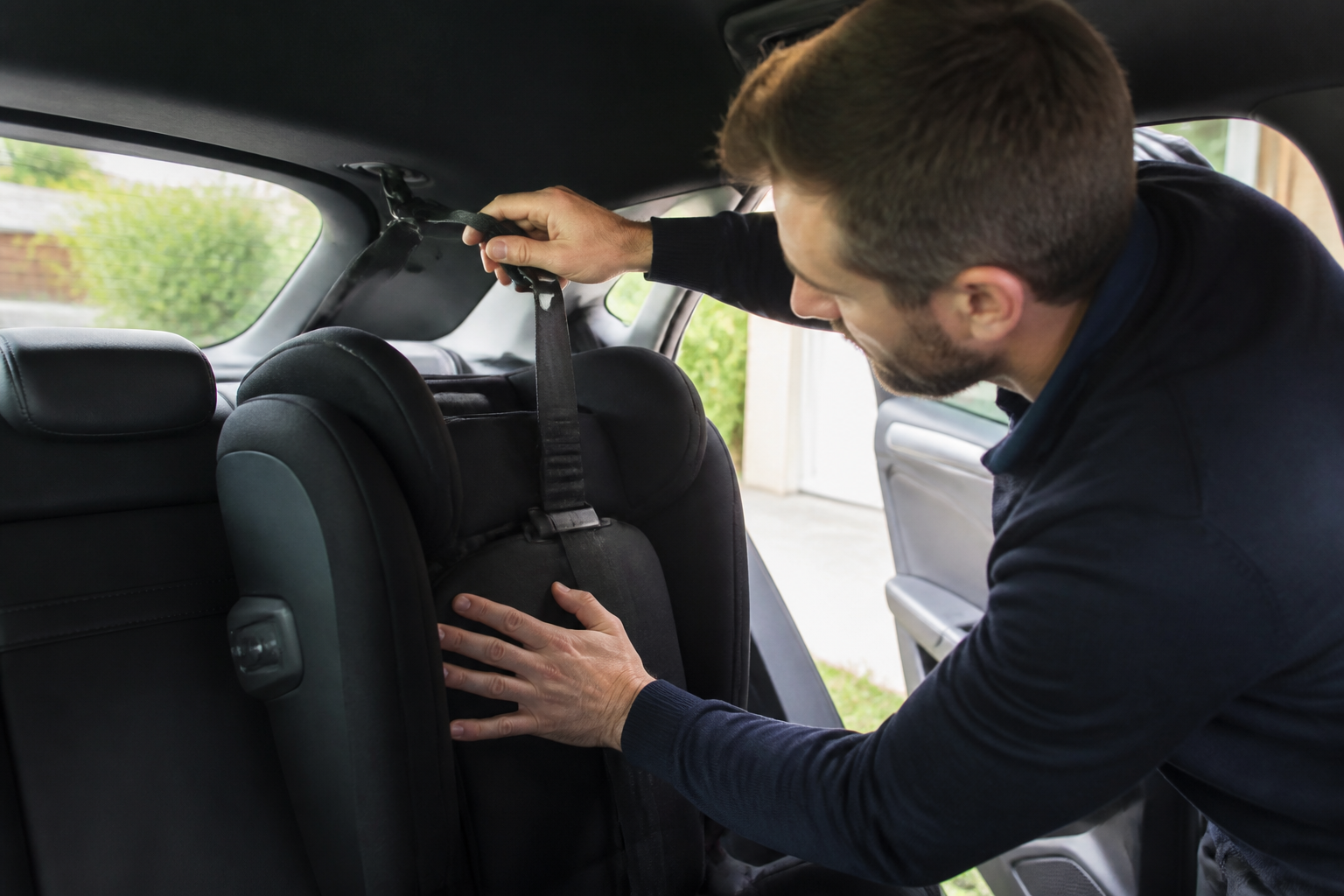
Use the rear-seat ISOFIX/i-Size anchors where available, then apply the Top Tether if the seating position and child seat require enhanced rear stability. Confirm which positions support ISOFIX, follow the FLEX BASE or KidFix installation guidance for base and belt options, and ensure proper anchorage engagement and post-install checks per Mercedes documentation.
Key takeaways
- Identify which rear-seat positions have ISOFIX/i-Size anchors using Mercedes documentation.
- Use the Top Tether only when both the seat and position support it and the vehicle provides a tether anchor.
- Follow model-specific base instructions (e.g., FLEX BASE) for locking arm placement and correct anchorage engagement.
- If a position lacks ISOFIX, use the vehicle belt-based installation method while ensuring proper restraint fit and tether usage where supported.
- Verify installation by checking for minimal seat movement and adherence to the seat’s installation guidelines.
Ensuring correct child seat installation in a Mercedes-Benz requires a practical, source-based verification routine that owners can follow step by step. This article expands the core idea into an actionable checklist, grounded in Mercedes-Benz documentation about ISOFIX/i-Size/ISOFIX and Top Tether availability, and the ways different seating positions accommodate different restraint systems. The goal is to help Mercedes-Benz owners verify seating-position suitability, confirm anchorage availability, and apply the correct attachment method so that a child restraint remains securely anchored during normal use and in a crash scenario.
Clarifying ISOFIX/i-Size and LATCH terminology in a Mercedes context
Mercedes-Benz documentation often references ISOFIX and i-Size as the preferred anchorage method for many rear-seat positions. In practical terms, ISOFIX (or i-Size) refers to fixed anchors embedded in the seat frame, designed to mate with corresponding connectors on the child seat base or seat shell. LATCH is the North American term that maps to the same concept in many markets, but Mercedes documentation may emphasize the i-Size labeling and the locking-arm mechanics described in the FLEX BASE instructions. Before starting, identify which seating positions are equipped with fixed ISOFIX anchors and which positions require belt-based installation only. This distinction is critical; attempting to attach a seat that is not designed for ISOFIX to fixed anchors can compromise safety and may violate vehicle or restraint specifications.
Step-by-step verification checklist
- Identify rear seating positions available for ISOFIX/i-Size anchors.Look for ISOFIX labels or visible anchors at the seat cushion gap. Some Mercedes models show the anchors between the seat back and cushion; others require you to lift or tilt the seat to access them. If anchors are not present in a position, that seat likely relies on a belt-based installation or is not suitable for that restraint model.
- Check the restraint’s compatibility with the seat position.Consult the child seat base instructions or user guide to confirm whether the seat is rated for ISOFIX/i-Size or for belt-only installation in the rear seat. The FLEX BASE guide provides explicit directions for mounting with locking arms and anchor engagement when using ISOFIX or i-Size securing methods.
- Confirm the seating position alignment with the base or seat shell.If using ISOFIX or i-Size, align the base or seat shell with the anchors so that the connectors click into place and the locking arms (if applicable) can be positioned as described in the base instructions.
- Verify correct attachment method for your child’s size/age and restraint type.Some seats support both ISOFIX/i-Size and belt-based installations. Ensure you are using the method indicated for your specific child seat and seating position, especially if the child has outgrown the ISOFIX/i-Size range or the vehicle seat is being used with a different restraint model.
- Engage the Top Tether when required.Forward-facing installations often benefit from a Top Tether. If your Mercedes-Benz seating position and the child seat support a Top Tether, attach it per the restraint’s instructions and the vehicle’s tether anchor points. Ensure the tether is tight and that the belt path is correctly routed to avoid slack or misrouting during a crash.
- Confirm secure fit by testing for movement.With the restraint installed, apply forward pressure at the seat and at the top of the seat. There should be minimal movement at the harness or base—ideally less than an inch (2.5 cm) of movement when tested at the belt path and anchor points.
- Review care and handling guidance for bases and anchors.Follow the cleaning and maintenance guidance for bases and anchors as outlined by Mercedes-Benz, since improper cleaning or damage to the base might influence locking integrity or anchor engagement over time.
Common installation considerations you’ll encounter
- Seat compatibility varies by model and seating-position availability. Even within the same model year, different trims or optional seating configurations can change which positions offer ISOFIX/i-Size anchors.
- When a rear seat position lacks ISOFIX anchors, a belt-only installation is typically required. Ensure the belt routing and lock-off mechanism (if the child seat provides one) function correctly with the vehicle belt system.
- Some seats, such as those matching the KidFix family, are advertised as compatible with both ISOFIX/i-Size and belt-based installations. Always verify the current installation method with the exact seat model and the vehicle’s seating position.
- Base-specific instructions matter: the FLEX BASE documentation outlines how locking arms should be positioned for ISOFIX or i-Size use, and it emphasizes proper handling to avoid damage to the anchors or base components.
- After installation, re-check the seat’s position with the child seated and the harness adjusted to the correct height or slots. Movement at the base or seat shell can indicate improper engagement of anchors or belt routing.
Practical references from Mercedes-Benz documentation
Official Mercedes-Benz resources describe how ISOFIX/i-Size anchorage is implemented in rear seating, and how belt-based installations are used when anchors are not present. For example, the FLEX BASE guide discusses locking arms, anchor engagement, and care guidelines for bases used with ISOFIX or i-Size systems. The 2020 C-Class KidFix accessory page illustrates that ISOFIT/ISOFIX and belt-using options may be available depending on the seat and position, underscoring that installation methods are seat- and position-specific.
Real-world applicability and limitations
While the general practice is clear—use ISOFIX/i-Size anchors where available and apply Top Tether when required—the exact seating positions and anchor availability can vary by vehicle generation, trim, and regional market. Owners should not assume a single seating position is universally suitable for all child restraints. Always consult the specific vehicle’s owner’s manual section on child restraints, the base’s installation instructions, and the child seat manufacturer’s guidance for the precise model you own or plan to use.
Notes on verification workflow and safety mindset
Use this checklist as a living workflow. If you upgrade the child seat or change seating configurations, repeat verification from the top. Documenting the model/year and seating position in use can help maintenance staff or new owners confirm compatibility without relying on memory. Finally, remember that proper installation is only one component of overall child safety; ensure appropriate seating height, harness fit, and ongoing monitoring during travel.
Sources